
Idea 1
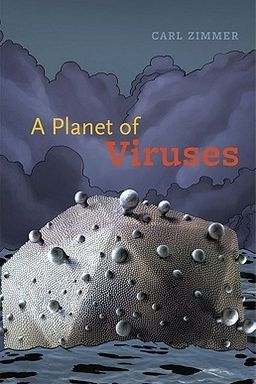
A Planet of Viruses: Life’s Hidden Architecture
When you get a stuffy nose, stare at a blue sky, or breathe in the salty ocean air, do you ever wonder what unseen forces shape your life? In A Planet of Viruses, science writer Carl Zimmer argues that the tiniest entities on Earth—viruses—aren’t just invaders or destroyers. They are the architects of life as we know it. Far from being inert agents of disease, viruses form the connective tissue of the living world, influencing everything from human evolution to planetary climate.
Zimmer’s central claim is stunning yet simple: viruses are not merely at the edge of life—they define it. He suggests that to understand life, humanity, and even the future of our planet, we must rethink our relationship with viruses. Instead of seeing them solely as enemies, we should recognize them as ancient collaborators that continually remake the biosphere and ourselves.
How Viruses Reveal Life’s Boundaries
The book opens with a journey into the microscopic world—the discovery of the tobacco mosaic virus in the 19th century. Before this moment, scientists assumed all life was cellular. When researchers like Martinus Beijerinck found that a contagious agent smaller than bacteria could reproduce inside living tissue, they redefined life’s boundaries. The discovery of viruses cracked open biology’s central question: what does it mean to be alive? Zimmer uses this history to show that viruses have perpetually reshaped our definition of vitality itself, hovering between chemical and creature—replicating yet not living in the traditional sense.
Each chapter extends this inquiry by showing how viruses blur those same boundaries across ecosystems—from the human body to deep-sea trenches—and how they act as bridges between life’s domains.
A Tour through the Viral Biosphere
Zimmer takes readers on a captivating journey through the viral world as if guiding a safari through biological wonders invisible to the naked eye. He explores how rhinoviruses conquer our noses with evolutionary finesse, how influenza endlessly reinvents itself through genetic mixing, and how human papillomavirus (HPV) turns ordinary cells into cancerous growths. He explains the lives of bacteriophages—viruses that prey on bacteria—transforming them from medical curiosities into potential saviors in an era of antibiotic resistance.
From there, the book dives into the depths of the ocean, where viruses outnumber stars and help regulate the Earth’s climate by controlling microscopic algae. Zimmer reveals that our own DNA carries the fossilized remains of ancient viruses, vestiges that now help us form placentas, fight infections, and even think. These inner parasites show how human identity has always been viral at its core.
Viruses Across Time and Culture
The narrative’s power lies not just in biology but in storytelling. Zimmer connects viral evolution to human history—from Edward Jenner’s early vaccination experiments against smallpox to present-day pandemics like COVID-19. He reminds us that civilization itself has been shaped by these invisible entities: the collapse of empires, the birth of medicine, and the rise of global cooperation around eradication. Each epidemic forced new scientific revolutions and moral reckonings.
Zimmer also uses historical episodes to highlight human ingenuity and hubris. Efforts to wipe out smallpox, synthesize polio from scratch, or create synthetic horsepox reveal both the power and peril of our manipulations. As he notes, science’s victory over nature is often temporary—each breakthrough opens new ethical questions about control, creation, and responsibility.
Why Viruses Matter for Everyone
For you, the reader, viruses are not abstract curiosities. They inhabit your skin, lungs, and genome. They shape ecosystems you depend on for clean air and food. Zimmer’s argument carries an urgent undertone: ignoring viruses means misunderstanding the biological reality of our planet. Whether studying pandemics, climate change, or human evolution, virology is no longer a fringe field—it is the study of life’s operating system.
In this accessible yet profound exploration, Zimmer transforms our perception of viruses from villains into participants—showing that they bind the natural world into a single molecular conversation. Like Richard Dawkins or David Quammen, he invites readers to adopt a planetary perspective, seeing ourselves not as masters of evolution but as its most recent collaborators. His ultimate revelation is humbling: we are, quite literally, made of viruses.
"Remove our virus-derived genes, and we would die in the womb." This single line captures Zimmer’s thesis—we are inseparable from the viral universe surrounding us.
Through rich stories, scientific clarity, and philosophical depth, A Planet of Viruses leaves you with a renewed awe for the living world—and a deep respect for the microscopic entities that have always been its quiet engineers.