
Idea 1
Awakening to a New Earth: The End of Ego and the Birth of Presence
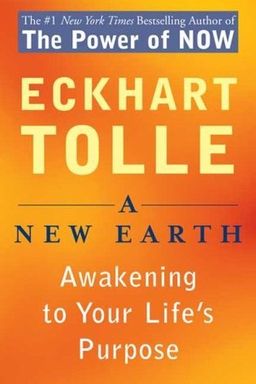
Have you ever felt trapped in constant busyness, endless thoughts, or restless striving for more—yet still sensed that something essential was missing? In A New Earth, Eckhart Tolle argues that this feeling of discontent stems from humanity’s deep identification with the ego—a false self built on thought, fear, and separation. His central claim is both bold and compassionate: the world’s suffering, conflict, and confusion arise from the egoic mind, and our collective salvation lies in awakening to a new consciousness grounded in Presence—the awareness behind thought.
Tolle contends that human beings are poised for an evolutionary leap—not just of the intellect but of awareness itself. While humanity’s past achievements have been driven by egoic thought, that same ego now threatens our survival. We stand, he writes, at the threshold between destruction and transformation, between the old consciousness of fear and the emerging state of Presence that transcends it. This awakening, he says, marks the emergence of a “new earth”—not in a cosmic sense but in the inner shift of human perception.
The Human Condition and Its Crisis
Tolle begins by tracing the human condition through history. Across cultures, he sees the same pattern: humanity’s capacity for self-reflection gave rise to language, memory, and planning—but also to chronic dissatisfaction and self-centeredness. Religions from Buddhism to Christianity have recognized this dysfunction: the Buddha named it dukkha (suffering), and Christianity called it “original sin.” In essence, both point to estrangement from Being—our inner sense of unity with life. This collective madness, Tolle writes, manifests as greed, conflict, and alienation. Science and technology magnify it; instead of freeing us, they amplify our inner disconnection. Humanity’s current state, he suggests, is not unlike an organism poisoned by its own growth. Yet within the same dysfunction lies the seed of awakening.
Transcending Ego: The Flower of Consciousness
To explain the moment of awakening, Tolle uses his famous metaphor of the flower. Just as the first blossom marked a new stage in plant evolution, the capacity for Presence—the stillness that perceives thought without becoming lost in it—marks humanity’s next step. Awareness itself is the “flowering” of consciousness. When you perceive beauty—a flower, a sunset, or another person’s presence—something within you recognizes itself. That awareness, subtle but pure, is the bridge between form and formlessness, between the world of things and the eternal reality within.
The ego, by contrast, thrives on identification: I am my possessions, my story, my religion, my pain. It divides the world into “me” and “them,” making life a constant competition. For the ego, the past and future are vital fuel—memories to preserve its identity and fantasies to promise completion someday. In doing so, it blinds us to the only true reality: the Now. Tolle calls the present moment the portal to the “vertical dimension” of consciousness—the depth that frees us from the ego’s horizontal timelines of regret and desire.
Awakening from the Dream of Form
Everything, Tolle emphasizes, begins with the recognition of illusion. To see the ego in action—to notice the mind’s compulsions, complaints, or constant judgment—is already the beginning of awakening. Presence doesn’t fight the ego; it simply shines through it like light through mist. He uses vivid examples: a Zen master smiling at life’s unpredictability; a scientist like Stephen Hawking finding peace in surrender; parents freeing themselves and their children from unconscious role-playing. In each story, awakening is not about escape but about seeing.
Why Awakening Matters Now
In Tolle’s view, this transformation is not optional—it’s necessary for our survival. Humanity is reaching what he calls a collective “breaking point,” akin to evolutionary crises of the past when old forms gave way to new ones. Our current ecological, social, and psychological crises, he says, are symptoms of identification with form. But they also pressure us to awaken—to evolve into beings who act from awareness rather than ego. The “new earth” is not an external utopia but a world created by individuals who embody consciousness in daily life.
Tolle’s optimistic message echoes mystics from Rumi to Krishnamurti and modern teachers like Ram Dass: the future depends not on new systems but on new awareness. The essence of enlightenment is not withdrawal, but participation from Presence. As he writes, the purpose of A New Earth is not to add more ideas to your mind but to bring about a shift in consciousness itself. In that shift—from thinking to being—you discover not only peace within yourself but a living connection with all beings. And from that, the real new earth begins to take shape.