
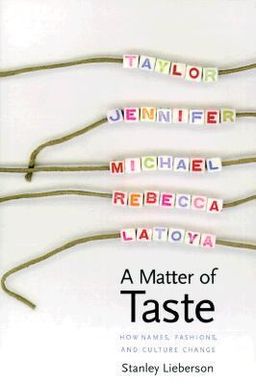
A Matter of Taste cover

A Matter of Taste

by Stanley Lieberson

Stanley Lieberson''s ''A Matter of Taste'' delves into the fascinating world of fashion and cultural change, unraveling the societal influences behind naming trends and fashion evolution. Explore how collective choices and social dynamics shape what we find appealing.

Cooking, Connection, and the Art of Rebuilding

How do food, love, and trust rebuild lives shattered by trauma and disconnection? In this multi-author romance collection, you see food not just as sustenance but as a vessel for healing, trust, and identity reconstruction. Each story—from Stephanie Berget’s ranch-set Gimme Some Sugar to Tina Donahue’s Anything You Want and Sandra Cox’s Queen of Diamonds—treats cooking, sensuality, and emotional transparency as moral and psychological laboratories. Through Cary Crockett’s baking, Joy’s inherited cookbook, Kendall Theron’s secret life, and Jamie Parker’s erotic self-discovery, the book argues that intimacy is both an ethical and sensory act: you create trust by making others feel safe, nourished, and seen.

Food as the architecture of belonging

Across these stories, food is far more than flavor—it’s a tool for reentry into community. Cary cooks her way into East Hope’s ranch culture, Joy reconnects to family through her grandmother’s tuna patty recipe, and Molly later uses baking as a lineage of care. Food offers emotional literacy where language fails: you feed people to say “I see you.” (Note: researchers in food anthropology, like Carole Counihan, describe this as “edible sociality,” the idea that sharing a meal is a moral contract.) Cooking in these narratives becomes identity work; you do it to prove belonging and gain legitimacy.

Trauma, trust, and repetition

Cary Crockett’s story models the slow re-composition of trust after violence. Fleeing an abusive ex and a stalker named Mad Dog, she lands at Micah West’s Circle W Ranch, where small gestures—borrowing a family recipe, serving hearty breakfasts, receiving Micah’s steady check-ins—compound into security. Trauma here is not cured; it’s managed through patterned safety. You learn that community recovery occurs through consistent repetition: safe work, shared meals, predictable kindness. Every omelet Cary makes and every routine she learns with Micah and his daughter Willa teaches her body that the world can become reliable again.

Ethics, secrecy, and self-definition

In Sandra Cox’s Queen of Diamonds, Kendall’s divided identity—publicist by day, jewel thief by night—extends the theme of survival through moral ambiguity. Her thefts fund her mother’s care, but they also fracture trust with Logan Hunter. Unlike Cary’s straightforward honesty, Kendall demonstrates that ethics can be contextual: when systems fail you, the line between right and wrong blurs. This theme runs through the entire collection: every woman manages limited agency within institutions that undervalue her labor or safety. You learn that identity, under pressure, is negotiated between necessity and desire.

Consent and creative freedom

Tina Donahue’s Anything You Want reframes agency and body image through Jamie’s experiences at Wicked Desires, a resort where participants script fantasies under strict consent structures. The erotic scenes and later polyamorous life with Creed and Tav illustrate how making choices about one’s body becomes a form of authorship. Consent here is design—the participants create, negotiate, and test erotic play as collaborative creativity. This mirrors how Cary co-authors safety with Micah or Joy co-creates hospitality with Chase. Every plot, even the risqué ones, returns to a common lesson: intimacy must be consciously designed, not assumed.

From sensory play to game design

Later in the series, Jamie’s fantasies evolve into a real video game, Anything You Want, demonstrating how lived desire feeds digital creativity. Creed and Tav prototype her sensual scenarios into interactive mechanics, converting embodied experiences—taste, timing, choice—into consent-based gameplay. You see the meta-lesson: authentic storytelling grows from real vulnerability and transparent negotiation. What begins as fantasy becomes a case study for ethical design—a parallel to the way relationships throughout the book are built through iteration, feedback, and care.

Why staged engagements and communities matter

The staged engagement of Colton and Aubrae revisits the tension between deceit and greater good. Their pretense convinces a gatekeeping matriarch to preserve a family vineyard, showing how public illusions can serve collective aims if managed ethically. It parallels smaller performances of belonging: Cary’s adoption of Minerva’s recipes or Jamie’s public partnership. Identity, the book suggests, often requires staging until emotion catches up. As Colton and Aubrae’s fake relationship turns real, the narrative insists you must take responsibility when fiction births commitment.

The connective thread

Whether rebuilding trust after trauma, designing consent-based pleasure, or negotiating social masks, each protagonist learns to transform vulnerability into creative power. Food, care, and honesty—whether in a kitchen, bedroom, or boardroom—become repeated experiments in mutual recognition. You leave this collection seeing intimacy as labor: sustained, negotiated, and profoundly human.


Rebuilding After Trauma

Cary Crockett’s story encapsulates how human beings recover from violation by regaining agency in controlled environments. When Cary runs from her abusers and starts anew as a camp cook at Micah West’s ranch, she is learning to regulate fear physiologically and socially. Her trauma manifests as hypervigilance—flinching at burns, scanning threats—but the Circle W provides containment. Routines, recipes, and community intervention (from Sheriff Madison and Clinton Barnes) create the scaffolding for safety. Her recovery teaches you that stability is not an inner state; it’s a collective ecosystem.

From survival to belonging

Through food and ritual, Cary transitions from transient worker to integral community member. Each act—preparing breakfast on time, adapting Minerva’s recipe box—earns her micro-trust. Micah’s steady boundary work, such as paying her weekly and protecting her autonomy, guards against exploitation. You see trauma recovery operating as gradual social calibration: start small, make contributions, accept consistent kindness.

Triggers and routines

Cary’s anxiety resurfaces with sensory triggers—smells, visits from Marlene—but she develops coping protocols: grounding through baking, diverting panic into task focus, relying on predictable allies. The ranch, with its work rhythms and child’s laughter, becomes a behavioral therapy site. In practical terms, this narrative models post-trauma environments that prioritize structure, autonomy, and community witness—ingredients social workers would call “stabilizing frames.”

Lesson

Safety regenerates through repetition: predictable meals, respectful touch, and collective vigilance rebuild a sense of home after terror.

In Cary’s healing you see the book’s first principle: you cannot outthink fear; you must recode your body through dependable, caring routines.


Food as Identity Work

Cooking across these stories doubles as a language of identity. For Cary, the transition from pastry art to cowboy cookery signals adaptation; for Joy, inheriting Gram’s cookbook captures continuity; for Molly, baking in her family kitchen symbolizes generational authority. You watch women use food to claim legitimacy in male-coded or uncertain spaces. Culture, class, and gender converge in every dish. The ranch hands’ reaction to Cary’s croissants, or Joy’s revival of a greasy, handwritten recipe, show that culinary labor earns or denies community entry.

Authority through lineage

Minerva’s recipe box stands for more than good cooking—it’s symbolic inheritance. Using it aligns Cary with female labor histories that built the ranch itself. Recipes transfer social capital, conferring the right to feed others. This pattern recurs when Joy’s inherited cookbook links her to her grandmother’s love and guides her chance meeting with Chase. Food becomes the tangible connector between old and new selves.

Negotiating gender dynamics

On the ranch, Cary navigates performance expectations defined by gender—efficiency, volume, sustenance. Her pivot from delicate pastry work to hearty ranch meals illustrates adaptive competence. (This mirrors what sociologists call “gendered task flexibility,” the invisible skill of adjusting behavior to cultural scripts.) Over time, competence neutralizes prejudice: she wins respect not by confrontation but by consistency.

Food as care

Every recipe functions as emotional exchange. Feeding others becomes a route to intimacy: Joy’s tuna patties invite Chase’s trust; Cary’s pancakes stabilize Willa’s mornings. Cooking in this world is not submission—it is assertion. You feed to show power, creativity, and love on your own terms.


Family Systems and Chosen Bonds

The Circle W ranch narratives explore how community repairs fractured families. Micah West’s custody battles, Marlene’s manipulation, and the emergence of Willa as a moral compass distinguish biological parenthood from functional parenting. When Cary becomes Willa’s trusted adult, the book valorizes chosen family: stable care outweighs bloodlines. Scenes of collective defense—Sheriff Madison’s response to threats, neighbors like Barnes assisting logistically—demonstrate that healthy families arise through coordinated community boundaries, not private isolation.

Children as moral anchors

Willa Wild catalyzes adult integrity: her need for routine forces Micah to limit Marlene’s chaos. The message is simple but profound: children teach adults to prioritize safety over romantic ambivalence. Their steadiness depends on adults’ predictability.

Boundaries and compassion

Micah’s three-day ultimatum to Marlene shows mature empathy—compassion without enabling. Cary mirrors this balance when she decides to stay for Willa rather than flee from fear. In crisis, love manifests as structure. Communities reinforce that through collective response, proving that it still “takes a village.”

Practical insight

Healthy families are built by repeatable boundaries, emotional honesty, and reliable networks—not genetic entitlement.


Secrecy and Moral Ambiguity

Sandra Cox’s Queen of Diamonds expands the scope from rural recovery to urban ethics. Kendall Theron’s secret life—publicist turned jewel thief—asks you to reconsider morality under economic and emotional strain. Her thefts, motivated by filial duty, break law but preserve dignity. Logan Hunter’s surveillance of her complicates power: he is both protector and voyeur. Their dynamic dramatizes how trust erodes when control replaces curiosity. In moral terms, you are asked to weigh harm versus care (a dilemma akin to Victor Hugo’s Les Misérables ethos).

Survival ethics

Kendall’s deception protects her daughter Caroline and her ailing mother, showing how informal economies of caregiving emerge under pressure. Yet secrecy isolates her. The story teaches you to judge context, not abstract codes: morality is situational when survival and care conflict. Still, concealment extracts its own cost—the loneliness of constant vigilance.

Power and transparency

Logan’s resources allow him to manipulate evidence and outcomes, illustrating gendered power asymmetry. Ethical love here requires chosen transparency, not surveillance. When Logan opts to protect rather than expose, he learns that love without trust is moral failure, even if legal rights are preserved.


Consent and Erotic Design

Tina Donahue’s sections dive into the mechanics of pleasure, showing that safe eroticism demands structure as rigorous as any professional domain. At Wicked Desires, Jamie Parker’s week-long stay becomes a manifesto for consent-based creativity. The resort’s rulebook—no unnegotiated acts, clear signals, and advance scene-planning—turns fantasy into a contract of trust. Creed and Tav’s partnership with Jamie demonstrates “consent by design”: the idea that pleasure expands in proportion to transparency.

The psychology of agency

Jamie confronts body-image insecurity amid a spectacle of idealized bodies. By scripting her scenes and setting personal boundaries, she rewrites her sexual narrative. Agency, not perfection, becomes the true aphrodisiac. (This parallels sex-positive scholars like Emily Nagoski, who link pleasure to context and control.)

Designing safe play

The chocolate and rope scenes model layered consent—written agreements, active monitoring, and aftercare. Jamie’s insistence on pre-scene communication ensures that vulnerability remains joyous, not exploitative. For you, the moral is clear: safety amplifies, not diminishes, intensity.

Design insight

Plan vulnerability like architecture—transparent blueprints make passion sustainable.


Polyamory and Shared Life

The epilogue transforms Jamie’s sensual trial into a sociology of partnership. When she chooses life with both Creed and Tav, their triad demonstrates functional polyamory grounded in consent and logistics. They discuss salary, housing, media boundaries, and emotional maintenance. Love becomes a governance model requiring protocols as precise as business plans.

Negotiation as intimacy

Their cohabitation only succeeds because negotiations precede emotion. Roles are defined, timelines set, and fallback plans created. Emotional freedom arises from procedural clarity—proof that polyamory thrives not on chaos but on deliberate architecture.

Public ethics

As game developers in the spotlight, the trio handle disclosure tactically, emphasizing professional credibility and mutual respect. The text reminds you that nontraditional relationships need narrative control. You owe the world honesty about boundaries and each other privacy about details. Respectful representation sustains both dignity and desire.


Staged Love and Moral Strategy

Colton and Aubrae’s faux engagement reframes courtship as strategy in pursuit of communal good. Their deception persuades a family matriarch to preserve a vineyard tradition, posing questions about the ethics of performance. The story blurs the lines between manipulation and moral persuasion. You learn that strategic deception can serve virtue—if it minimizes harm and ends with transparency.

Performance as persuasion

Colton crafts credibility through rituals—a public announcement, charitable donation, and shared narrative of stability. Ethics hinge on whether the pretense supports or undermines community trust. When their fake romance turns real, the story argues that authenticity can grow from performance, provided participants consent and acknowledge the fiction’s evolution.

Moral reflection

You may borrow social scripts to achieve justice—but you must own the truth once those scripts rewrite your life.


Cooking as Social Language

Food reappears throughout the book as the language linking intimacy, power, and culture. From private chocolate rituals to public banquets, each meal conveys intention. Jamie’s breakfast scenes eroticize nourishment; Colton’s donation feast transforms dessert into diplomacy; Molly’s bakery revives community through taste memory. You learn that every act of feeding is political and emotional communication.

Intimacy through eating

Shared meals mark transitions from anonymity to attachment. To eat from another’s hand, as Jamie does, signifies trust. To bake from an ancestor’s recipe, as Joy or Molly does, affirms lineage. Food collapses the distance between bodies and histories.

Meals as moral theater

The Thanksgiving feast, vineyard gala, and breakfast cart all perform social roles: peace offerings, seductions, or reconciliations. Food stages the moral stakes of belonging—each bite rehearses respect, generosity, and power. In your life, every meal you host can mirror these moral dramas: will it invite equality or reinforce hierarchy?

Final reflection

Across kitchens, ranches, and resorts, food is how love learns to speak—whether whispered in chocolate or shouted in community suppers.

Dig Deeper

Get personalized prompts to apply these lessons to your life and deepen your understanding.

Go Deeper

Get the Full Experience

Download Insight Books for AI-powered reflections, quizzes, and more.