
Idea 1
Love, Survival, and the Sea
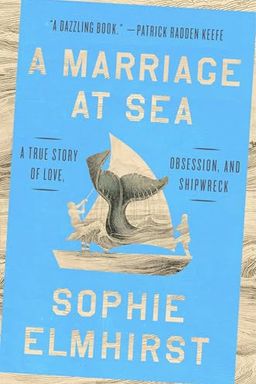
Have you ever chased a freer life, only to discover you needed other people more than ever? In A Marriage at Sea, Sophie Elmhirst argues that the Baileys’ astonishing ordeal—117 days adrift in the Pacific after a whale sinks their boat—is less a survival epic than a love story about interdependence. Elmhirst contends that Maurice and Maralyn Bailey set out to escape English suburbia for radical freedom, only to learn that real escape requires the discipline of care, the humility of dependence, and a willingness to be saved—by each other and, at the end, by strangers.
The book’s power rests on a paradox: two devoted nonconformists sell their house, build a thirty-one-foot sloop named Auralyn, and reject children and radio contact in pursuit of purity. Then, in the most lawless wilderness on Earth, they survive not through individualism but through a marriage that functions like a lifeboat—rituals, roles, tenderness, and relentless, practical attention to the next task. Their story also asks you to consider what happens after a miracle: Who owns the narrative when the media arrives? How do you live with the knowledge that your greatest public significance came from catastrophe?
What This Story Really Argues
Elmhirst’s core argument is that survival at sea is as psychological and relational as it is technical. Maurice—an anxious, brilliant printer from Derby—adores star-work and charts; Maralyn—confident, practical, the spark—organizes food, routines, and morale. When a wounded sperm whale tears a briefcase-sized hole below Auralyn’s waterline on March 4, 1973, all the charts in the world cannot save them without the quiet, stubborn order Maralyn imposes: lists, rations, inventions, games, and a refusal to let despair dictate the next hour. (Compare this relational emphasis with Alfred Lansing’s Endurance, which highlights Shackleton’s social genius as much as his navigation.)
How the Book Unfolds
You first watch two people decide to throw away safety: they sell their Derby bungalow, move to a bare flat in Southampton, sleep on floors, and spend four years hand-finishing Auralyn. They choose childlessness (“Maurice is problem enough,” quips Maralyn) and the old ways of sailing—no radio—to protect solitude. They leave England in June 1972, crossing the Atlantic by sextant to a joyous Caribbean season. Then the Panama Canal opens the Pacific: the true unknown.
The whale strike is cinematic: a bleeding, thrashing sperm whale—its tail ten feet across—vanishes into the dark, while water climbs Auralyn’s floorboards. In ten silent minutes, they salvage a torch, diaries, a sextant, the Dundee cake saved for Maralyn’s April birthday, and two dictionaries. Auralyn slides under “so gracefully,” becoming a future ecosystem on the seafloor. Maurice and Maralyn separate into an orange life raft and a dinghy, tied together like twins who suddenly don’t share the same lungs.
The Anatomy of Survival
From here, Elmhirst zooms in on the granular tools of staying alive. There’s the ritual of rationing: a pint of water per day; the coffee whitened with the last of the Coffee-Mate; menus written in a neat hand on the canopy; a calendar scrawled on orange fabric. There’s radical improvisation: fishhooks bent from safety pins; turtle steak filleted with a mariner’s knife; flying fish collected from the deck at dawn; sham smoke-flares kindled in a Dundee cake tin. There’s also moral ambiguity: they slaughter turtles and even suffocate sharks, all while grieving a pet turtle that dies and then becomes food.
Crucially, you feel the mental work of refusing collapse. Maralyn curates hope—destiny, kismet, “third time lucky”—while Maurice, ever rational, calculates currents and considers the clean logic of suicide. Ships pass and do not see them: duds of factory flares; a torch’s thin SOS; oilskins waved at indifference. When Maurice develops a fever and near-fatal sores, Maralyn gives “pep talks,” fishes alone, and keeps the raft’s sagging tubes inflated every twenty minutes through the night.
Why It Matters Now
Beyond the romance of sea stories, A Marriage at Sea is a mirror for any life where you’ve tried to leave expectations behind. The Baileys’ pilgrimage toward “freedom from interference” becomes a case study in the limits of control and the grace of rescue. A shabby Korean tuna boat—Wolmi 306—spots a dot on the water, hauls two skeletal castaways aboard, and baptizes them in tinned milk. Captain Suh’s crew gives them clothes, massages their swollen legs, and rebuilds their faces with eggs and corned beef. The life they wanted returns wrapped in human care.
Key Idea
Survival is not the triumph of the solitary will; it’s the craft of two people holding each other inside a routine until chance can find them.
Elmhirst then follows the afterlife of an ordeal: Honolulu press gauntlets, Seoul parades, a bestseller (117 Days Adrift), and a second voyage to Patagonia that tests leadership and friendship. She closes with age and grief: Maralyn’s death in 2002; Maurice’s loneliness and his long letters to a friend, stitching memory into meaning. The author’s final measure is not nautical miles or headline inches but love’s arc: whether, in the end, you were truly adrift together.