
Idea 1
The Fragility and Resilience of Human Connection
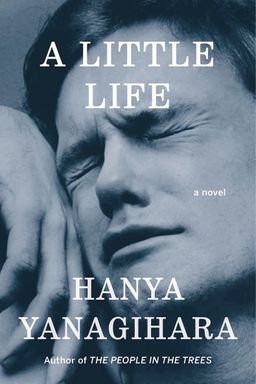
What makes a friendship endure despite pain, trauma, and the passage of years? The story of Jude, Willem, JB, and Malcolm—four college friends navigating adult life in New York—offers a haunting meditation on how relationships can both heal and harm us. This narrative asks how much love can truly save someone who’s convinced they’re beyond redemption. It’s not just about friendship; it’s about survival through human connection, and the limits of what compassion can mend.
The novel argues that adulthood doesn’t merely begin with independence—it begins with vulnerability. When Jude and Willem move into their first apartment on Lispenard Street, their friendship forms the scaffolding of their adult lives. Yet underneath their camaraderie lies emotional fragility. Jude’s mysterious past and physical disability make him both fiercely private and quietly broken, while his friends circle him with love they hope will fill the silence he keeps. Over time, each of them learns that growing up means confronting what they cannot fix.
The City as a Mirror of Growth
New York City itself becomes an emotional landscape—chaotic, beautiful, and indifferent. The friends struggle to carve lives in a city that always demands more. JB’s art reflects his desire for recognition; Malcolm’s architecture builds permanence amid uncertainty; Willem’s acting career becomes a tug-of-war between success and meaning; and Jude’s legal mind hides a damaged soul desperate for control. The urban backdrop makes their private battles feel universal. You get the sense that every adult hiding pain behind ambition could be living in their apartment on Lispenard Street.
Love as a Lifeline—and a Mirror
The novel continuously examines love as both healing and dangerous. As Jude’s backstory unfolds—the monastery abuse, Brother Luke’s exploitation, and Caleb’s violence—it becomes clear that love, for him, has always been a test. It’s only through Willem’s unwavering kindness that Jude experiences unconditional affection. When Willem dies, his absence becomes not just loss but existential collapse. The book reminds you that when we build our identity around someone’s love, their absence unbuilds us entirely.
The Persistence of Memory and Trauma
The story insists that trauma never truly vanishes—it simply changes shape. For Jude, physical scars map an internal geography of pain. His limp, his compulsive cleaning, and his dependence on razors are ways he tries to control what was uncontrollable. Even success as a lawyer or being adopted by Harold doesn’t rewrite his self-image; he still sees himself as damaged goods. This captures an essential truth of adulthood: you can grow older without healing; you can build a brilliant life that still hurts to live in.
Tragedy as a Measure of Humanity
The book builds toward loss—JB’s addiction, Malcolm’s distance, Jude’s trauma, Willem’s death. Yet these tragedies reveal deep human truths about endurance and meaning. When Jude finally takes his life at fifty-three, it’s heartbreaking but also oddly peaceful. He’s lived decades in the aftermath of abuse, relying on friendship as his sole refuge. His suicide isn’t just despair; it’s exhaustion. The novel invites readers to ask uncomfortable questions: When is survival an act of courage, and when is surrender the only mercy left?
Why This Story Matters
Stepping into adulthood, as depicted here, is not about achieving stability—it’s about learning to coexist with brokenness. The book’s emotional power lies in how honestly it portrays people carrying invisible wounds. You may recognize yourself in their striving: the way you chase career goals or seek love to cover your uncertainty. But this story asks you to go deeper—to see that empathy, persistence, and emotional honesty matter more than perfection. In the end, the friends’ shared history, from Lispenard Street to Greene Street, shows that adulthood is a long negotiation between the pain we inherit and the love we choose.