
Idea 1
The Evolution of Economic Understanding
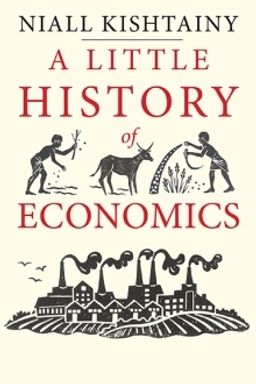
Why do societies organize production, trade, and value the way they do? This sweeping book traces how humanity’s economic reasoning evolved—from ancient barter to behavioral economics—revealing how moral, philosophical, and scientific ideas combined to shape modern markets. It argues that economics emerged not as a sterile science of numbers but as a moral inquiry into how people use limited resources to pursue abundant wants.
You begin with scarcity: the fact that resources are limited forces choices. Scarcity leads to opportunity cost—every decision has a trade-off. This fundamental logic has guided thinkers from Aristotle to Keynes. Over time, each era answered the question “How should we live and produce together?” in its own way: ancient philosophy debated virtue and wealth, medieval theology bound trade to morality, mercantilists linked gold and empire, and classical economists like Smith, Ricardo and Marx framed the modern ideas of production, value and distribution.
From Morality to Method
Early economic thinking was entangled with religion and ethics. Aristotle condemned usury and distinguished use-value from exchange-value. Augustine and Aquinas framed wealth as a tool for virtue. These debates mattered because they defined what kinds of exchange were legitimate. Later, mercantilism replaced faith with power: wealth was measured by metal and tied to state ambition. Quesnay’s physiocracy tried to ground wealth in nature, while Adam Smith redefined it as the total production of goods and services available to all—a pivot from counting gold to measuring real prosperity.
This progression also marks a shift from moral philosophy to analytical method. Economics became a science of cause and effect—how resources and incentives shape outcomes. By the 19th century, Ricardo built deductive models of trade and distribution; Marx transformed them into a critique of exploitation. In the late 19th and early 20th centuries, marginalists like Jevons and Marshall mathematized these ideas into supply–demand curves, turning ethics into equations. Yet even then, questions of fairness and freedom persisted.
Markets, Growth, and Limits
The story then widens into the machinery of markets and growth. General equilibrium theory (Arrow and Debreu) mathematically explained how decentralized choices can reach efficient outcomes—if assumptions hold. But information failures (Akerlof’s lemons), behavioral biases (Kahneman and Tversky), and financial instability (Minsky) revealed persistent vulnerabilities. These critiques reintroduced psychology and institutions, echoing Aristotle’s ancient caution about moral temperance. Meanwhile, growth theory (Solow and Romer) clarified how capital, technology, and ideas drive long-run prosperity, explaining why some nations catch up while others stagnate.
Development economics extended this logic to the Global South, showing you how industrialization requires coordination and governance. The “big push” theorists (Lewis, Rosenstein-Rodan, Nkrumah) argued for large, state-led investment, while later experience (South Korea’s disciplined planning versus Ghana’s inefficiencies) demonstrated that success depends on how states manage incentives and accountability. Dependency theorists like Prebisch and Frank showed that global trade itself can trap regions in structural disadvantage unless institutions and policies correct unequal exchange.
Freedom, Inequality, and the Human Turn
From the mid-20th century onward, the question of freedom re-emerged. Hayek warned that economic planning threatens liberty; Keynes and Beveridge countered that social safety nets expand real freedom by giving citizens security and capability. Public choice theorists (Buchanan) reminded us that governments are composed of self-interested individuals whose incentives must be structured carefully.
Finally, modern development thinkers like Amartya Sen, Thomas Piketty, and feminist economists broadened what “the economy” means. Sen reframed poverty as capability deprivation; Piketty quantified rising inequality; others revealed unpaid labor and gender bias hidden in national accounts. Together they returned economics to its original moral concerns: who benefits from growth, what counts as progress, and how societies can design markets that serve human well-being rather than abstract efficiency.
The book’s synthesis
Economics evolves as a dialogue between scarcity and morality, theory and history, markets and justice. You learn that every economic system—from Aristotle’s polis to Silicon Valley—embodies moral choices, institutional designs, and human aspirations that extend far beyond price and profit.
Across centuries, you see how the pursuit of efficiency coexists with deeper questions of equity and meaning. Economics, at its best, is not the study of money but of human possibility within constraint.