
Idea 1
The Internet as Humanity’s New Myth Machine
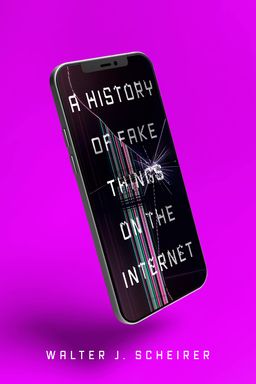
Why do fake things online feel so real? Walter Scheirer’s central claim is that the Internet isn’t just a communications network—it’s a myth-making machine. Across history, humans used myths to explain contradictions and inspire collective imagination. Today, that same cognitive instinct expresses itself through memes, viral hoaxes, and algorithmically amplified stories. The web is a continuation of the ancient human drive to create shared narratives—it just operates at digital speed and planetary scale.
From Ancient Myths to Memes
Scheirer borrows from Claude Lévi-Strauss, who argued that myths aren’t irrational—they deploy a logic similar to science but directed toward symbolic contradictions. On the Internet, this same logic animates memes. As in Greek pottery, you find familiar stock figures—Doge, Wojak, Pepe—repurposed to convey moral lessons, frustrations, and satire. Visuals move faster than text, which makes images the modern vessel for mythic storytelling. Each meme acts as a miniature myth module, remixable and accessible to everyone with Wi-Fi.
This is why fake news, playful pranks, and participatory fabrications thrive. They make people co-authors of a collective imagination. Shares and likes function as the new oral repetition, spreading modern folklore about politics, identity, and belonging much like Homeric bards once did.
Playful Fakery and Participatory Pranks
Scheirer reminds you that early Internet fakery often grew from humor rather than hostility. Kembrew McLeod’s formula—performance art + satire × media—describes what hackers and troll collectives did long before the concept of “disinformation.” Sites like Something Awful or 4chan evolved from prankish creativity into laboratories for narrative experimentation. These communities, much like mythic tribes, operated by remixing symbols and jokes to explore who they were as a group.
That playfulness, however, created downstream consequences: journalists, state agencies, and ordinary users sometimes mistook these symbolic performances for literal claims. As a result, modern disinformation uses mythic energy but weaponizes it—turning the same creative process into manipulation.
Trust, Imagination, and Parallel Realities
When myth and fact circulate side by side, trust reorganizes. The Internet collapses distance between “my story” and “the story.” You inhabit overlapping timelines—your social feed’s collective imagination and the historical record. Scheirer warns that blanket cynicism is dangerous: fictions can be generative, building communities and art. The challenge is distinguishing play from deceit, symbolic creativity from destructive propaganda.
Where Technology Meets Anthropology
The book’s throughline merges anthropology, media theory, and computer science. By treating memes and myths as data structures, Scheirer shows that imagination itself now runs on cloud infrastructure. This view reframes fake news as a cultural phenomenon rather than simply a technical one. Myths never vanished; they just found server space.
Core idea
The Internet did not invent myth—it industrialized it. What you witness as viral content is ancient mechanism in new form: stories that solve contradictions, build belonging, and reshape what you treat as truth.
Understanding the Internet as a myth engine allows you to see beyond surface-level panic about “fakes.” It invites a deeper question: how might humanity design media ecosystems that honor imagination without surrendering truth entirely?