
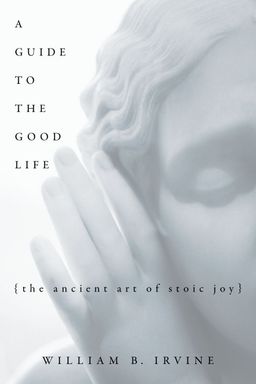
A Guide to the Good Life cover

A Guide to the Good Life

by William B Irvine

A Guide to the Good Life delves into the ancient philosophy of Stoicism, offering practical advice for achieving joy and tranquility. Learn to embrace moderation, appreciate what you have, and focus on internal growth to navigate life''s challenges with grace.

Stoicism as a Philosophy for Living

How can you stay calm and purposeful amid constant change? This book presents Stoicism—not as a historical curiosity—but as a practical discipline for modern life. It traces a line from Zeno of Citium’s Athens to the Roman masters Seneca, Epictetus, and Marcus Aurelius, arguing that philosophy should be lived, not merely studied. Stoicism, in this view, offers a systematic program to reduce anxiety, cultivate gratitude, and align action with virtue.

Living by Nature and Reason

The Stoics claim that human flourishing depends on living in accordance with nature—meaning human reason and sociality. You were made to think rationally and care for others. That design implies virtues like courage, justice, and self-control. To live virtuously is to perform your function well, and the reward is inner tranquillity free from destructive passions.

Zeno synthesized the Cynics’ simple lifestyle with the Academy’s rational theory, producing a blueprint for moral resilience. Cleanthes and Chrysippus systematized Stoic logic; later, Seneca and Marcus translated those ideas into daily exercises. The resulting program combines philosophy, psychology, and ethics into habits of mind.

Philosophy as Therapy

To the Stoics, philosophy is medicine. They examined emotions like anger, grief, and fear through logical analysis and reeducation of desire. You are instructed to practice techniques such as negative visualization (rehearsing loss), the dichotomy of control (sorting what you can and can’t control), and voluntary discomfort (deliberate hardship). Each technique builds psychological immunity—a way to anticipate shocks and value what remains.

“Philosophy is a toolkit for life.”

For Stoics, wisdom is not abstract knowledge but an ability to live well regardless of circumstance.

From Ancient Athens to Modern Psychology

The book connects ancient doctrine with modern psychology. Hedonic adaptation—the tendency to quickly normalize pleasure—maps directly onto Stoic warnings about insatiability. Cognitive-behavioral therapy echoes Epictetus’s claim that “men are disturbed not by things, but by their opinions about things.” Modern philosophers like William Irvine reinterpret Stoic ideas through evolutionary psychology: our craving for status and security once aided survival but now breeds chronic anxiety.

This modern Stoicism drops Zeus’s cosmology but keeps the behavioral core. You replace external validation with internal goals, shifting focus from outcomes to effort. Instead of hoping for approval, you aim to act with integrity. Tranquillity follows from alignment of intention and reality.

Practical Wisdom and Social Duty

Stoic training extends beyond the self. Marcus urges cooperation and love of mankind; Seneca insists reason must serve the community. Thus, Stoicism rejects hermitic withdrawal. Inner calm empowers outer duty—responding to insults with humor, confronting grief with gratitude, and facing political risk with courage.

Ultimately, this book reframes Stoicism not as repression but as creative discipline. You learn to use setbacks as tests, luxury as training, and mortality as perspective. The Stoic promise is enduring: by mastering thoughts and reordering desires, you create a life of strength, serenity, and joy unspoiled by fortune’s turns.


Negative Visualization and Control

One of the most transformative Stoic methods combines negative visualization with the trichotomy of control. You imagine loss to heighten gratitude, and then classify what happens into what you entirely control, partly control, or cannot control at all. This dual practice dismantles anxiety and boosts appreciation.

Mental Rehearsal of Loss

Seneca and Epictetus urge that you occasionally picture losing loved ones, possessions, or health. When you kiss your child, imagine that they might be gone tomorrow—not to grieve early, but to cherish now. The exercise prevents entitlement and cures the restless hunt for more. Thinking of loss transforms ordinary life into a field for gratitude.

Modern psychology supports this: adaptation erodes joy after success. Negative visualization reverses that erosion. It primes you to delight in what remains, not lament what’s missing.

Sorting What You Can Control

Epictetus’s dichotomy—things within or outside your control—becomes, in Irvine’s update, a trichotomy. You have full control over your judgments and aims, partial control over results and reactions, and no control over past or external events. Internalize goals accordingly: aim to “play your best” rather than “win the match.”

Why it works

By shifting success from outcome to effort, you protect motivation and drain disappointment.

Joined Power

These two tools reinforce each other. When insult or misfortune strike, imagine loss beforehand so it’s less dramatic, then apply control triage to act wisely. For example, if someone insults you, recognize that their opinion lies beyond your control; your task is calm response and humor. By coupling realism with rational sorting, you respond—not react.

Both practices are stealthy and portable. You can practice them privately—during commutes, pauses, or before sleep. Over time they cultivate less fear, deeper gratitude, and more stable delight—the Stoic mark of tranquillity.


Voluntary Discomfort and Discipline

Stoics recommend occasional hardship to train courage. Voluntary discomfort means choosing small ordeals—dress lightly in cold, eat plainly, skip luxuries—to weaken attachment and strengthen will. Musonius Rufus and Seneca argue that such practices free you from fear of future suffering and teach contentment.

Why Practice Hardship

Choosing discomfort is counterintuitive: humans avoid pain. Yet Musonius calls mild hardship a vaccine against misfortune. You learn endurance, self-respect, and appreciation. Cold mornings and simple meals remind you comfort is optional, not essential. Seneca writes that practicing poverty reveals how light the real burden of deprivation is once voluntary.

Forms of Testing

Cato dramatized shame by wearing unusual dress; modern practitioners might confront fear through public performance or athletic trial. The author describes rowing competitions, yoga struggles, and musical recital anxiety as deliberate self-tests. Controlled ordeals convert episodic bravery into cumulative confidence.

Epictetus’s warning

“I regard my other self as an enemy lying in wait.” Comfort and fear corrupt reason; training restores it.

Program for Practice

Begin with one mild discomfort weekly—cold showers, fasting, or sleeping without heat. Schedule a bravery test each quarter and journal what you learned about fear and desire. You’ll find pleasures richer because they’re no longer owed to you.

Voluntary discomfort is not punishment. It’s controlled freedom training—a rehearsal for courage that makes adversity manageable wherever it finds you.


Strategic Acceptance and Action

Stoic fatalism doesn’t mean passive surrender. It teaches strategic acceptance: accept what you can’t change to act better where choice still exists. The technique untangles regret from resilience by distinguishing immutable past from malleable present and future.

Fate as Context

Ancient Stoics spoke of the Fates spinning your thread. Modern Stoicism translates this into realism: you didn’t script the play, but you can play your role well. Marcus Aurelius advises treating the present instant as your only reliable possession. Epictetus says it’s futile to fight the past; energy should serve what can still be done.

Acceptance That Liberates

Accepting the immutable past frees energy for productive work. Instead of repeating “if only,” you ask “what now?” Regret transforms into preparation. Epictetus’s formula—“make your desire conform to events”—becomes a mental habit aligning expectation with reality. You learn calm obedience to fact without abandoning initiative.

Marcus on the present

“Do what is right. The rest—cold, heat, fame, misfortune—is external.”

Stoic fatalism strengthens rather than dulls resolve: once you stop fighting lost battles, life’s remaining arenas become clear. Acceptance becomes fuel for purposeful action.


Stoic Emotional Mastery

Emotional mastery defines Stoic peace. Seneca calls anger 'brief insanity'; Epictetus analyzes sorrow as mistaken judgment. The book guides you to handle anger, grief, and joy by changing evaluations, not suppressing feeling.

Defusing Anger

Anger tempts with false relief. Instead of venting, pause and classify: Is this insult true? Is it within my control? Often it’s neither. Respond with humor or silence. The author demonstrates this academically—turning mockery into self-deprecation disarms critics and contagious irritation.

Grief: Reason with Compassion

Stoics permit initial sorrow but reject perpetual despair. Seneca’s consolations teach you to grieve briefly, then remember what was gained. Comparisons to modern therapy show that forced grieving can prolong pain; Stoic realism often heals faster by shifting attention to enduring goods and shared humanity.

Joy Beyond Desire

Stoic joy is objectless—delight in existence itself. Marcus’s serenity and Seneca’s calm gratitude illustrate it. The author’s mother, weakened by stroke yet rapt over an ice cube, embodies this paradoxical richness: when desire shrinks, awareness expands. You cultivate such joy through gratitude, present focus, and simplicity.

The lesson: you needn't eradicate emotion, only train causes of emotion. As judgments grow wise, feelings follow suit—anger softens, grief shortens, joy deepens.


Wealth, Duty, and Courage

Stoicism neither condemns wealth nor fame outright but warns against attachment. You are asked to treat possessions and reputation as tools for service, not for self-absorption. When principle conflicts with comfort, virtue wins—sometimes even at cost of exile or death.

Owning Without Clinging

Seneca and Marcus, wealthy themselves, insist that riches are harmless if you remain indifferent. Musonius and Epictetus are stricter, viewing luxury as soul corrosion. Yet all agree: enjoy what you have lightly. Practice poverty, imagine loss, and view wealth as opportunity for generosity—akin to Buddhist counsel to use riches for good without attachment.

The Trap of Fame

Fame, they warn, is subtler poison. It fuels craving for applause over integrity. Roman Stoics were public figures but used fame as moral amplifier, not vanity boost. In modern life, social media praise should serve outreach, not ego.

Serving the Community

Stoicism integrates altruism with discipline. Marcus’s dictum: love mankind. Thrasea Paetus, Barea Soranus, and Cato model courage—acting on justice even against emperors. You may never face such stakes, but daily integrity—defending fairness at work or home—follows the same logic.

Wealth and position are permitted only if they remain means to service. You own things best when they don’t own you.


Exile, Aging, and the End of Life

Stoic lessons extend to final transitions—exile, aging, and death. These scenarios test whether virtue truly is portable. External dislocation or decline need not destroy peace if your goods reside within the mind.

Exile as Training

Seneca comforted his mother Helvia that exile is mere relocation; Musonius, banished to Gyara, found it clarified values. When Paconius Agrippinus learned his banishment, he calmly prepared dinner—proof that readiness beats shock. Exile strips false identity so interior strength can prove itself.

Modern Parallel: Old Age

The book modernizes exile as the nursing home move—a loss of independence and role. Preparing mentally through Stoic exercises—visualizing loss, internalizing goals, practicing acceptance—makes transition bearable. Virtues travel with you; status does not.

Facing Death

Stoics face death with composure. Julius Canus calmly greeted execution; Seneca argues that good living makes good dying. Musonius even permits heroic self-chosen death when life no longer serves others. The criterion is moral usefulness, not despair.

Old age and loss reveal Stoic mastery’s depth: when external goods fade, internal excellence remains. Preparing for endings is not morbid—it completes the art of living.


Reviving Stoicism Today

After Rome’s fall, Stoicism waned under Christian theology and modern academic turn. Yet its methods endure—from Descartes and Thoreau to contemporary psychology. The book closes with a practical revival: restore Stoic techniques within modern science’s framework.

Decline and Rediscovery

Lecky blamed moral decadence; Clarke, absence of teachers. By the Enlightenment, Stoicism became intellectual archaeology. Today it resurfaces through behavioral therapy and popular philosophy, precisely because people crave meaning over mere comfort.

Modern Psychological Grounding

Replacing Zeus with evolution, Stoicism now treats anxiety and grief as residues of survival instincts. You can retrain them with rational exercises—like taking aspirin though its inventor misunderstood biochemistry. Stoicism works because it targets the disease: insatiable desire and emotional volatility.

“Stoicism is a cure for the disease of dissatisfaction.”

You learn habits of acceptance that no pill can reproduce.

Stealth and Progression

Begin quietly: practice one technique, such as negative visualization, then add control triage and voluntary hardship. Journal evening reflections and study classics—Seneca, Epictetus, Marcus. Measure success by reduction of needless anxiety and rise of gratitude. You need not proclaim conversion; let results speak.

Modern Stoicism survives by proof of effect. If daily practice yields steadiness and joy, philosophy again fulfils its ancient promise: a tool for living well rather than merely thinking well.

Dig Deeper

Get personalized prompts to apply these lessons to your life and deepen your understanding.

Go Deeper

Get the Full Experience

Download Insight Books for AI-powered reflections, quizzes, and more.