
Idea 1
A Life of Service, Reflection, and Moral Courage
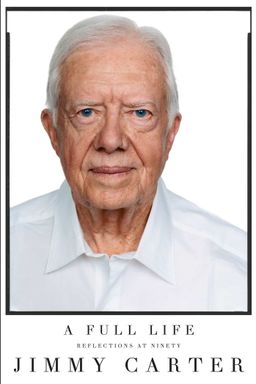
Have you ever wondered what it means to live a truly full life—not just one filled with success, but with purpose, humility, and service? In A Full Life: Reflections at Ninety, Jimmy Carter invites you into his nine-decade journey of achievement and introspection. He argues that living fully is not measured by fame, wealth, or political power but by faith, integrity, and ongoing contributions to the lives of others. Carter contends that a well-lived life blends personal growth with devotion to justice, peace, and compassion—a conviction that shaped every stage of his journey from peanut farmer to president to humanitarian elder statesman.
This sweeping memoir moves far beyond the confines of political autobiography. It is a meditation on family, faith, service, and moral responsibility, revealing how Carter’s values were forged in the poverty of rural Georgia, refined in the Navy’s disciplined order, tested in public life, and deepened through global humanitarian work. The book’s recurring theme is clear: no achievement matters unless it uplifts others.
Roots in Archery: Lessons of Modesty and Community
Carter begins with stories from Archery, Georgia—a small, primarily Black community where his childhood taught him equality in action long before civil rights legislation. He worked beside African-American neighbors in the fields, fished with them, and learned labor’s dignity from friends like Rachel Clark. His father’s severity and fairness, his mother’s empathy and moral independence, and his exposure to working-class realities shaped his lifelong comfort with both privilege and poverty. He recalls nights heated by fireplaces and days spent hauling water, using the hardships of farm life as an enduring metaphor for self-reliance and humility.
The Broad Arc of an American Journey
From the blacksmith’s forge to the White House, Carter’s narrative traverses the domains of rural simplicity, wartime service, political idealism, and post-presidential activism. He reflects on building submarines with Admiral Hyman Rickover, governing Georgia with racial inclusivity, battling Washington’s cynicism, and restoring hope through The Carter Center’s mission to eliminate disease and mediate peace. Through each experience, he returns to faith as his guiding compass: teaching Bible study, pursuing forgiveness, and acting from conscience even when unpopular (as with his decision to return the Panama Canal or to uphold human rights as foreign policy).
Why It Matters Today
Carter’s reflections matter not only as historical insight but as a counterpoint to modern self-centered success narratives. He shows how lasting fulfillment stems from service over self-promotion and from facing failures with grace. At ninety, he writes not to instruct others but to share lessons drawn from mistakes—humility, perseverance, and a faith that transcends institutional religion. Like Viktor Frankl’s Man’s Search for Meaning, Carter reminds you that purpose arises from aligning actions with values: building, teaching, and healing rather than dominating.
“Vice President Mondale summarized our administration by saying, ‘We told the truth, we obeyed the law, we kept the peace.’ I would add, ‘We championed human rights.’”
The book’s range mirrors Carter’s unpretentious spirituality and his commitment to practical compassion—from eradicating guinea worm disease in Africa to teaching Bible lessons each Sunday. In essence, A Full Life challenges you to see your own journey as a tapestry woven from honesty, diligence, and moral courage. It’s part political scrapbook, part spiritual reflection, and part manual for finding purpose beyond ambition.
Across its pages, you’ll encounter moments of humor, heartbreak, reconciliation, and transcendence. What emerges is not a myth of greatness but a human portrait: a man who worked by lamplight, fought injustice quietly, and believed love and service were the best ways to measure a life well lived. By its end, you’re invited to reflect not on Carter’s eminence, but on your own capacity to live a life as principled and complete.