
Idea 1
Becoming a Force for Good in a Troubled World
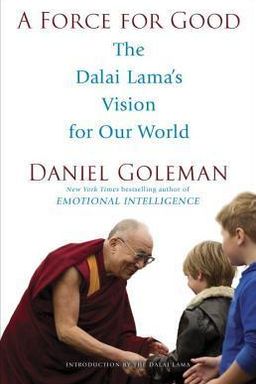
How can you live an ethical life in a world overwhelmed by conflict, greed, and despair? In A Force for Good: The Dalai Lama’s Vision for Our World, Daniel Goleman captures the Dalai Lama’s call to action for the twenty-first century: to build a compassionate civilization grounded in science, ethics, and individual responsibility. The Dalai Lama contends that genuine, enduring change begins within—through cultivating emotional balance and compassion—and expands outward into a social revolution that transforms economics, education, and global cooperation.
This book is not just a meditation on kindness; it’s a concrete guide for radical, systemic change. Goleman, known for pioneering the concept of Emotional Intelligence, pairs the Dalai Lama’s moral clarity with evidence from neuroscience and psychology, providing a framework for compassionate action that is both spiritual and practical. The Dalai Lama envisions a world where leaders, scientists, businesspeople, and everyday citizens align moral responsibility with reason—a “muscular compassion” that brings fairness, accountability, and healing to human systems.
The Call for a Moral Revolution
At the book’s heart lies a challenge: to counter the moral failures driving modern crises. The Dalai Lama sees society suffering from a deficit of compassion—a kind of “moral blindness” in individuals and institutions alike. From corruption in business and politics to environmental degradation and inequality, our collective problems, he argues, stem from unchecked self-interest. His antidote is not new laws or leaders, but a “force for good” born in the minds and hearts of ordinary people.
Drawing upon global examples, he points to role models such as Richard Moore—the childhood victim of a British soldier’s rubber bullet who forgave his attacker—and South Africa’s Truth and Reconciliation Commission under Nelson Mandela and Desmond Tutu. These stories embody resilience and compassion under circumstances of pain and injustice. Compassion, in this view, is not passive—it is the courage to face suffering and respond with love rather than vengeance.
Science Meets Spirituality
The Dalai Lama’s vision for a better world is grounded in modern science. Through dialogues with neuroscientists like Richard Davidson and psychologists such as Paul Ekman, he has championed what he calls “emotional hygiene”—a kind of mental discipline that parallels physical health. Just as you wash your hands to prevent illness, you can cleanse your mind of destructive emotions like anger, fear, and envy. Neuroscience supports his view: training the mind through mindfulness and compassion reshapes neural pathways linked with empathy and self-control.
Compassion, once seen as a moral choice, is revealed to be a skill that can be learned and strengthened. Experiments within the Mind and Life Institute show that even a few weeks of meditation on loving-kindness can increase altruism and reduce stress. These findings echo what positive psychology researchers such as Barbara Fredrickson and Carol Dweck have shown: changing inner attitudes changes outward behavior.
Systems Change Through Inner Change
The Dalai Lama insists that every level of transformation—personal, social, and ecological—flows from individual inner growth. Corporate scandals, ecological destruction, and poverty will not end through political decrees alone; they will change when people’s motives change. Goleman highlights business leaders like Marc Benioff of Salesforce and the founders of Greyston Bakery who embody “compassionate capitalism,” balancing profit with social good. Similarly, grassroots efforts like the Barefoot College in India empower rural women to become solar engineers, transforming both their environment and self-worth.
This focus on inner transformation extends into education. The Dalai Lama advocates “education of the heart” alongside the intellect, emphasizing social and emotional learning (SEL) programs that develop empathy, self-regulation, and ethical awareness. He imagines future generations educated not just for competition, but for cooperation—children who measure success by kindness as much as knowledge.
A Century of Dialogue and Hope
Ultimately, A Force for Good calls for a century of dialogue—a shift from conflict to collaboration. The Dalai Lama outlines a theory of change rooted in networks, not hierarchies: governments are made of individuals, and individuals form movements. He encourages you to begin with yourself—cultivate calm, act with compassion, and use reason to guide your values. Through conscious living, each of us contributes to a planetary movement that could, within a generation, reverse centuries of division and destruction. The overarching message: even amid chaos, the long arc of human history is bending toward goodness—if we choose to keep pushing it forward.