
Idea 1
Editing Life: The Promise and the Dilemma
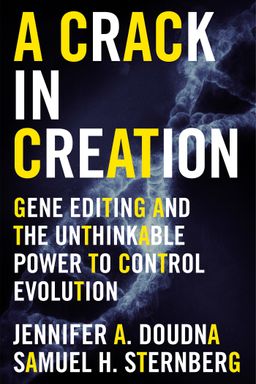
You live in an era when humans can alter life’s genetic code with remarkable precision. This book traces how that happened—from bacteria defending themselves against viruses to modern scientists rewriting human, plant, and animal genomes. It tells a scientific adventure that began with curiosity and ended with power: the ability to program biology itself. The story unfolds from discovery to responsibility, revealing how CRISPR became both a revolutionary tool and a moral crossroads.
From natural defense to programmable editing
CRISPR began as a bacterial immune memory system. Scientists like Francisco Mojica saw odd repeating sequences in microbial DNA and eventually realized they stored fragments of viral genomes—molecular mugshots used to recognize and destroy invaders. When Jennifer Doudna, Emmanuelle Charpentier, and others decoded how Cas proteins worked with RNA guides, they transformed CRISPR from a curiosity into a universal genetic scalpel. That leap turned microbial self-defense into an all-purpose editing system for any organism.
The core argument is simple: nature evolved a molecular way to remember and retaliate against infections, and humans learned to borrow it to change the instructions of life. What shifted science was not a new molecule but a new logic—turning the complex art of protein design into the straightforward task of RNA design. (Note: You can see conceptual parallels to breakthroughs like the transistor in electronics—simple rules generating immense power.)
The lineage of gene repair
Before CRISPR, the dream of fixing genes had deep roots in medicine. Miraculous spontaneous cures—such as WHIM-09’s chromothripsis or ADA-SCID reversals—hinted that cells could repair themselves, inspiring researchers to try deliberate corrections. Early gene therapy used viral vectors to add new genes, but fatal immune reactions and insertional mutagenesis revealed the hazards of random integration. The turning point came from Mario Capecchi, Oliver Smithies, and Maria Jasin, who showed that you could aim repairs with homology and that a double-strand break dramatically increased accuracy. That insight made programmable nucleases the next frontier.
Researchers then built tools like zinc finger nucleases and TALENs—precise but hard to design. CRISPR simplified everything by shifting recognition to RNA, democratizing access and multiplying possibilities. You no longer needed to be a protein engineer to edit DNA—you just needed to understand twenty nucleotides.
From lab curiosity to global use
Cas9’s mechanism clarified the magic: two RNAs (later fused into a single guide) direct a protein to its matching DNA target and cut it cleanly. When that principle worked in human cells in 2012–2013, CRISPR became the simplest and most adaptable way to program genetic change. Plasmid repositories like Addgene and open-shared protocols made it viral across labs and countries in months. Biotech startups formed instantly—Editas Medicine, CRISPR Therapeutics, Intellia—and investors saw both potential therapies and ethical storms ahead.
The dual story: power and responsibility
Applications exploded—from disease resistance in crops to transplantation-ready pigs. Yet the same accessibility raised concerns: DIY biology kits appeared online; people speculated about designer babies and ecological disruptions through gene drives. Doudna’s own nightmare about unintended misuse underscored that great technical power demands foresight and governance. Summits modeled after Asilomar sought to pause and reflect before clinical germline edits spread uncontrolled.
Central insight
CRISPR collapses two centuries of biology into one principle: RNA-guided recognition allows programmable control of DNA. But mastering that control also means mastering the social, ethical, and ecological consequences that come with altering life’s code.
The book’s journey and larger theme
Across its chapters, you move from bacterial immunity to human therapy, from precision engineering to moral reckoning. The narrative urges you to see that technology and ethics evolve together. In essence, CRISPR is a triumph of understanding—and a test of judgment. As you follow experiments from Mojica and Barrangou to Doudna and Charpentier, and policies from Asilomar to the International Summit, you see science widening its reach and its risks. The story ends not in certainty but in shared guardianship of a power once reserved for nature itself.
By the end, you understand the book’s message: CRISPR is both a mirror and a lever. It shows what life can do on its own and what humans can now choose to do intentionally. The challenge is deciding how far to push that choice.