
Idea 1
Love, Power, and Transformation in a Fractured World
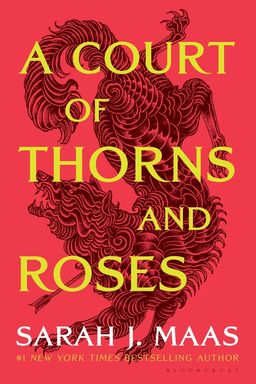
What would you sacrifice for love, freedom, or the chance to right your own mistakes? That’s the question that runs beneath the surface of this modern retelling of Beauty and the Beast. The story follows Feyre, a mortal woman who crosses boundaries both physical and moral, learning that the line between human and fairy, captive and savior, lover and betrayer, is far more complex than legends suggest.
At its core, this book contends that love and understanding can redeem even worlds divided by fear. But redemption isn't soft—it requires courage, self-awareness, and sometimes bloodshed. The author reshapes a familiar fairy tale into a meditation on agency, prejudice, and sacrifice. Feyre’s journey from hunter to hero mirrors an evolution many of us face: the struggle to recognize humanity in the other, to see beauty where there was once fear, and to act decisively even when the cost seems unbearable.
Feyre’s Beginning and the Cost of Desperation
The book opens with hunger and survival. Feyre’s family has lost its wealth, and she alone bears the burden of feeding them. Her actions—killing a wolf that might be more than a wolf—set off a chain of events that thrust her into a realm of magic and danger. This opening doesn’t just introduce the plot; it asks a question about human nature: how much morality can one afford when life is on the line? Feyre’s decision to kill out of necessity becomes symbolic of humanity’s complex relationship with power and fear.
Crossing the Divide: The Wall Between Worlds
The dividing wall between humans and faeries is both literal and metaphorical. It represents ignorance and inherited prejudice, the way societies create barriers to keep themselves safe—but at the cost of understanding. Feyre’s crossing into Prythian shows us how fear can become self-sustaining, how myths can justify violence, and how stepping into the unknown is often the first step toward transformation. This tension between safety and discovery runs throughout the book, reminding you that growth always begins at the edge of comfort.
A New Kind of Captivity
When Feyre is taken by the beast Tamlin, she expects imprisonment or death. Instead, she encounters contradictory freedom—a realm where she is told she can go anywhere but knows she can’t survive outside the castle’s borders. The story cleverly reframes captivity: Feyre isn’t bound by chains but by fear, ignorance, and obligation. The dynamic between Feyre and Tamlin echoes the Stockholm Syndrome dilemma (as seen in psychological analyses of “captive romance” narratives)—yet it’s rewritten here to reflect mutual development rather than submission. Tamlin isn’t merely a captor; he’s a participant in her awakening.
Evolving Morality and Compassion
A major thread in Feyre’s journey is moral expansion. In the beginning, she kills a wolf without remorse. Later, she grieves the fairy’s death she caused, comforting dying creatures, and questioning the tales of cruelty she was raised on. This growth mirrors psychological concepts of empathy development (see Martin Hoffman’s work on empathy maturation): moral understanding isn’t born from lectures but from lived experience and emotional confrontation. Feyre’s empathy for Tamlin’s world is both her gift and her test.
Love as Catalyst and Curse
Love in this story is never gentle—it’s demanding, transformative, and sometimes deadly. When Feyre learns of Tamlin’s curse, love becomes both her motivation and her undoing. The parallels between love and sacrifice here recall the mythic structure of tales like Orpheus and Eurydice, where devotion requires descent into darkness. In choosing to rescue Tamlin from Amarantha’s tyranny, Feyre demonstrates that true love isn’t passive affection—it’s active courage that redefines both self and other.
Transformation and the Price of Power
By the book’s conclusion, Feyre’s transformation into a High Fae is symbolic rather than simply magical. It’s the culmination of choices made under pressure—her capacity to see beyond species and bloodlines, to act bravely despite despair. But this metamorphosis also raises questions: does power corrupt redemption, or magnify it? Feyre becomes part of a world she once feared, blurring the moral clarity that drove her earlier choices. Like many modern fantasy heroines (think of Daenerys in George R.R. Martin’s saga), her empowerment is double-edged.
Why This Story Still Matters
This retelling stands out because it connects mythic structure to emotional realism. You aren’t asked to believe in magic—you’re asked to believe in transformation. Whether it’s prejudice, pride, love, or loss, every element in Feyre’s arc deals with universal human fears and hopes. The book’s exploration of female strength in constrained spaces resonates today: how do you claim agency when the rules were written against you? And how do you choose love without losing yourself?
Key Takeaway
The heart of this story lies in transformation—emotional, moral, and physical. Feyre learns that strength begins not in dominance but in empathy, and that the walls dividing worlds can only be broken by love fierce enough to face its own darkness.