
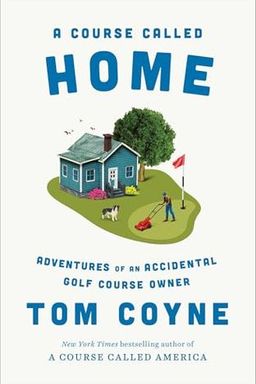
A Course Called Home cover

A Course Called Home

by Tom Coyne

The author of “A Course Called America” recounts restoring and reviving a golf course in upstate New York.

Golf as Pilgrimage

How can you turn a hobby into a life-shaping quest? In this book, Tom Coyne argues that golf, when rooted in its linksland origins, becomes a pilgrimage—a journey that marries craft, community, history, and personal change. He contends that the “secret of golf” isn’t a swing key but a way of being: you learn to play the land, listen to locals, honor heritage, choose authenticity over spectacle, and practice the twin disciplines of presence and persistence. To reach that discovery, he treats Scotland and the British Isles as sacred ground, St. Andrews as cathedral, and a grinding odyssey—107 courses in 56 days culminating in Open qualifying at Bruntsfield—as his liturgy.

You travel with Coyne from Kent to Fife, from Cornwall to the Shetlands and the Outer Hebrides, and you see that this is not vacation but vow. He frames the journey with the town motto at St. Andrews—Dum Spiro Spero (While I breathe, I hope)—and a prayerful confession: he designed a “shipwreck of a journey” in hopes his “bones would land somewhere near the onetime resting place of St. Andrew.” The stakes are spiritual and sporting: recover a faded identity (the hungry competitor from Paper Tiger days), face down friendly rivals (Robert), and test a thesis—that the game’s soul is in true links.

What links land teaches

On seaside turf, you stop flying everything at glossy greens. You play the ground, not the air. Coyne relearns punch shots and bump-and-runs at Littlestone, Royal Cinque Ports, Prince’s, and Royal St. George’s. He keeps putts short and firm because links surfaces are “hearty, not glass,” and he lets balls run sixty feet instead of trying to parachute them. Wind becomes a partner, not a pest: in Cornwall’s crosswinds (Mullion, Perranporth, Trevose) and later at Peterhead, locals show him “a little hooky something”—a low, holding flight that wins while textbook high fades balloon into doubles. (Note: This reorientation echoes classic links manuals from Darwin and Simpson—shot value depends on land and breeze, not launch monitor ideals.)

People carry the game

Pilgrims need guides. Gramma Billy and Gene arrive first as inbox angels—then as on-course companions whose chocolate, teddy bears, and optimism keep the quest human (even after a stray ball clips GB’s cheek at Kilspindie). Caddies like Alan McPherson at The Glen, and locals like John at Kinghorn and Edward at Burntisland, turn rounds into living history. Future playing partners emerge from an open call on radio; strangers become co-authors of the story. You’re reminded that hospitality—spare tees, lamb chops, invitations to B&Bs—matters as much as a short-game lesson.

Tradition, accident, and access

Coyne threads centuries into his walk: from Dutch colf to featheries and gutties; from the Honourable Company’s blunt 1744 rules to Dr. Stableford’s points system that kept windy rounds from ending in torn cards. He shows how “eighteen holes” wasn’t divine law (Montrose once had twenty-five), how royal designations rest on letters more than quality mandates, and how words like bogey and birdie began as vernacular jokes. Scotland’s “right to roam” and St. Andrews’s public-park ethos reveal a civic model: golf as commons, not gated amenity.

Authenticity and stewardship

Coyne contrasts courses that feel discovered with those that feel manufactured. Askernish and Machrihanish Dunes show that minimal shaping and ecological partnership can reveal timeless holes (David McLay Kidd’s team hand-cut turf, composted seaweed, even used sheep). In contrast, at Trump International (Balmedie) the wide cart paths, big signage, and theatrical earthmoving leave him admiring the spectacle yet suspecting the place, and its name, overshadow the land. Layered atop that taste debate is a hard reality: coastal erosion. Montrose preplans reroutes; Mulranny has already surrendered nine holes; wartime pillboxes sit in shifting dunes. Links are born of the sea’s gifts—and now face the sea’s return.

Travel to the edge, follow your “flight factor”

Ferries, fogholds, beach landings (Barra), one-lane roads to Asta and Whalsay—friction becomes meaning. Coyne invents a visceral metric: the “flight factor.” Would you change a flight to play here again tomorrow? Glen (North Berwick), Kingsbarns, and Montrose tug his calendar in a way some hyped tracks don’t. The test centers desire rather than magazine rankings, making appetite an honest proxy for connection.

Presence and persistence

Two instructions finish the pilgrimage: Penn’s email—“Never, ever quit”—and a wedge engraving—“BE PRESENT.” Coyne fails often (a collapse at Peterhead, a quit at Western Gailes), but Askernish becomes his conversion: multiple rounds move him from analysis to attention. In that presence, shots and joy improve. He reaches the qualifier with courage enough to post 80—not heroic, but honest. The deeper win is habit: keep going, and while you go, be here.

When you combine these strands—craft on the ground, wisdom from locals, a porous itinerary for people and weather, reverence for history without blind obedience, an ethic of authenticity and care for fragile dunes, a taste-led “flight factor,” and the disciplines of presence and persistence—you get a way to live your golf and your days. Coyne’s pilgrimage becomes a template: if you want meaning, treat the trip like a vow, the land like a teacher, and your partners like family. The secret isn’t hidden in your backswing; it’s out there on the wind, waiting for you to walk.


Play The Land

Coyne insists that links golf is a different language, not a dialect of American parkland. If you bring a high ball and a parachute plan to seaside turf, the wind and firm ground will humble you. The fix is practical: get the ball down, use contours, and recalibrate your risk. You learn it the right way—on dunes, with locals—at Littlestone, Royal Cinque Ports, Prince’s, Royal St. George’s, and later in Scotland from Peterhead to North Berwick.

Keep it low, plan for roll

At Royal St. George’s he swaps towering wedges for punchy 6‑irons that hop and run. Approaches finish short of flagsticks, then bound forward as the design intended. Links turf—sandy, tight, springy—rewards shots that start low and finish long. On greens, he shrinks his stroke and firms his pace (a lesson honed at Littlestone): putts “dive to safety” rather than drip. From fifty yards and in, putter and bump‑and‑run often beat lob wedges because mishits finish pin‑high rather than dead.

Make wind your design partner

Wind isn’t weather; it’s architecture. Cornwall’s surf funnels and cliffside gusts at Mullion, Perranporth, and Trevose force trajectory choices before you consider yardage. On Scotland’s northeast, Peterhead’s Gordon offers the cheat code: a “little hooky something,” a controlled, low draw that holds its line into crosswinds. Watching Gordon’s pars against Coyne’s ballooning doubles crystallizes a new truth: in this context a dead‑straight ball is “the absolute worst shot.” (Note: This mirrors links maxims from Bernard Darwin—wind discipline is craft, not courage.)

Let locals calibrate your eyes

Caddies and members compress decades of trial into a sentence. At The Glen, Alan McPherson reads Coyne a green like a story. At Murcar, young pro Cullan’s compact, hooded chips repeatedly finish kick‑in close, demonstrating that a firm, simple motion travels under wind and over links collars. At Royal Aberdeen, a caddie warns that too much golf in too much wind can eat your swing. Local instruction isn’t generic swing theory; it’s course‑and‑day specific intelligence.

Reframe misses and recoveries

Links reward smart misses. Short and in the fairway cut is better than pin‑high in fluffy rough. You aim not always at flags but to slopes that gather balls (North Berwick’s humps and hollows), and you putt through fringes as often as you chip. Stableford points (born at gale‑battered Wallasey) still make sense on windy days—write off the snowman, chase the next point, and preserve your spirit.

Practical adjustments you can make now

  • Club up and trap it: Add one to two clubs into breeze, ball back, hands forward, finish short to keep it down.
  • Aim for feeders: Identify banks and spines that funnel balls; use them instead of flying tight pins.
  • Putt from off: From 10–50 yards, test the putter; it removes strike variability in wind.
  • Choose the working shape: Into crosswinds, small draws hold their line better than straight balls; downwind, a held‑off fade can land soft.

Links rule of thumb

Play the ground, not the air—and let the wind tell you which shot is allowed.

When you adopt this mindset, the course stops feeling unfair and starts feeling conversational. You ask the land what it wants, and you answer with shots that honor it. The payoff isn’t just lower scores; it’s a richer sense of place and a golf memory that lasts.


Companions Carry Meaning

Coyne’s itinerary is ambitious, but the people he meets are the battery. The book argues that golf’s memory is social: strangers, caddies, and friends turn fairways into shared chapters. If you travel open to that, your best stories will be about humans more than holes.

Unexpected guides who change the arc

Gramma Billy begins as an email signature and becomes a guardian. Her parcels (chocolate, posters, teddy bears for the girls) and steady cheer give Coyne courage. She and Gene drive to Eyemouth and North Berwick, where a 70 and a sparkling six feel like signs. When a ball at Kilspindie nicks GB’s cheek, her grace underlines the theme: generosity binds this pilgrimage. John at Kinghorn, Edward at Burntisland, and starters and secretaries across Fife treat Coyne less like a tourist and more like a cousin returned.

Caddies as keepers of lore

Alan McPherson at The Glen is a north‑star. He’s played nearly every Scottish course; his lines and stories align Coyne’s swing with the land. Coyne promises himself Alan will be on the bag at Bruntsfield, and that vow holds. At Royal Aberdeen, warnings about wind‑wear echo later collapses; at Castle Stuart, a shaper’s eye for contours reframes what “designed” actually means. These are more than yardages—they’re a living archive.

Friends who expand what counts

Garth, a 39‑handicap, fights for a first 99 through Aberdeen and Inverallochy, finally breaking through at Buckpool. His joy resets Coyne’s scoreboard: beginnings, not just birdies, deserve celebration. Gretchen, the World Speedgolf Champion, demonstrates a different engine—see it, hit it, go—and even bags an ace at Turnberry. Penn, the patron saint of persistence, writes: “Never, ever quit,” then somehow lines up an Augusta miracle through a friend of a friend. Paddy the Caddie mixes mischief and medicine—mockery when you need humility, toasts when you need heart.

Hospitality as swing oil

“Offers of spare tees, home‑cooked lamb chops, and last‑minute B&Bs become as vital as a short‑game lesson.”

How to invite this into your trips

  • Broadcast your journey: Coyne’s open radio invitation creates a rolling cast; your version could be a forum post, a local society email, or a tee‑time swap.
  • Trade schedule for serendipity: Leave porous hours for coffee with members or a nine at dusk with the club captain.
  • Give back: Share photos, write notes, gift a book or headcover—reciprocity cements community.

Coyne’s point isn’t sentimental; it’s structural. The links survive because people like Alan, GB, and local committees carry them—telling stories, mowing greens, opening doors. If you want golf that lasts, invest in those relationships. Your score will fade; the laughter and the lessons won’t.


Tradition, Accident, Access

The book invites you to love golf’s heritage without mythologizing it into marble. Much of what looks timeless grew from accidents, conveniences, and civic habits. When you see that clearly, you respect the past while staying flexible in the present.

History is iterative, not ordained

Montrose, today “Royal Montrose,” once stretched to twenty‑five holes before consolidating to eighteen in 1888. St. Andrews normalized eighteen, but the path wandered. Designs evolved under Old Tom Morris and Harry Colt across decades and storms. The Honourable Company codified rules in 1744 that feel blunt and practical—tee within a club’s length; don’t move stones—in a world where matches, not stroke play, set the tone. (Note: Like soccer’s offside or baseball’s strike zone, these rules bear local fingerprints.)

Titles and terms born of happenstance

Royal designations rest on royal letters more than on any strict design audit. Prestige flows, but the badge says more about patronage than par. Language followed similar paths: bogey traces to a bogle and marches with Colonel Bogey’s whistle; birdie hatched from a throwaway “bird of a shot” at Atlantic City Country Club and stuck because players liked how it felt to say it. Dr. Stableford’s points system emerged because wind was shredding morale at Wallasey; kindness, not orthodoxy, created a new format.

Scotland’s civic model: right to roam

The Old Course doubles as a public park where locals walk dogs, kids kick balls, and golfers route through them with patience. The “right to roam” keeps rural land open to respectful passage, shaping how clubs design fences (or don’t), how towns relate to fairways, and how you feel as a visitor—less a customer, more a guest. It’s a democratic inheritance that makes golf look less like a gated class marker and more like a shared craft.

How this reframes your choices

  • Revere, don’t fetishize: A Royal badge or famous yardage doesn’t guarantee joy. Let experience, not signage, guide your esteem.
  • Use formats as tools: Stableford or match play may fit windy links better than medal. Flexibility is faithful to tradition’s spirit.
  • Honor the commons: Walk respectfully; accept dogs and prams as part of the scene. That patience is a local rule as real as any printed one.

Accidental tradition

What feels immutable—eighteen holes, “Royal,” “birdie”—often began as a workaround that proved lovable.

Seen this way, history is permission. You can love double greens at St. Andrews and still play nine at dusk on a cattle‑guarded Barra track behind turnstiles. You can admire Old Tom while choosing Stableford in a gale. The point is not to debunk tradition, but to let its human roots make you braver, kinder, and more context‑aware when you tee it up.


Authenticity And Stewardship

Coyne presses a hard question: Are you playing a landscape or a brand? His travels contrast two models—courses that reveal what the land already suggests versus courses that impose spectacle. Layered over that taste debate is an ethical one: With coastlines eroding, what you build and how you maintain it matters.

Manufacture versus discovery

At Trump International (Balmedie), he tries to be fair. The dunes are grand; the scale impresses. But the experience feels directed—ten‑foot cart paths, signature signage, photo‑ready vistas. The developer’s name looms larger than the wind. Contrast that with Machrihanish Dunes, where David McLay Kidd and team hand‑cut tees and greens, composted seaweed, respected SSSI protections, and even turned sheep into greenkeepers. The result feels ancient within six years because the dunes remain themselves. Askernish doubles down on the revelation model: “lost” Old Tom holes rediscovered rather than reimagined.

Design ethics in a changing climate

Coastal erosion reframes design as triage and tribute. Montrose considers reroutes before the sea makes the choice. Mulranny in County Mayo already conceded nine holes and nearly lost the remaining nine in a 2014 storm. On Orkney and elsewhere, WWII pillboxes set into dunes turn shoreline into a palimpsest—history layered on geology, both at risk. Designers and committees face two paths: adapt to protect what you can, or retreat and memorialize what you can’t. (Note: The dilemma echoes shoreline challenges for links in Ireland and beyond—Portmarnock, Lahinch, even Pebble face versions of it.)

What authenticity feels like to you

On “found” links, irregularities surprise you into joy—a blind rise, a rabbit scrape, a rumpled apron that gathers a ball from thirty yards right. You sense the architect listened more than he lectured. On manufactured marvels, excellence can be undeniable, but you may feel like an extra in a show staged for your phone. Neither is “wrong,” but your appetite for soul versus spectacle will steer your itinerary.

Choosing wisely as a traveler

  • Ask two questions: Did the team find holes or forge them? How did they treat the ecology and the community?
  • Favor stewardship: Seek clubs that work with natural heritage groups (as at Mach Dunes) and accept quirk where machinery would flatten character.
  • Play now, support later: If a course you love faces erosion (Montrose, Stromness), play it, tell its story, and back conservation efforts.

Design credo

“The dunes need purpose, and that purpose is their protection. Once you figure out how to golf across them, they go from almost worthless to the crown jewel.” —David McLay Kidd

Coyne doesn’t ask you to boycott big builds; he asks you to notice your own pulse. If a place makes you whisper, not pose, you’ve found something. And if your grandchildren are to feel that whisper, courses and players will have to link taste with responsibility.


Edges, Islands, Flight

The farther Coyne travels, the closer he gets to what he’s after. The Shetlands, Orkney, and the Outer Hebrides turn logistics into liturgy: ferries timed to tides, beach landings at Barra, fogholds at Benbecula that threaten the Bruntsfield qualifier. Remote nine‑holers like Asta and Whalsay demand effort, and that effort sweetens every swing.

Travel as the shaping hazard

Whalsay’s club captain leads by four‑wheeler to show the proudest views; Asta’s fairways feel like a secret handshake; Barra’s cattle‑guarded greens sit behind turnstiles to keep bulls at bay. A cabin pro shop and a donation box replace resort polish. You learn to carry snacks, cash, and patience. When fog eats a day, you don’t curse—Askernish might give you three rounds you’ll remember forever.

The “flight factor” as honest metric

To sort the unforgettable from the merely excellent, Coyne invents a test: would you change a flight to play here again tomorrow? Glen (North Berwick) passes because of its cliff‑edge charms and Alan’s lore. Kingsbarns, modern yet soul‑stirring, makes him admit his anti‑new bias was lazy. Montrose earns its tug with rumpled nobility and a coastline’s melancholy. Meanwhile, some big‑name tracks—technically perfect—don’t pull at the calendar.

How to build your own “flight list”

  • Let appetite lead: Ignore magazine rankings for a day. After your round, ask: would I pay a penalty to miss my plane for another loop?
  • Weight the company: Courses where a caddie or member unlocked the land (The Glen, Kinghorn) often rise. People are part of place.
  • Include the edges: Add remote nines—Barra, Whalsay, Asta—because effort concentrates memory.

Pilgrim’s reminder

“If you’re after something they say doesn’t exist, you have to go to places they haven’t been.”

You may not beach‑land a Twin Otter on Barra or watch pillboxes sink into storm‑chewed dunes, but you can choose friction over ease—one ferry ride, one rough road, one small club on your map. Your golf will gather texture, and your “flight factor” list will look less like a brochure and more like a diary.


Presence And Persistence

Two short sentences reshape Coyne’s game and trip. From Penn: “Never, ever quit.” From a wedge: “BE PRESENT.” They sound like bumper stickers; they behave like disciplines. The book shows how to practice both when weather, travel, and nerves threaten to knock you out.

Don’t quit (as a routine)

On days like Peterhead’s back nine, where gusts punish optimism, Coyne watches doubles pile up. Later, at Western Gailes, he literally walks off—a choice that gnaws at him. Penn’s email arrives as correction, not comfort. The rule is simple: finish the hole, finish the round, finish the day. At Bruntsfield he posts an 80—short of qualifying glory, long on courage—and finds that completion itself builds a sturdier identity. (Note: This echoes endurance lessons from writers like Murakami—consistency outruns talent on rough days.)

Be present (as a skill)

Askernish delivers the breakthrough. Grounded by fog that could have derailed the quest, he “Askernishes”—looping until attention replaces analysis. Sensory cues—wind on cheek, hum underfoot, the click of firm turf—quiet the scoreboard and feed execution. Gretchen’s speedgolf shows a kin skill: see it, hit it, go. Decisiveness, not deliberation, often yields your truest action.

Habits you can steal

  • Shot reset: One breath, one small target, one committed shape. No post‑mortems between swings.
  • Round reset: Use Stableford spirit even in stroke play—write off disasters mentally and chase the next par.
  • Presence cue: Touch the wedge engraving, the brim of your cap, or a zipper—pair it with one vivid sensory check.

The inner win

Success is not avoiding bad shots; it’s refusing to let them define the rest of your day.

Persistence without presence becomes grim; presence without persistence becomes fragile. Coyne’s wedge and Penn’s note pair the virtues. When you keep going and keep noticing, golf stops feeling like verdicts and starts feeling like a conversation you’re strong enough to keep having.


Design Your Odyssey

Behind the romance sits a spreadsheet. Coyne turns a fragile idea into a schedule that threads career, family, ferries, and fatigue. The lesson: epic trips aren’t accidents; they’re negotiated, engineered, and then loosened to let grace walk in.

Secure the green light at home

The pivotal conversation happens before a tee is booked. Allyson’s approval isn’t indulgence; it’s the harvest of years—AK (After Kids) maturity, past sacrifices, and a reckoning with earlier selfishness (Paper Tiger days). Coyne pitches the trip sideways—“Are the girls too young for Scotland?”—but the underlying truth is clear: family buy‑in is the highest‑value item on your packing list.

Plan hard, then plan to flex

An assistant professor’s calendar compresses the window: finish spring classes, return before tenure reviews. He squeezes 107 rounds into 56 days, hopping trains (a sleeper to Penzance), ferries, and budget flights (Flybe to Shetland), and muscling oversized luggage across parking lots. Duff’s blistered heels and cold nights mark the price of intensity. Yet the schedule leaves pores for the unplanned—Gramma Billy’s cameos, locals’ invites, and weather’s whims.

Logistics as part of the game

On islands, tides set tee times; fog edits ambition. Rental cars in Kirkwall, bulls on Barra, and ferry timetables become as consequential as putts. Coyne’s aphorism holds: map pins, ferry schedules, and a spare tee can decide whether a day is glorious or ruined. The right relationships—tourism boards, club secretaries, and one saintly caddie—turn bottlenecks into stories.

How to build your own pilgrimage

  • Start with values: Pick places that test your thesis (true links, right to roam, authenticity) rather than chasing a top‑100 checklist.
  • Overplan, underfix: Create a backbone itinerary with buffer days; protect a few must‑plays but leave room for locals and weather.
  • Engineer community: Announce your route; accept invites; offer reciprocity. People will carry you farther than perfect timings.

Method and motto

Dum Spiro Spero—While I breathe, I hope—isn’t just sentiment. On a tight calendar, hope becomes a logistics strategy: keep moving, trust the next tide.

The result of this blend—negotiation, engineering, and surrender—is a trip that feels earned. You won’t replicate Coyne’s numbers, but you can borrow his structure: make the ask, build the map, guard the pores, and let the land and its people do the rest.

Dig Deeper

Get personalized prompts to apply these lessons to your life and deepen your understanding.

Go Deeper

Get the Full Experience

Download Insight Books for AI-powered reflections, quizzes, and more.