
Idea 1
Transforming Your Life by Quitting Complaining
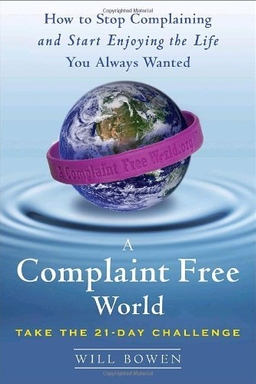
What would your life look like if you stopped complaining for just twenty-one days? According to Will Bowen in A Complaint Free World, this single act could transform your relationships, health, happiness, and even your brain. Instead of focusing on negativity, you would start shaping your world through gratitude, awareness, and positive speech. Bowen’s central claim is that you create your life with your words, because your words express your thoughts, and your thoughts drive your reality. Complaining, therefore, is not harmless—it’s the verbal manifestation of dissatisfaction that attracts more of what you don’t want.
Bowen’s mission began when, as a minister in Kansas City, he challenged his congregation to stop complaining for twenty-one consecutive days. He gave out purple bracelets and asked people to switch them to the other wrist every time they complained, criticized, or gossiped. The challenge spread far beyond his church—Oprah picked it up, millions joined worldwide, and Bowen realized he’d tapped into a global hunger for positivity.
Why Complaining Matters More Than You Think
Bowen draws on insights from psychology and neuroscience to show that complaining actually rewires your brain for negativity. It reinforces neural “shortcuts” that make you default to irritation and discontent. Studies he cites reveal that chronic complainers feel more stress, anxiety, and even physical health problems. In contrast, gratitude and positive language activate the brain’s reward centers and boost serotonin, making you happier and more resilient.
The book’s title promises a Complaint Free World, but Bowen begins narrower: one person at a time. He insists that if just 1% of humanity stopped complaining, this would ripple through global consciousness—lifting courtesy, empathy, and even world peace. Maya Angelou, whose quote became the movement’s motto—“If you don’t like something, change it. If you can’t change it, change your attitude. Don’t complain.”—told Bowen that such a shift might make war itself seem absurd.
The Philosophy Behind the 21-Day Challenge
Why twenty-one days? Bowen explains that neuroscientific and psychological research suggests it takes roughly that long for a new behavior to become habit. The purple bracelet is not just a token of participation but a mindfulness tool—it forces you to acknowledge every complaint you voice. The tactile action of switching it from wrist to wrist reinforces awareness, interrupts automatic negativity, and eventually rewires your speech and thinking patterns. Bowen likens this to “installing new software” in your mental operating system.
He warns that the first result of reading the book or starting the challenge will be heightened awareness. Like entering a smoky room after quitting cigarettes, you’ll suddenly hear complaining everywhere—on the news, at work, in your own family, and most of all, in your own head. Yet this discomfort is the first step to transformation. Recognizing just how pervasive negativity is makes you powerful enough to change it.
The Four Stages of Mastery
To guide you through this transformation, Bowen borrows a psychological model of skill learning known as the “Four Stages of Competence” and applies it to complaining:
- Unconscious Incompetence — You complain constantly without realizing it.
- Conscious Incompetence — You notice each complaint but can’t seem to stop.
- Conscious Competence — You catch yourself before speaking negatively, often pausing in silence instead.
- Unconscious Competence — You’ve retrained your mind; positivity is automatic and habitual.
Throughout these stages, Bowen provides personal stories—his confrontation with a man who hit his dog, workplace communication mishaps, and airport fiascos—that illustrate how complaining adds unnecessary suffering and blinds us to gratitude. Each anecdote mirrors what he calls the “complaint loop”: complaint → negative experience → complaint → more negativity. The only way out, he says, is to recognize the pattern and deliberately break it.
A Movement Beyond Self-Help
What began as a church sermon evolved into a worldwide “happiness contagion.” Businesses implemented Complaint Free programs to improve productivity and morale. Schools used it to teach emotional intelligence. Even Congress considered a “Complaint Free Wednesday” before Thanksgiving to reinforce gratitude. This communal focus distinguishes Bowen’s approach from many self-help books—it’s both personal and collective transformation.
“Complaining never attracts what you want—it perpetuates what you don’t want.” —Will Bowen
Bowen’s central promise is not that life will magically become perfect. Instead, it’s that by shifting your words, you reshape your perception, and perception determines your reality. Just as chronic complainers inhabit a world that always lets them down, people who choose gratitude begin to notice daily blessings that were there all along. The choice, he says, is finally yours: to live life by design, or by default.