
Idea 1
Space Settlement: Hopes, Hazards, and Hard Realities
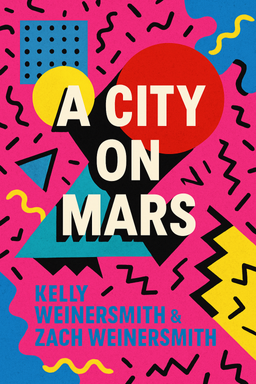
Why do humans dream of living off Earth? From science fiction to billionaire ventures, you’re told that settling space will save humanity, cure climate woes, and unleash vast prosperity. In Space Settlement: Hopes, Hazards, and Hard Realities, authors Kelly and Zach Weinersmith (sometimes calling themselves the “space bastards”) challenge that uncritical optimism. They argue that space settlement is not inevitable—it’s a choice, and a perilous one unless guided by science, ethics, and law.
The book’s thesis is cautious but constructive. Humanity should pursue expansion only after solving foundational biological, legal, and social problems—a stance they call wait-and-go-big. This means you don’t reject space altogether, but you pause grand settlement schemes until you can send sufficient numbers of people with robust infrastructure, sound science, and clear governance. The authors expose how pop narratives obscure the messy realities behind space colonization and show you how to separate persuasion from evidence.
Debunking the Glamour of Rockets
Popular arguments—like space as a Plan B escape, environmental relocation, or planetary resource bonanza—often fail when probed. You learn that Mars can’t shelter humanity after extinction events; it’s too small, cold, and fragile. Moving industry off Earth would take centuries and enormous energy, making it irrelevant for near-term climate stabilization. Resource-mining riches collapse under basic economics: abundance depresses price, and asteroid matter is diffuse, expensive to retrieve, and chemically tricky. And contrary to claims about a moral transformation from the Overview Effect, astronauts remain human—capable of awe but not immune to pettiness, nationalism, or burnout.
Life and Law Beyond Earth
Biology and law are the twin pillars of realism here. The authors detail how the body rebels in space: radiation scars DNA, microgravity dissolves bone, and reproduction is an ethical minefield. Babies haven’t survived gestation in orbit, and animal studies show serious developmental problems. Ethically, you can’t consent on behalf of unborn generations to experimental habitats that might deform them. Legally, settlement is tangled in ambiguities: The 1967 Outer Space Treaty bans sovereignty but doesn’t define ownership, jurisdiction, or child protection frameworks. When companies claim Mars independence (as in SpaceX’s early Starlink terms of service), it’s marketing, not legal fact.
Engineering and Economics: The Scale of Survival
Closed-loop life support, energy generation, and shielding add crushing complexity. Real experiments like Biosphere 2 and the USSR’s BIOS and Japan’s CEEF taught how oxygen, microbial balance, and food supply are precarious. Mars or lunar bases would need dense engineering networks—radiation-protected power, recycling systems, and ecological stability. Economically, company-town models loom large: early bases will probably be corporate fiefdoms with employer-controlled housing and limited freedom. Without policy safeguards, workers could face coercive conditions more severe than historic coal towns.
Geopolitics and War Risk
Space is not a peace utopia. Satellites are fragile keystones of Earth’s economy and defense; disable them and modern civilization stumbles. Historical nuclear tests in space (like Starfish Prime) already proved their vulnerability. As companies build vast constellations (e.g., Starlink used in Ukraine), the line between civilian and military assets blurs, inviting conflict. Without clear international rules, safety zones and unilateral claims around scarce resources will resemble territorial seizures. Legal scholars like Daniel Deudney warn that premature expansion could increase existential risk rather than reduce it.
The Authors’ Prescription: Patience with Purpose
Instead of rushing, Kelly and Zach propose three preparatory tracks: (1) long-term biological and ecological research, (2) international legal architecture akin to UNCLOS for space, and (3) socio-economic planning for fair, sustainable communities. This vision answers optimists and alarmists alike: you can love space, but love it wisely. Building a Moon or Mars society isn’t about tech alone—it’s about ensuring governance, morality, and readiness scale together. In their metaphor, don’t build space hot tubs; build a survival cathedral worthy of the species.