
Idea 1
America as a Moral Project
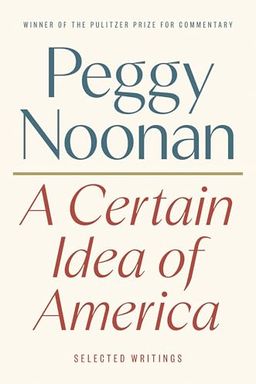
What would it mean to love your country without lying about it? Peggy Noonan’s answer animates the whole book: you treat America not as a flawless idol or a terminal case, but as a living moral project—an idea worth both defense and repair. She adapts de Gaulle’s line, “All my life I have had a certain idea of France,” and invites you to adopt a certain idea of America: a courageous invention rooted in the radical claim of human equality, tested by history, chastened by failure, and always ready to be “shined up a little” for the next generation.
Noonan places this project in a demanding civic frame. You practice protective affection—tenderness toward the country’s promise—while you exercise moral honesty about its sins. The book weaves profiles (Lincoln, George H. W. Bush), cultural criticism (Tom Wolfe, Paul Simon, Taylor Swift), and policy argument (AI, Ukraine, the American dream) into a single claim: history, virtue, and beauty are practical forces. They shape public conduct, guide hard choices, and steady you in a turbulent age.
The character of protective patriotism
Noonan’s patriotism is not chest-thumping; it’s husbandry. You show love by preserving institutions, teaching honest stories, and keeping public standards high. Think of Lincoln’s literary mercy and strategic clarity; think of Bush 41’s cool restraint as the Soviet system collapsed. She argues comportment—tone, manners, even dress—operates as a social technology that protects trust. Authority that looks, sounds, and acts serious is more likely to behave seriously (a point she underscores in laments about the Senate’s abandoned dress code and in praise of Margaret Chase Smith’s “Declaration of Conscience”).
Praise as civic practice
In a culture that prizes the “hot take,” Noonan recommends disciplined praise. Naming greatness trains your eye for it. Her portraits—Billy Graham’s ecumenical seriousness (glimpsed through Laura Hillenbrand’s Unbroken), Tom Wolfe’s cultural x-ray vision, Bob Dylan’s Nobel and long moral memory, Paul Simon’s “Seven Psalms” arriving in a dream amid hearing loss—model a way to celebrate without fawning. Praise, she says, is both moral instruction and social nourishment. It shows citizens what excellence looks like and why it matters. (Note: This stance recalls Joseph Epstein’s essays on character and Lionel Trilling’s moral realism, but Noonan keeps a more popular, pastoral tone.)
History as operating manual
For Noonan, history isn’t an inert archive; it’s a toolbox. Appomattox teaches magnanimity; the friendship of Lo Armistead and Win Hancock at Gettysburg teaches complexity and reconciliation; John Hay’s cool read on Russian duplicity trains diplomatic realism. She argues leaders who absorb these lessons act more prudently when the stakes are civilizational—say, in averting humiliation of a nuclear power or in conceding a close election for the country’s sake (Richard Nixon in 1960). History, rightly told, is civic ballast and a map for crisis.
Culture as social glue
The book widens from statecraft to street life. The pandemic revealed we were in the same storm, not the same boat. Essential workers slept on air mattresses (Braskem’s “live-in” crew) while others refreshed tracking links for home tests. Later, Taylor Swift’s Eras Tour revived downtowns and spirits—economic ripples on par with multiple Super Bowls, and an uncommon public joy that registered a 2.3 seismic “Swift Quake” in Seattle. Noonan’s point: culture is not fluff; it’s infrastructure for hope. It can rebuild confidence that politics alone can’t supply.
The fights over speech and standards
Noonan warns against new “struggle sessions”—modern rituals of public shaming, often online, that mirror the logic (not the lethality) of Mao-era reeducation: accusation, forced confession, social ruin. She points to campus speech codes, bureaucratic overreach (like constricting pronoun rules at Colorado State), and corporate timidity. Her fix is modest but firm: due process, dialogue over denunciation, and institutional spines that withstand Twitter hurricanes. Locally, she sees a parents’ revolt (San Francisco’s school-board recall) insisting that officials prioritize children and competence over ideological fads.
Risk on the horizon
Two frontier risks press for statesmanship: AI and nuclear weapons. Noonan echoes Geoffrey Hinton’s warnings, cites an open letter (Steve Wozniak, Elon Musk) demanding a pause, and notes the trust deficit with the very companies that built the attention economy. She also urges Washington and allies to think the unthinkable on Ukraine: tactical nuclear use would shatter a taboo that has kept the world intact since 1945. The throughline is prudence—public guardrails for AI; sober diplomacy, open lines, and non-humiliating exits for adversaries. (Compare to Kissinger’s late-life insistence on dialogue and Bush 41’s restraint.)
Reclaiming the American dream
Finally, Noonan repairs language. The American dream is not a shopping list; it’s mobility—the hope that where you start won’t trap you where you end. That dream is ailing, damaged by economic shifts and cultural breakdown, and by what she calls a “failure of love” in too many children’s lives. Her project for governance is conservative yet capacious: harness big government to conserve what matters—families, small towns, religious freedom, assimilation—through targeted mentorship, mental-health investments, and practical Americanization of immigrants. You steward a large state toward humane ends rather than pretend it can be wished away.
Thesis in a line
Love the miracle, tell the truth about its wounds, and carry it forward with prudence, praise, and courage.