
Idea 1
The Five-Thousand-Year Journey That Created—and May Undo—the Car Age
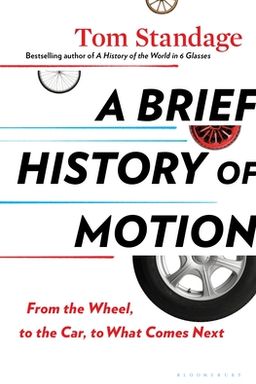
How often do you pause at a traffic light and wonder how we got here—how a machine that once symbolized freedom has come to dominate our cities, shape our economies, and entangle our lives so completely that we can barely imagine living without it? In A Brief History of Motion, Tom Standage argues that the car is not a permanent fixture of modern life but merely the latest chapter in humanity’s long quest to move faster, farther, and more freely. Like the wheel, steam engine, and bicycle before it, the automobile transformed society in ways its inventors never foresaw—and now we must confront the unintended consequences of that transformation.
Standage contends that mobility technologies always reshape everything around them: our cities, economies, and even moral systems. The car, he explains, solved one unsustainable system—the horse-powered city of the nineteenth century—but created new problems of pollution, congestion, and inequality. Now, as we face climate change and digital disruption, the world stands at another crossroads. The same kinds of technological optimism that once surrounded the car are now being projected onto electric, autonomous, and shared vehicles. The question Standage poses is not whether these innovations will change how we move—they inevitably will—but whether we can avoid repeating the mistakes of the past.
From Wheels to Cars: The Deep History of Motion
To understand our car-saturated world, Standage takes readers back to the beginning—literally to the invention of the wheel. Around 3500 BCE, early societies discovered that attaching planks to axles could move goods across land more efficiently than human or animal backs. But even the wheel was controversial; many ancient cultures, like the Egyptians, declined to use it because their rivers provided better transport. It was only when wheels were attached to chariots that they became symbols of power and divine authority. Later, the Romans built extensive road networks, regulated traffic into separate lanes, and even introduced one-way streets in cities like Pompeii—an early echo of urban congestion management that foreshadowed our obsession with regulating traffic today.
From there, the story jumps forward to the Renaissance and beyond, when wheeled vehicles—first carriages, then stagecoaches, then omnibuses—made land transport accessible to broader social groups. The first technological democratization of mobility, Standage notes, came not with the car but with Blaise Pascal’s seventeenth-century “five-sols” coach service in Paris, an early public-transport experiment. Crucially, every stage of transport history followed the same pattern: a new technology began as a luxury item, transformed into a mass necessity, and ultimately produced crises of crowding and pollution that demanded the next innovation.
Technology’s Double-Edged Sword
The book’s central argument echoes the historian Melvin Kranzberg’s maxim—quoted at the outset—that “technology is neither good nor bad; nor is it neutral.” Every leap in mobility brought progress and peril. The transition from horses to cars exemplifies this duality. By 1900, major cities were drowning in manure; switching to cars seemed an environmental salvation. Yet within decades, automobiles created traffic fatalities, suburban sprawl, and fossil-fuel dependence. Standage urges readers to recognize how short-term solutions often sow long-term problems—a perspective highly relevant in the age of electric vehicles and artificial intelligence. As he points out, “the car solved the horse-manure crisis only to create the climate crisis.”
A Mirror from the Past for the Future
After recounting the car’s triumph—its twentieth-century rise from Model T to motorways—Standage traces how its dominance eroded public space, distorted city planning, and entrenched inequality. From the auto-oriented suburbs of postwar America to General Motors’ design-driven culture that married consumerism to identity, cars became not just tools of movement but extensions of selfhood. In their promise of independence lay the seeds of dependence: entire economies were built on car ownership and endless highways.
Standage connects this historical arc to present-day debates over ride-hailing, micromobility, electric cars, and autonomous vehicles. He warns that new technologies like Uber, Tesla, or Waymo could simply restyle the same underlying biases if we fail to learn from history. Cars gave us freedom at a cost—suburban isolation, environmental destruction, and vast infrastructure devoted to idle machines. The same could happen with robotaxis or electric fleets unless humanity redefines what mobility is actually for. Instead of aiming for faster travel or shinier gadgets, Standage challenges us to design systems that prioritize livability, equity, and sustainability.
Ultimately, A Brief History of Motion is not just a story about transport—it’s a meditation on how innovation, once unleashed, reshapes civilization’s very rhythm. From chariot wheels to driverless cars, the pattern remains: invention, adoption, crisis, and reinvention. The car may not vanish soon, but its cultural supremacy is waning. What comes next—whether a seamless network of shared mobility or a fragmented dystopia of digital commutes—depends on whether we can finally steer technology consciously, learning from five thousand years of motion.