
Idea 1
Reading Humanity Through Its Genome
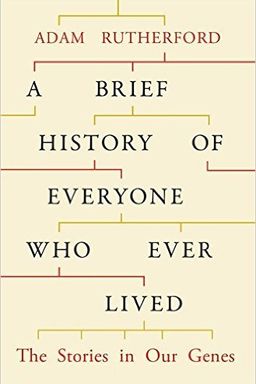
What if your DNA were not just a biological code but a historical archive—a text written in the language of life that can reveal migrations, interactions, and adaptations over tens of thousands of years? In this book, Adam Rutherford argues precisely that: genomics has become a new kind of historical source. Like archaeology and written history, it tells stories of who we are and how we came to be, though it does so through the comparative reading of molecular sequences rather than artifacts or chronicles.
From Molecule to Historical Document
Rutherford traces how the human genome was transformed from an abstract concept into a readable record. Beginning with Fred Sanger’s sequencing method in the 1970s and culminating in the Human Genome Project’s 2003 completion, the ability to decode DNA letters opened a new window into deep time. The price of sequencing fell from billions of dollars to a few hundred, effectively democratizing access to personal genomics through projects such as 23andMe or the UK’s 100,000 Genomes Project. These tools turned DNA into a historical text inviting you to explore your past at the molecular level.
Reading this text involves comparison: a single genome says little, but patterns across thousands map the movements of populations, the mingling of species, and the evolution of traits. The identification of Richard III’s remains, the sequencing of Neanderthal and Denisovan genomes, and the reconstruction of ancient human individuals like Ust’-Ishim reveal not only who our ancestors were but also how modern humans interacted and bred with them. DNA has become a chronicle of meetings, migrations, and mixtures.
The Cautions of Interpretation
Rutherford emphasizes, however, that DNA is a probabilistic and contextual record. Genes are not destiny. Traits such as intelligence or personality emerge from complex gene–environment interactions, not single DNA letters. Moreover, the small fractions of DNA used for family or ancestry tracing—mitochondrial DNA and the Y chromosome—represent only slivers of your full heritage, because recombination constantly reshuffles the majority of your genome. You inherit uniqueness and connectedness at once.
Sound methodology is as crucial in genomics as in archaeology. Clean-room protocols, replication in independent labs, and transparent statistical work distinguish real discoveries (like Svante Pääbo’s authenticated ancient genomes) from pseudoscientific stories (such as the discredited “Jack the Ripper shawl” claim). Rutherford reminds you to read genomic history critically and with humility.
A New Narrative of Humanity
When viewed across the book’s arc, this genomic lens transforms how you imagine human history. Evolution looks less like a ladder and more like an interwoven web in which multiple human species met and exchanged genes. Ancient DNA shows that early Homo sapiens interbred with Neanderthals and Denisovans, creating legacies—like the high-altitude EPAS1 adaptation in Tibetans or 1–3% Neanderthal ancestry in most non-Africans—that still shape your biology today. Culture, disease, and environment then sculpted genomes further through selection: the adaptation to digest milk in adulthood, lighter skin in higher latitudes, and immunity shifts in response to plagues all demonstrate how genes and history intertwine.
When Rutherford explores modern variation, he dismantles the concept of biological race. Most genetic diversity exists within populations, not between them. Small local adaptations exist, but no genetic boundary divides humanity into discrete racial groups. Instead, identity reflects culture, geography, and history far more than immutable DNA differences. Genomics reveals profound interconnectedness even as societies wrestle with the remnants of imagined separations.
The Continuing Human Story
The book closes by showing that evolution never stopped. Hundreds of new, functional genetic variants have arisen in the past few thousand years, while culture itself—through agriculture, caste systems, medicine, and migration—continues to act as an evolutionary force. Even epigenetic modifications, once hyped as proof of inheritance by experience, are reframed here as biochemical realities rather than miracles: they highlight how environments tune gene activity, not reprogram it permanently.
Core Insight
The genome does not just record what you are made of—it encodes your species’ story. Reading it with care reveals shared origins, intertwined ancestries, and ongoing change. It makes you both witness and participant in evolution’s continuing experiment.
Across science and society, that perspective shifts everything. You see that identity, ancestry, and difference are more entangled—and more fascinating—than any myth of purity or hierarchy ever allowed. Your genome is not a verdict; it is a story still being written.