
Idea 1
Corporate Governance and the Future of a Better World
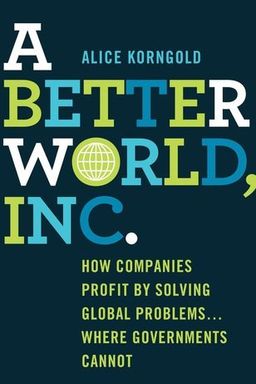
Have you ever wondered whether companies—those vast, money-making machines—could actually help solve the world’s biggest problems? In A Better World, Inc., Alice Korngold makes a bold claim: multinational corporations are not just capable of creating a better world; they are indispensable to it. Governments are bound by national interests, NGOs often struggle with limited resources, but global corporations have the reach, resources, and incentives to tackle climate change, inequality, and human rights abuses while remaining profitable.
Korngold contends that corporate governance—specifically, the decisions made by boards of directors—can either obstruct or accelerate progress toward an inclusive, sustainable, and prosperous future. In her view, inclusion and sustainability are not moral extras or public relations slogans; they are business imperatives. Without inclusion of marginalized talent and sustainable use of resources, companies will simply fail in a world of climate disruption and social instability.
The Central Argument: Inclusion and Sustainability Drive Profit
According to Korngold, inclusion and sustainability must sit at the heart of any serious corporate strategy. Inclusion means tapping the potential of those excluded from economic systems—women, BIPOC individuals, migrants, people with disabilities, LGBTQ+ individuals, and formerly incarcerated citizens. Sustainability requires halving emissions by 2030 and achieving net-zero by 2050. Together, these two priorities define a company’s pathway not only to moral legitimacy but also to profitability. When companies waste human potential or damage the environment, they sabotage their own futures.
As boards adapt, their composition and priorities must evolve. Corporate boards are learning that diversity, equity, and inclusion (DEI) correlate directly with better decisions and improved financial performance. Regulators such as the U.S. Securities and Exchange Commission are beginning to require disclosure of board diversity, cybersecurity measures, and environmental risks—a testament to how governance has become inseparable from global progress.
The Shift from Philanthropy to Systemic Business Solutions
Korngold traces the evolution of corporate responsibility. While businesses once expressed their goodwill through philanthropy or charitable donations, today’s leading companies pursue solutions to social and environmental challenges as core business activities. HP’s work to bring digital literacy to underserved communities, UPS’s innovations in drone delivery for healthcare, and Trane Technologies’ commitment to decarbonizing buildings are examples of how social impact and innovation converge.
“Defeating poverty and mitigating climate change are ambitious goals. Only multinational corporations have the global footprint to solve such challenges.”
–Alice Korngold
In the same spirit as visionary leaders like Paul Polman (author of Net Positive), Korngold believes that businesses must give more than they take. The ESG framework—environmental, social, and governance—has become a guiding model. Investors now prefer to back companies that proactively address climate and social issues because these initiatives lower risk and foster long-term value.
Why This Book Matters
Korngold’s book is part analysis, part manifesto, and part playbook. It arrives during an era of global fragmentation and heightened awareness of climate urgency. She argues that corporate boards must lead systemic change, not wait for governments to legislate it. This means setting science-based sustainability targets, promoting equity at every level, and engaging employees, customers, and communities in building shared prosperity.
Drawing from decades of experience consulting for boards and NGOs, Korngold urges cross-sector collaboration. Businesses can’t solve global challenges alone. They must partner with nonprofits, governments, and civil society in iterative dialogue—each sector bringing unique strengths. This collaborative approach reflects what former Unilever CEO Paul Polman calls “net positive”—companies should thrive by improving the world, not exploiting it.
The Promise of Governance for an Inclusive Planet
Ultimately, the book imagines corporate governance as a global citizenship mechanism. Boards determine capital flows, employment policies, and environmental footprints. When they prioritize human dignity and ecological care, their decisions ripple across supply chains and nations. To do so effectively, boards must represent diverse voices—gender, race, culture, age, and professional expertise—to foresee risks and opportunities from every angle.
For you as a reader—leader, investor, or citizen—the book asks a provocative question: will corporations remain extractive machines of exploitation, or will they redefine themselves as engines of inclusion and sustainability? Korngold offers not just hope but a pragmatic blueprint: diversity in governance, collaboration with civil society, and a relentless commitment to measurable ESG goals. The choice will shape not just the future of business but the survival of humanity itself.