
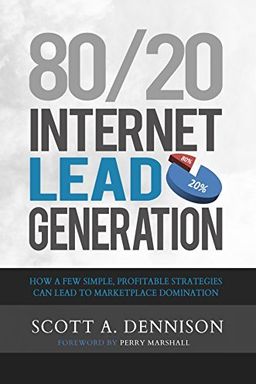
8020 Internet Lead Generation cover

8020 Internet Lead Generation

by Scott A Dennison

80/20 Internet Lead Generation reveals how to harness the internet''s potential for business growth. Learn simple yet powerful strategies like SEO, pay-per-click advertising, and content creation to target the right customers and dominate your market.

Mastering the 80/20 of Internet Lead Generation

What if just 20% of your marketing efforts could generate 80% of your business leads? That’s the heart of Scott A Dennison’s 8020 Internet Lead Generation, a practical playbook for small business owners and marketers who feel overwhelmed by the noisy, fast-changing world of online marketing. Dennison argues that while the internet gives every business a chance to compete globally, most owners waste time chasing fads rather than mastering the few actions that truly produce results. His book bridges that gap by showing you how to implement high-impact digital marketing strategies that attract, nurture, and convert leads—without spending a fortune on ads or gimmicks.

From Traditional to Digital Thinking

Dennison opens by contrasting the predictable world of traditional marketing with the dynamic, data-driven terrain of the digital era. Unlike a TV commercial or print ad, internet marketing gives you precise metrics and near-instant feedback on what’s working. That means you can tweak, test, and optimize campaigns in real time instead of waiting months for results. In his view, any company—no matter how small—can use digital tools to create relationships with prospects “for cents on the dollar.” This shift, he argues, is not optional. In a world where consumers research every purchase online, your business either leverages the internet or gets left behind.

Why Most Businesses Fail Online

While many owners understand they need an online presence, few grasp what a true internet marketing system looks like. Dennison observes that too many entrepreneurs expect instant results or focus on vanity metrics like clicks and likes. They invest in flashy websites but neglect key fundamentals—search optimization, targeted messaging, lead nurturing, and analysis. His mission in this book is to demystify these essentials and show you how to build a sustainable online marketing engine. He reminds readers that success depends less on tools and more on consistent strategy and execution. In other words, your website should not just exist—it should convert visitors into paying customers through a deliberate process.

The Six-Core Framework

Dennison’s framework centers around six interlocking components: website development, blogging, SEO, email marketing, social media, and analytics. Each piece functions like a cog in a machine—remove one, and performance suffers. He urges business owners to treat these areas not as isolated tasks but as parts of a cohesive system. Your website attracts visitors, your blog builds authority, SEO ensures you’re discoverable, email nurtures prospects, social media amplifies relationships, and analytics tell you what’s working. This 80/20 approach helps readers focus their energy on the critical few levers that yield the greatest returns.

Beyond Tools: Building Relationships and Trust

Dennison emphasizes that marketing today is less about selling and more about establishing trust. He draws parallels to content marketing pioneers like Seth Godin, who advocate for empathy-based strategies where you serve before you sell. Whether through helpful blog posts, videos, or newsletters, you must give potential clients a reason to see you as an expert resource. Regular engagement leads to “digital familiarity”—a sense of knowing and trusting your brand long before a sale is made. This, says Dennison, is where online marketing proves far more powerful than its traditional counterpart.

Tracking, Testing, and Adjusting

One of the book’s recurring themes is the power of continuous measurement. Leveraging tools like Google Analytics and social media insights, Dennison shows how data allows entrepreneurs to pivot quickly instead of relying on guesswork. He warns, however, that too much data can paralyze you; what matters is understanding which metrics connect to revenue—namely traffic quality, conversion rates, and ROI. By adopting a “test and tweak” mentality, you can gradually compound small wins into major results. This approach mirrors the iterative strategies outlined in Eric Ries’s The Lean Startup: learn fast, adjust course, and scale what works.

Why It Matters Today

Dennison’s message is ultimately one of empowerment. The barriers to effective marketing have never been lower, yet confusion still reigns. He argues that once you cut through the noise and master the small set of high-return techniques—the 20% that drives 80% of your results—you gain control over your business growth. For local business owners, solo professionals, and marketing beginners, 8020 Internet Lead Generation provides not just tactics but a mindset: one rooted in focus, testing, and customer-first communication. If you’re willing to do that 20% of effort with consistency, Dennison assures you’ll unlock exponential results.


Why Every Business Needs Internet Marketing

Dennison insists that in today’s economy, online marketing is not optional—it’s survival. More than half of prospective buyers conduct research on social media before making a purchase. If your business isn’t visible online, you’re invisible to half your market.

Convenience and Reach

Online channels allow your business to operate around the clock. Dennison compares a well-optimized website to a 24-hour sales rep—always available, always ready to serve. Customers browse from home, office, or smartphone, and purchases can happen while you sleep. Such accessibility breaks geographic barriers, allowing even a small café in Sydney to reach customers in other continents if their digital strategy is sound.

Cost Effectiveness and ROI

Traditional marketing—TV, mailers, and billboards—burns cash with little measurable feedback. Internet marketing reverses that equation by offering affordable tools like email lists, Google Ads, and SEO optimization. These let you reach qualified audiences for pennies compared to offline campaigns. Better yet, everything can be tracked. Dennison notes that digital campaigns give immediate performance data, helping you quickly shift budget toward what works and away from what doesn’t.

Customization and Relationship Building

Digital tools also allow hyper-personalized marketing. By tracking customer preferences or browsing history, you can recommend specific products—just like Amazon’s “users also bought” feature. This fine-grained customization increases loyalty and upsells while deepening your connection with clients. Dennison underscores that such personalization transforms marketing from manipulation into meaningful service.

Data-Driven Marketing Intelligence

A major advantage online marketers enjoy is access to real-time analytics. Every click, bounce, and sale tells a story. Smart businesses use this information to refine their offers, segment audiences, and discover under-served markets. Dennison draws attention to the idea that data isn’t just numbers—it’s insight into behavior. The modern marketer, he says, must act as both storyteller and scientist, interpreting metrics not as cold statistics but as clues to human motivation.


The Six Pillars of Internet Marketing

Dennison structures his digital strategy around six pillars: website design, blogging, SEO, email marketing, social media, and analytics. Each supports the others in building sustainable lead generation.

1. Website Development

Your site is your storefront. Dennison emphasizes simplicity, clarity, and speed: clean visuals, consistent branding, and mobile friendliness. Errors in usability—broken links, poor navigation, or slow load times—drive potential leads away instantly. He provides a detailed checklist: test your design across browsers, ensure forms work properly, and verify every external link.

2. Blogging

Blogging builds credibility. By sharing useful content, you position yourself as a trusted voice rather than a seller. Blogs also create internal links and keyword-rich articles that feed SEO. Interaction through comments strengthens relationships and reveals new customer needs.

3. SEO

Search engine optimization ensures your website appears where prospects look. Dennison breaks SEO down into keyword research, on-page optimization, and link-building. He reminds readers that Google prioritizes quality content over quantity, rewarding pages that deliver genuine value. Including long-tail keywords helps target niche audiences, narrowing competition.

4. Email Marketing

Email, though old, remains one of the highest ROI tools when executed properly. He guides readers through crafting friendly messages, limiting send frequency, and personalizing subject lines. Successful campaigns focus on useful insights and exclusive offers rather than aggressive sales pitches.

5. Social Media

Social platforms are today’s networking events. Dennison advises claiming your handles early and maintaining consistent branding. Each post should inform, entertain, or engage. Respond quickly to queries, handle negative comments gracefully, and remember that authentic interaction earns loyalty faster than polished advertising.

6. Analytics

Finally, analytics ties everything together. By tracking site behavior—time on page, bounce rate, conversion funnels—you gain feedback loops for constant improvement. As Peter Drucker once said, “What gets measured gets managed.” Dennison’s advice echoes that wisdom: track only what moves the needle toward your goals.


Different Types of Online Marketing Strategies

Once foundational elements are in place, Dennison introduces the many Internet marketing types—from search engine and pay-per-click to referral, affiliate, and viral campaigns.

Search and Paid Advertising

Search Engine Marketing (SEM) combines SEO with paid placements. By bidding on keywords and optimizing ad copy, you can appear exactly when customers are seeking your service. Pay-per-click (PPC) platforms like Google Ads offer controlled spending—you pay only for results. Dennison warns, however, that poor campaign management can drain budgets quickly; expertise and experimentation are essential.

Referral and Inbound Marketing

Referral marketing leverages social sharing: great content or offers spread from one user to another organically. Inbound marketing complements this by drawing visitors through valuable educational materials on external sites or blogs. Instead of shouting “buy now,” you attract attention by being genuinely useful—a strategy championed by HubSpot’s methodology.

Affiliate and Conversion Marketing

Affiliate models reward third parties who send traffic or sales. It’s cost-efficient since you pay only for performance. Conversion marketing, meanwhile, focuses on persuading those visitors to act—sign up, purchase, or inquire—often by testing page designs, copy, or special incentives (“Free shipping” for abandoned carts, for instance).

Video, Podcast, and Viral Content

As users shift to multimedia, video and podcasts have exploded. YouTube’s billion monthly users represent untapped attention. Dennison encourages businesses to post tutorials, client stories, or behind-the-scenes glimpses—content that entertains while educating. Viral marketing extends that impact through shareable challenges, memes, or branded entertainment that ignites conversation.


Common Pitfalls and How to Avoid Them

Dennison dedicates an entire section to the mistakes that derail digital marketing. Recognizing these traps early helps you save time, money, and credibility.

Lack of Strategy

One of the most frequent blunders is diving into tactics without an overarching plan. Tools alone—email software, SEO plugins, social media apps—don’t create success. Dennison urges you to map customer journeys before launching campaigns, ensuring that every touchpoint connects toward conversion.

Ignoring Analytics and Audience Insight

Many marketers neglect to measure outcomes or misunderstand their audience. Without listening or analyzing data, your message misfires. Use analytics tools and social listening apps to gain empathy-driven understanding of customer behavior before speaking.

Missing Calls to Action

Websites without clear CTAs are wasted opportunities. Each page should guide visitors toward a next step—call, subscribe, register, or buy. Make those actions obvious, compelling, and friction-free.

Failure to Innovate

The digital world changes quickly. What worked last year—say, keyword stuffing or unoptimized Flash websites—may harm you today. Dennison emphasizes adopting a mindset of testing and experimentation. Continual learning keeps your strategy lead-generating rather than lagging.


Myths vs. Realities of Internet Marketing

In this myth-busting chapter, Dennison debunks the illusions that confuse entrepreneurs and prevent them from achieving results.

Myth: “My audience is too old for social media.”

Fact: Older demographics are active online. Over half of boomers use Facebook or LinkedIn. Ignoring them means neglecting a significant, affluent customer base. Social media marketing should be tailored by tone and platform, not abandoned by age.

Myth: “Email is dead.”

Fact: Email remains one of the strongest digital channels for ROI. Its power lies in permission-based communication—messages that subscribers choose to receive. When personalized, timely, and value-driven, email nurtures leads more effectively than most ads.

Myth: “Digital marketing gives instant results.”

Fact: Sustainable success takes time. Organic rankings, trust building, and content traction grow with consistency. Dennison likens it to compound interest—the more patient and strategic you are, the stronger your results.

Myth: “Internet marketing is free.”

Fact: While cheaper than traditional media, quality content, hosting, or PPC still require investment. The key is optimizing spending according to ROI, not chasing “free” gimmicks that cost more in lost credibility and time.


Tracking and Measuring What Matters

Dennison returns to one principle: You can’t improve what you don’t measure. Effective marketers treat metrics as guideposts to refine their strategies continually.

Direct Feedback and Surveys

Sometimes the simplest insight comes from asking customers, “How did you hear about us?” Surveys and post-purchase forms reveal which channels bring real leads, clarifying where to double down.

Digital Tracking Tools

Dennison champions free or affordable tools—Google Alerts for monitoring brand mentions, Hootsuite for scheduling, and Social Mention for real-time feedback. Each helps you understand your brand’s perception and content reach across platforms.

Landing Pages and Conversion Data

Tracking custom landing pages isolates campaign performance. When paired with analytics dashboards, you can see how ad clicks translate into sign-ups or purchases. Avoid duplicate content across domains to stay in Google’s good graces.

Sentiment and Social Metrics

Advanced services such as Sentiment Metrics evaluate not just mentions but emotional tone—positive, neutral, or negative. Used wisely, this data helps refine messaging and customer care to align with real-world reactions.


Embracing Emerging Trends and Innovations

Keeping up with online marketing trends isn’t about chasing every shiny tool—it’s about anticipating where attention is moving and adapting accordingly.

Mobile and Design First

Mobile usage now dominates web traffic. Dennison highlights responsive design, fast load speeds, and concise copy as fundamentals. Sites that frustrate mobile users lose prospects instantly. User-centered interface design—simple, intuitive, and beautiful—is no longer optional.

Content Quality and Video Focus

Google’s Panda, Penguin, and Hummingbird updates prioritized content depth and authenticity. Dennison advises consistent blogging, complemented by product videos, testimonials, and behind-the-scenes clips to showcase authenticity. Videos combine education and emotion, creating shareable value.

Social Signals and Retargeting

Search engines increasingly integrate social engagement into ranking algorithms. More shares signal credibility. Meanwhile, ad retargeting ensures that prospects who visited your site see your products again later—reminding them and boosting conversions.

Innovation and Gamification

Finally, Dennison illustrates how modern businesses weave creativity and play into brand experiences. Gamification—adding reward elements or challenges—captures engagement far more effectively than static promotions. Innovation isn’t just technology; it’s attitude.


Evolving and Enhancing Your Marketing System

Dennison closes with an important mindset shift: digital marketing isn’t a project you finish; it’s a living system you nurture. Success requires continuous refinement.

Consistency and Engagement

The simplest improvement is consistency. Post daily on social platforms, test titles, and solicit conversation. Engagement compounds visibility—the more value you provide, the more algorithms and audiences reward you.

Campaigns and Infographics

Running creative giveaways or social campaigns reenergizes your brand. Dennison praises visual storytelling, especially infographics, for simplifying complex data into shareable art. Tools like Piktochart make design accessible to all.

Customer Service and Transparency

Responding quickly and honestly to errors builds long-term trust. Dennison urges owning mistakes publicly rather than hiding them. The quickest way to ruin credibility is silence.

Integration and Offline Touchpoints

Digital doesn’t erase offline opportunities. Simple acts—adding your website URL to a business card, hosting Q&A sessions, or maintaining an updated FAQ—connect your online system to real-world interactions, completing the customer experience loop.

Dig Deeper

Get personalized prompts to apply these lessons to your life and deepen your understanding.

Go Deeper

Get the Full Experience

Download Insight Books for AI-powered reflections, quizzes, and more.