
Idea 1
Investing for Systems Change in the 21st Century
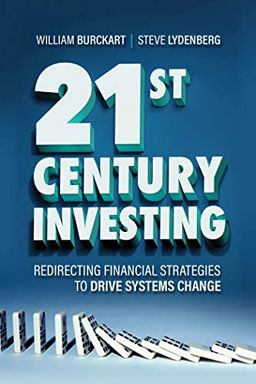
What if the future of your investments depended not only on the next market swing, but on the health of the planet, society, and institutions that make the market possible in the first place? In 21st Century Investing: Redirecting Financial Strategies to Drive Systems Change, William Burckart and Steve Lydenberg ask investors to reconsider their purpose. They argue that in our deeply interconnected world, traditional investing—focused on beating benchmarks or earning short-term profits—is dangerously outdated. The book proposes a radical yet practical reorientation: move from conventional to sustainable, and finally to system-level investing, a model designed to safeguard and strengthen the social, financial, and environmental systems that underpin all economic activity.
Burckart and Lydenberg, cofounders of The Investment Integration Project (TIIP), draw on decades of work in sustainable finance to show how investors—from pension funds and endowments to individuals—can be active agents of systemic progress. Their thesis is simple but profound: healthy, resilient systems generate sustainable financial returns. The book provides a six-step process for implementing this approach: setting system-level goals, deciding where to focus, allocating assets strategically, applying and expanding investment tools, leveraging advanced techniques, and evaluating results based on systemic impact, not just profit.
Why Investment Must Evolve
Traditional portfolio management, rooted in Modern Portfolio Theory (MPT), treats markets as efficient and external to investors’ influence. But as the authors remind us, this illusion broke during the 2008 financial crisis. Investors themselves helped cause the collapse through overleveraged, short-term bets—proving that investor behavior can destabilize entire systems. If private actions can harm markets and societies, then intentional, coordinated actions can also heal them.
The authors distinguish between three stages of investing: conventional, sustainable, and system-level. Conventional investors chase market returns with little regard for social or environmental consequences. Sustainable investors integrate Environmental, Social, and Governance (ESG) factors, seeking to avoid harm or generate specific impacts. But system-level investors go further—they aim to reshape the fundamental systems that determine long-term risk and reward. As Burckart and Lydenberg note, “All investors have system-level impacts, whether they choose to manage them or not.”
The Stakes: Fragile 21st-Century Systems
The authors argue that we face intertwined systemic crises. Social systems—strained by inequality, racial injustice, and populism—are producing political and social instability. Financial systems—warped by short-termism and speculative excess—no longer align with long-term value creation. Environmental systems—destabilized by climate change, resource depletion, and biodiversity loss— threaten physical survival. Each of these systems is interconnected, meaning a failure in one ripples through the others, as seen in the global fallout from COVID-19.
For Lydenberg and Burckart, the challenge is to rebuild “guardrails” through investment choices that reinforce the resilience of these systems. The authors point to paradigm shifts—from fossil fuels to renewables, or from shareholder primacy to stakeholder capitalism—as necessary course corrections. They call this approach a “third stage” of investing, where capital becomes a tool for safeguarding the very foundations on which it depends.
How System-Level Investing Works
The framework offered in this book is methodical and actionable. Investors must first set goals that address systemic challenges—like reducing income inequality or fostering climate resilience—rather than narrow metrics such as individual company returns. Next comes focus selection, identifying which complex systems warrant investment effort, guided by four criteria: consensus (is the issue widely recognized?), relevance (does it affect all sectors?), effectiveness (can investors influence it?), and uncertainty (are the risks beyond conventional management?).
Asset allocation and strategy then follow. The authors show that each asset class plays a distinct role in system resilience: equities can influence corporate norms; bonds fund public infrastructure; real estate shapes sustainable communities; and venture capital finances innovation. Traditional tools—like security selection, engagement, and policy statements—are adapted to system-level purposes. And beyond these, investors adopt advanced techniques such as field-building collaboration, policy advocacy (“polity”), standard setting, and opportunity generation in underserved areas.
From Theory to Practice
Throughout the book, examples demonstrate that this approach is not abstract philanthropy—it’s already in action. CalPERS, the largest U.S. pension fund, integrates human, physical, and financial capital into its risk framework and collaborates globally through Climate Action 100+. The Caisse de dépôt et placement du Québec (CDPQ) invests directly in Montreal’s sustainable infrastructure. The Church of England Pensions Board engages mining and energy companies to improve global safety standards. And the Rockefeller Brothers Fund divested from fossil fuels, using its legacy wealth to set new industry norms.
Individual investors are not excluded. They can direct cash toward local development banks, choose funds aligned with Sustainable Development Goals (SDGs), and pressure financial advisors to adopt systemic evaluation frameworks. The lesson is clear: size matters less than intentionality. Even small investors help tip large systems.
Measuring What Truly Matters
Traditional performance metrics—quarterly returns, portfolio volatility—fail to reveal systemic impact. System-level investors demand new evaluative lenses that combine financial performance with social and environmental outcomes. Drawing on measurement pioneers like the Impact Management Project and IRIS+, Burckart and Lydenberg propose a due diligence framework rooted in judgment, integrity, and consistency. The question shifts from “How much did the fund make?” to “Did the investment strengthen the systems on which future returns rely?”
Why This Matters Now
As the authors conclude, the time for this evolution is short. The 21st century’s defining risks—climate disruption, inequality, pandemics—will not wait for incremental reform. A transition to system-level investing is not only a moral imperative but a fiduciary one: safeguarding long-term value means protecting the systems that create it. “Investors have the power to make societies, markets, and the environment resilient,” they write. “But a new way of thinking—balancing market returns with benefits for society—is needed.” This book gives that roadmap, demonstrating that the future of finance, and the fate of our world, are inseparable.