
Idea 1
Navigating the Age of Bewilderment
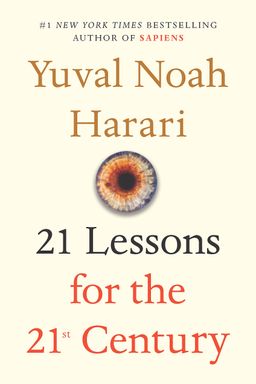
You live amid the collapse of the grand narratives that guided the twentieth century. In this book, Yuval Noah Harari traces how fascism, communism, and liberalism once offered coherent worldviews—but by the early twenty-first century, they had splintered. The liberal promise of progress and freedom faltered after events like the 2008 financial crisis, Brexit, and the rise of populism. The question now is: what happens when the old meanings dissolve but no new global story replaces them?
From Grand Stories to Fragmented Realities
Harari distills the political century into stages. In 1938, fascism glorified national identity; in 1968, communism and liberalism competed for global allegiance; by 1998, liberal democracy stood alone. By 2018, even that consensus seemed gone. The arithmetic of myths had reached zero: you inhabit an era of bewilderment without shared answers. This vacuum generates fear and nostalgia—people grasp at fragments of old ideologies, blending them into incoherent hybrids like “illiberal democracy.”
Technology and the Collapse of Certainty
Simultaneous revolutions in infotech and biotech amplify the disorientation. Political systems built for the steam engine era now confront algorithms and gene editing. Engineers—not parliaments—shape futures of privacy, labor, and identity. The institutions designed to stabilize modernity now lag behind the technologies transforming it.
You can no longer rely on the liberal “set menu” of free trade, democracy, and rights. Leaders selectively embrace some dishes while discarding others—free markets without civil liberties, nationalism without cooperation, or connectivity without equality. The cohesive logic of liberalism dissolves into a chaotic buffet.
Living Without a Single Story
Harari’s advice is to replace panic with honest bewilderment. Panic craves simple threats and saviors; bewilderment accepts complexity and asks better questions. Rather than clinging to old myths, you must develop new tools—critical thinking, emotional resilience, and self-knowledge—to navigate uncertainty. The book’s structure itself models this: starting from the disappearance of political stories, moving through technological upheaval, then exploring ethics, data, power, and consciousness.
The Emerging Human Challenge
Across all chapters, Harari poses one central warning: the race to hack the human mind and body is accelerating faster than our capacity for wisdom. Biological understanding, computing power, and data now combine to yield unprecedented control over behavior—what Harari calls the formula b × c × d = ahh! (Biological knowledge × Computing power × Data). The result is algorithmic authority: systems predicting your choices better than you can yourself. Liberal freedom, rooted in private consciousness, erodes when algorithms penetrate that privacy.
This book becomes both diagnosis and survival manual. It teaches you that economic wealth, political stability, and personal autonomy now depend on who controls data, who designs algorithms, and how humans rediscover humility and awareness. Whether you confront job automation, social media addiction, inequality, or the manipulation of your emotions, the same call repeats: do not cling to old myths—learn how minds and systems work before they rewrite what it means to be human.
Core insight
Harari’s project is not despair but adaptation. He argues that you must cultivate clarity and emotional endurance to construct new narratives fit for a global, data-driven civilization. The world has lost its single story; the next one must be consciously built—if humanity is to remain both free and sane.