
Idea 1
Through Paul’s Lens: Inside the Storm
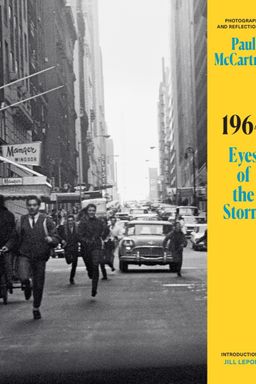
What does your life look like from the inside when everyone else is watching from the outside? In 1964: Eyes of the Storm, Paul McCartney invites you to step behind the velvet rope and look out through his camera at the year The Beatles stopped being a British sensation and became a global earthquake. McCartney argues that photographs aren’t just souvenirs of fame; they’re a living diary—an unfiltered first-person record—of how four working-class friends stumbled into the center of a cultural maelstrom and tried to stay human while the world screamed back. He contends that the most honest account of Beatlemania isn’t the one trained on their faces, but the one that peers out from behind them—at the police lines, the press pack, the anonymous train worker, the girl in a headscarf, the gun holstered on a Miami cop’s hip.
In this book-as-exhibit, you’ll discover how a simple Pentax camera becomes McCartney’s confidant on a six-city sprint—Liverpool, London, Paris, New York, Washington, and Miami—across the three months that changed music and youth culture forever. You’ll trace the Beatles’ “staircase to the stars” through serendipity and grind, from backstage tea and cramped dressing rooms to The Ed Sullivan Show’s seventy‑three million viewers. You’ll see the band as a family—grinning, exhausted, teasing—through portraits only a bandmate could take, and meet the wider orbit that made their lives possible: Mal Evans, Neil Aspinall, Brian Epstein, Cilla Black, the photographers, and the fans.
A Year When Everything Turned
Historian Jill Lepore’s galvanizing introduction situates these images in a world jolted awake: President Kennedy assassinated; television learning to show unthinkable violence live; decolonization movements rising; the Civil Rights Act fought in the U.S. Senate; Barry Goldwater’s conservatism surging; Muhammad Ali (then Cassius Clay) about to dethrone Sonny Liston. The Beatles walk into this storm with cheek and melody, carrying a transatlantic mixtape—Italian suits, German haircuts, Black American rhythm and blues—repackaged with Liverpool wit. And McCartney records it all as the band turns from being looked at to also looking back. (Context: Lepore’s essay reads like a companion to Louis Menand’s The Free World, tracking how art, politics, and media fused in the ‘60s.)
The Eye Behind the Eyes
McCartney’s core claim is subtle but profound: these aren’t trophy shots; they’re how it felt. He emphasizes constraint—36 frames per roll, no second chances, no phone-camera endless scroll. The discipline made him compose in-frame, ask working photographers for light readings (and occasionally get the deadpan joke “f/8 at a fortnight”), and accept softness as atmosphere. You see that stance in everything from a misted Arc de Triomphe through a limousine window to the precarious angle of Ringo’s drum kit at Washington’s Coliseum, or a Miami Beach sky so audaciously blue he shifts to Kodachrome. (Photography curator Rosie Broadley calls this a snapshot aesthetic with cinema in its bones—think Robert Frank meets the French New Wave.)
A Family Album, Not a Press Kit
Unlike the iconic press shots you know, these images feel like a cousin sliding an album across the table. John plays guitar in a Paris suite; George sleeps on the transatlantic flight; Ringo rehearses in swim trunks for a live broadcast. Brian Epstein laughs in a towel robe; Mal Evans towers on a makeshift basketball court; Neil Aspinall shares a quiet break; Jane Asher poses in light that would make Robert Freeman proud. Even the photographers—Dezo Hoffman, Harry Benson, Freeman himself—are captured as characters in the story. The gaze is reciprocal: Paul pictures them; they picture Paul. (Ringo’s own book, Photograph, offers similar “inside-out” frames; together, they read like companion diaries.)
Why It Matters Now
This matters because cultural myths flatten people. Here, they spring back into three dimensions—droll, overwhelmed, political by accident more than design. You watch the band refuse segregated audiences in the South on principle; you feel McCartney’s shock at a cop’s revolver inches from his lens; you hear the laughter and the lament in one breath. If you’ve ever tried to keep your balance while your life suddenly accelerated—new job, viral moment, parenthood—this book offers a model: stay curious, notice everything, find the dignity in ordinary faces, keep your art close. Above all, it’s a reminder that history isn’t just what happens to you; it’s also what you notice while it’s happening—and what you choose to remember.
Key Idea
McCartney’s photos flip Beatlemania’s camera around. The story isn’t only four faces lit by flash; it’s the storm system of fans, press, police, workers, skies, and streets that made those faces matter—and the craft and kindness required to survive it together.