
Idea 1
People, Credit, and Fragility
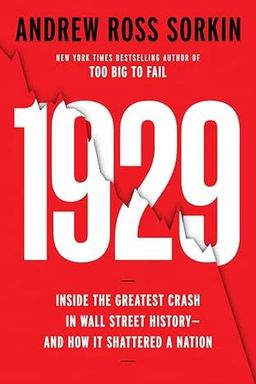
Why do markets that look solid one week crumble the next? This book argues that crashes are never just about impersonal forces; they are dramas of people, power, and plumbing. You watch how charismatic bankers, headline-grabbing speculators, and cautious central bankers act on incentives inside a market architecture that magnifies their choices. When you overlay that with a culture that normalizes borrowing and lionizes quick wealth, you get a system primed for a break. The 1929 story is the composite of those layers—human ambition, credit leverage, market mechanics, and politics—slammed together under stress.
Human actors set the tone
You meet Charles E. Mitchell of National City (“Sunshine Charlie”), who turns banking into a mass-marketed product and steps into the money market on March 26, 1929 to advance roughly $6 million in call loans as rates spike near 20 percent. You watch Thomas Lamont of J.P. Morgan, polished and worldly, glide from reparations talks in Paris to backroom crisis councils on Wall Street—while privately telling his son to sell and keep cash. Speculators like William C. Durant and Jesse Livermore embody risk from opposite sides: Durant the bullish showman who lobbies Hoover at the White House, Livermore the solitary strategist who profits on the downside yet later succumbs to the psychological toll (he dies by suicide in 1940). John J. Raskob bridges money and politics, promoting installment investing for wage earners and dreaming up the Empire State Building as a monument to optimism.
Credit turns optimism into fragility
Debt is the through line. Broker loans swell from about $1 billion to nearly $6 billion in the late 1920s. Banks—directly and via securities affiliates—feed the boom; some even cross red lines. National City quietly buys its own shares to support a merger, amassing some seventy-one thousand shares by October 28 (and about $32 million of its stock on the books)—illiquid and unusable as collateral when liquidity tightens. Investment trusts and holding companies stack leverage on leverage: trusts buy other trusts financed with preferreds and bonds, creating opaque chains of exposure. When call money costs jump, brokers can’t roll debt; forced liquidations cascade.
Market plumbing amplifies psychology
You see how specialists, pools, and a lagging ticker convert fear into stampede. Michael Meehan’s RCA pool—$12.7 million from 68 participants, including Durant and Walter Chrysler—shows how insiders can “paint the tape” to attract public money. On panic days, the ticker falls hours behind; phone lines clog; traders guess at prices and sell first. Visible theatrics matter: on October 24, Richard Whitney strides to the U.S. Steel post and bids for ten thousand shares at $205, using a bankers’ pool that Lamont and the “Big Six” hastily assemble. The gesture calms the floor briefly but can’t absorb the public’s selling power.
Fed limits, political crossfire
The Federal Reserve’s toolkit—discount rates, rediscounts, and moral suasion—proves ill-matched to the speculative credit machine. After Benjamin Strong’s 1928 death, leadership fractures; Washington and the New York Fed clash. Governor George L. Harrison quietly tolerates Mitchell’s March intervention even as Senator Carter Glass publicly denounces it as mutiny. Meanwhile, ideologues shape options: Andrew Mellon urges liquidation as purgative, while Hoover tries cooperative voluntarism and soothing statements. Later, Roosevelt pairs decisive moves (bank holiday, deposit insurance) with narrative mastery (fireside chats), showing how communication is policy in a panic.
Culture widens exposure
Installment credit that popularizes cars and appliances also normalizes buying stocks on time. Media and celebrity validate risk: Groucho Marx mortgages his home to meet margin calls; William Durant rails against the Fed on late-night radio. Even household staff speculate on margin and beg employers to intervene as tickers tumble. The investor base democratizes—and with it, the reach of margin calls into ordinary kitchens.
Crash, reckoning, and reform
Black October exposes the limits of private rescue. Lamont warns, “No man nor group of men can buy all the stocks the American public can sell.” Human costs follow: bank presidents like John Riordan end their lives under impossible pressure; depositors queue at the Bank of United States for two dollars. Public anger fuels Ferdinand Pecora’s hearings, which strip mystique from J.P. Morgan partners and put Mitchell’s deals under a national microscope—transforming scandal into the Glass–Steagall Act, deposit insurance, and, eventually, the SEC. Even when courts acquit (Mitchell, 1933), legitimacy is gone; law replaces trust as the system’s guardrail.
What you carry forward
The book leaves you with a sober conclusion: crises arise when ambitious actors, permissive credit, manipulable market plumbing, and muddled policy combine under the spell of cultural exuberance. You can’t regulate human nature, but you can build humility into institutions and remember how “bootlegging” credit flows around rules. Weigh public assurances against private hedges (Lamont’s advice to his son), track credit growth and market microstructure alongside macro data, and recognize that visible acts—whether Whitney’s bids or Roosevelt’s bank holiday—work only if backed by real balance-sheet power.
Key Idea
Crashes are human stories in leveraged systems; to manage them, you map incentives and credit, not just prices. (Note: This stance echoes Kindleberger–Minsky cycle logic and complements Galbraith’s emphasis on frauds and “bezzle.”)