
Idea 1
Reclaiming Focus and Time in a Distracted World
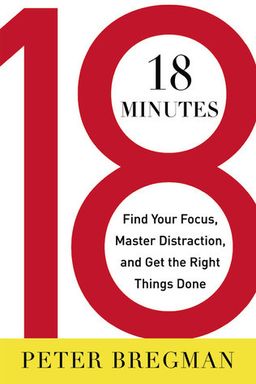
How often do you reach the end of a busy day and wonder where your time went? You worked hard, answered countless emails, attended meetings, and yet, inside, you feel drained and unfulfilled. It's the modern paradox: endless activity, limited progress. In 18 Minutes: Find Your Focus, Master Distraction, and Get the Right Things Done, Peter Bregman confronts this paradox head-on, arguing that our greatest challenge isn’t managing time—it’s managing focus. He believes the secret to success and happiness lies not in doing more, but in doing what truly matters.
Bregman’s title refers to the practice of spending 18 minutes each day deliberately guiding your attention: a short morning ritual to plan, tiny pauses throughout the day to stay aligned, and an evening reflection to learn. He contends that most people fail to achieve meaningful results not because of laziness or lack of intelligence, but because they never stop long enough to ensure they’re moving in the right direction. Like Newton’s law of motion, we keep barreling forward until something external—or internal—makes us reassess our trajectory.
The Cost of Lost Time
Early in the book, Bregman tells relatable stories: Molly, who starts her job with 385 emails waiting; Rajit, whose day disappears into distractions; and Marie, who looks back on decades of living and feels merely “fine.” These vignettes ground his argument that time is the only resource that once lost, can never be recovered. His central question emerges: if we already know we don’t have enough time, why do we steal so much of it from ourselves?
Using anecdotes, scientific research, and leadership insights, Bregman explains the invisible habits that pull us off track—momentum, emotional reactivity, expectation bias—and how strategic pauses can break the cycle. He bridges personal stories with professional lessons, much like Charles Duhigg does in The Power of Habit, weaving psychology and life coaching into practical systems for productivity.
The Power of the Pause
The book begins with a section called “Pause,” urging readers to stop reacting and instead step back—like pressing the FIND ME button on Google Earth. When Bregman built his consulting business only to lose himself in success, the crash forced him to pause. That break revealed his deeper purpose: to help others focus on what matters most. He argues that stopping to hover above your life is the first step to reclaiming direction. We often race ahead, convinced that busyness equals progress. But, as his stationary bike story shows, momentum—mental or emotional—can trap us in motion without meaning.
By pausing, we regain clarity. Just as a computer needs time to process, humans need time to reflect. Each chapter builds on this idea with practical reframing: slow down, start over, rest strategically, question your assumptions, and repair your focus. Each technique invites deliberate interruption—structured moments to realign your next move with your deeper goals.
Structure of Focus: Year, Day, Moment
The book unfolds across four parts: “Pause,” “What Is This Year About?”, “What Is This Day About?”, and “What Is This Moment About?” This organization echoes his central insight: sustainable focus operates on multiple time horizons. You must decide annually what matters, translate it daily into tangible actions, and master your moments so they align with your chosen path. Each level demands a distinct skill—strategic thinking, disciplined planning, emotional control—yet all are anchored in awareness.
This framework mirrors Stephen Covey’s layered approach in The 7 Habits of Highly Effective People, where personal leadership precedes time management. Bregman’s version is less about habits and more about rhythm—creating an intentional dance between action and reflection that keeps you connected to purpose. The ultimate goal isn’t perfection or endless productivity, but a sense of grounded progress: ending each day knowing you used your time well.
From Efficiency to Meaning
Bregman also differentiates between mere efficiency and meaningful productivity. Most time management systems promise to help you “get it all done.” But Bregman insists that trying to do everything is impossible—and dangerous. You’ll end up lost in noise, sacrificing the very things that bring fulfillment. Instead, he asks you to choose intentionally: what’s worth doing, and what’s not? Only by focusing on a few core areas—he calls them the “five areas of your annual focus”—can you align effort with satisfaction.
This shift transforms time management from a skill into a philosophy. You’re not chasing speed but cultivating wisdom about direction. He describes his book as a FIND ME button for life—a guide to locating yourself amid chaos and landing where you most want to be. By combining emotional intelligence, behavioral science, and concrete daily rituals, Bregman offers a compass for anyone feeling spread thin or off-balance.
Why It Matters
In a world overflowing with information and obligations, 18 Minutes teaches a form of mindful productivity—less about speed, more about alignment. Bregman’s message is compassionate yet rigorous: every day presents another chance to recalibrate your life toward what’s essential. His framework helps you slow down, focus, reflect, and reenter your day with intention. Ultimately, he invites you to experience work and life not as battles for your time but as opportunities to act with clarity and purpose. If you’ve ever felt you’re spinning instead of steering, this book shows you how to press pause, look up, and rediscover where you are—and where you actually want to go.