
Idea 1
Mastering Your 168 Hours: The Freedom of Time
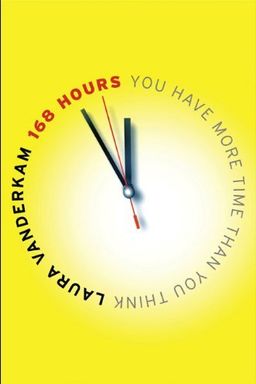
How often do you find yourself saying, “I don’t have enough time”? In 168 Hours: You Have More Time Than You Think, Laura Vanderkam turns that complaint upside down. Her core argument: we all have the same 168 hours each week, and most of us misuse them because we don’t recognize how much control we actually have. Vanderkam contends that time management isn’t about doing more—it’s about doing more of what matters. If you can learn to fill your 168 hours intentionally, you can design a life that reflects your deepest priorities.
The book’s premise relies on a deceptively simple question: if everyone—from overworked executives to stay-at-home parents—has the same weekly hours, why do some people thrive while others feel perpetually overwhelmed? Vanderkam’s answer is that successful people understand how to align their time with their values and to shed the false narratives of busyness that dominate our culture. By recording, examining, and reimagining your own time use, you uncover where those lost hours are hiding.
Rethinking the Myth of Busyness
The first idea Vanderkam dismantles is the “time crunch” myth. Despite constant complaints of being overworked, most people dramatically overestimate their work hours. Time-diary studies show that the average full-time worker performs 35–43 hours of real work per week and still sleeps around 8 hours a night. Yet we tell ourselves stories of 70-hour workweeks and 6-hour sleep nights to prove our dedication. The truth? We’re often confusing feeling busy with actually being productive.
This cognitive bias stems from what psychologists call “social desirability”—we feel valued when we claim to be busy. It’s a badge of importance. But as Vanderkam shows, this story costs us control. When you log every hour for one week, you start to see how much time vanishes into distractions: scrolling social media, inefficient meetings, television, errands, and “pseudowork.” These activities feel necessary, but they drain the hours that could be invested in personal growth, health, and joy.
Your Time as a Blank Slate
Vanderkam introduces the idea of thinking in weeks, not days. A week provides a more flexible framework to observe patterns and to fix imbalances. Each week contains 168 hours—ample time to sleep eight hours a night (56), work 40–50, and still have 60-plus hours for family, exercise, hobbies, and relationships. The problem is not scarcity—it’s awareness. Most of us don’t know where our time goes because, unlike money, we rarely track it.
The way to reclaim that awareness is through a simple but powerful exercise: keeping a time log. Vanderkam’s research participants often discover surprises. One woman who believed she worked 16-hour days learned she actually averaged just six productive hours and slept more than she thought. Awareness leads to choice, and choice leads to change. When you see every hour as a conscious decision, “I don’t have time” becomes “it’s not a priority.” This shift reveals what you value—and what you neglect.
Changing the Language of Time
Perhaps the most transformative idea in the book is linguistic: stop saying “I don’t have time.” Replace it with “It’s not a priority.” This exercise can be bracing. “I don’t read to my kids because it’s not a priority” sounds harsh—but it’s honest. It forces you to examine your real choices instead of blaming circumstance. As Vanderkam writes, “Time is a choice. You are in charge of you.”
Viewed this way, time becomes a powerful tool rather than a trap. If you treat each of your 168 hours as a finite resource—a blank calendar that you fill deliberately—life begins to expand. You can sleep enough, work productively, nurture your relationships, and still have blank space for rest or spontaneity. The secret lies in aligning your hours with your core competencies—the things you do best and value most.
What You’ll Learn
Across the chapters, Vanderkam offers a method for redesigning your life around purpose. You’ll learn to:
- Identify your personal core competencies and invest your best time in them.
- Reimagine your work life—finding or creating the right job that energizes rather than depletes you.
- Eliminate or outsource low-value tasks at home and work (like endless housework and pseudo-busyness).
- Design a meaningful personal life filled with family connection, relationships, volunteering, and fulfilling leisure—without guilt.
You’ll meet real people—executives like Theresa Daytner, scientists like Sylvia Earle, and parents balancing huge demands—who have all learned to channel their energy toward what matters. Their stories reveal that fulfillment isn’t a miracle of luck; it’s a function of focus. Vanderkam’s message is both practical and liberating: you already have enough time. What you need is the courage to use it wisely.
Themes ranging from workplace productivity and creative autonomy to housework decline, modern parenting, and leisure structure all flow from this central insight. Whether through time logs, outsourcing, or redefining “balance,” Vanderkam’s 168-hour lens invites you to take radical ownership of your week—and by extension, your life.