
Idea 1
Freedom, Memory, and the Persistence of Human Dignity
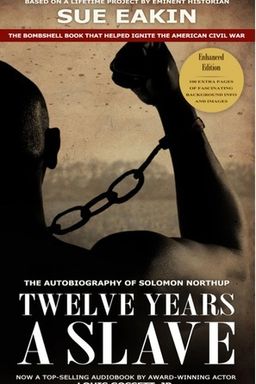
What does freedom truly mean when one has tasted its absence—when liberty itself becomes a memory rather than a right? In 12 Years a Slave, Solomon Northup delivers more than just a survival narrative; he offers a moral lens through which readers confront the contradictions, cruelties, and enduring humanity within the institution of slavery. Written in 1853 upon his miraculous rescue, the book bridges two worlds: the free North and the enslaved South, showing how corruption can strip a person of identity, and how resilience can restore it.
Northup contends that slavery was not an abstract evil but a daily degradation enacted by human beings upon other human beings—a system sustained by greed, custom, and the perversion of law. Yet his narrative is also a testament to moral courage, empathy, and faith. It reveals how, even when stripped of rights and dignity, a person can hold on to memory, morality, and hope. This duality—between despair and defiance—forms the book’s beating heart.
Freedom and Identity Stolen
Born free in New York, Solomon Northup was a violinist, carpenter, and devoted father until deception led him into bondage. Two men, Brown and Hamilton, lured him under the guise of professional opportunity, drugged him, and sold him in Washington, D.C. This moment encapsulates his thesis: that freedom’s fragility lies in the ability of corrupt men and corrupt institutions to redefine truth. His free papers—tangible proof of identity—were stolen, and without them, he became legally invisible.
This erasure of personhood speaks to what W. E. B. Du Bois later called “double-consciousness”—the sense of being seen only through the distorted lens of another’s prejudice. Northup’s name itself was changed to “Platt.” Stripped of identity, he lived twelve years as someone else. Yet within him survived the memory of who he was—a quiet rebellion that made each day bearable.
Slavery's Human Spectrum
Throughout his twelve years, Northup exposes slavery as a spectrum of humanity’s best and worst. His first master, William Ford, was a Baptist preacher who treated his slaves humanely, demonstrating how decency could coexist with complicity. Ford’s kindness could not redeem the system but revealed moral complexity. His next owner, John Tibeats, embodied cruelty—an arrogant carpenter whose violent temper nearly killed Northup. And Edwin Epps, a drunken planter and “nigger breaker,” personified sadistic power unchecked by conscience.
By showing these gradations, Northup challenges readers to see that slavery was not sustained simply by monsters but by men—ordinary individuals bound by habit, profit, and prejudice. This recognition magnifies the tragedy: moral blindness flourished in polite society.
Endurance, Faith, and Resistance
Northup’s survival depended on quiet intelligence, skilled labor, and cautious restraint. His violin, ironically, became both his comfort and currency—it lightened his master’s moods, earned him temporary privileges, and connected him to his past life. He never stopped assessing risks, waiting for the moment when escape might be possible. His friendship with Bass, an itinerant Canadian carpenter, finally opened that door. Bass, impelled by conscience, wrote the letters that led to Northup’s rescue. Their alliance across race and social status becomes one of the era’s most inspiring moral encounters—a symbolic restoration of justice through human empathy.
Why It Still Matters
Northup’s memoir does more than recount brutality; it asks every reader to question how memory shapes freedom itself. Remembering injustice becomes an act of liberation. His account builds bridges between personal testimony and broader historical reckoning, prefiguring later works by Frederick Douglass and Harriet Jacobs. It reminds you that freedom, once lost, is not just regained—it must be redefined, protected, and narrated.
To read 12 Years a Slave is to confront the horror of bondage through one man’s eyes—but also to glimpse the endurance of the human spirit. Northup leaves readers with a question that persists beyond his century: When the chains are broken, how do we ensure they are never forged again?