
Idea 1
Order, Chaos, and the Architecture of Responsibility
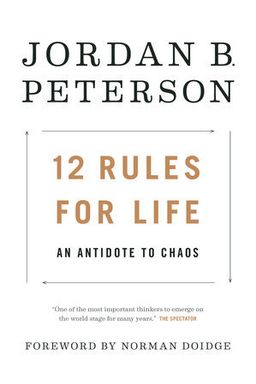
What does it mean to live a meaningful life in an age of confusion? In 12 Rules for Life, Jordan B. Peterson argues that the path to order and purpose lies in accepting responsibility, telling the truth, and aligning your actions with meaning rather than expedience. He draws from biology, psychology, theology, and myth to propose an ethic of self-correction and disciplined striving in a world that mixes chaos and order at every level.
Peterson’s project is not abstract moralizing. Each “rule” distills universal psychological patterns into practical advice for living: stand tall, care for yourself, choose honest friends, aim at moral improvement, raise disciplined children, clean your house before accusing the world, and pursue the meaningful rather than the merely convenient. Beneath these injunctions runs a consistent claim—that human beings inherit both the biological structure of dominance hierarchies and the symbolic burden of moral knowledge. Life is suffering and limitation, but within those constraints, responsibility can transform pain into growth.
The pattern beneath the rules
At the base of Peterson’s teaching lies the tension between chaos (potential, danger, the unknown) and order (structure, habit, known territory). You live between the two. Too much order becomes tyranny; too much chaos becomes despair. Meaning exists on the narrow bridge between them—where you voluntarily confront what you fear and build competence through disciplined action.
Each rule translates that mythic balance into a personal practice: stand up straight with your shoulders back to signal readiness for conflict; treat yourself as someone worth helping so that order begins within; choose friends committed to your improvement; measure progress against yourself rather than envy others; discipline your children with firm love to prepare them for society; and clean your room—literally and metaphorically—before denouncing the world’s injustices.
From myth to psychology
Peterson integrates evolutionary biology, clinical psychology, and the Western symbolic canon. Lobsters—creatures that predate trees—stand as living proof that dominance hierarchies and serotonin systems structure life across species. Their posture mirrors success or defeat, just as yours does. Genesis dramatizes the dawn of self-consciousness: once Adam and Eve tasted knowledge, they became aware of their flaws and capacity for evil. That awareness underlies shame but also moral self-reflection—the capacity to choose good over resentment.
Peterson merges this religious language with clinical realism. He counsels small, measurable responsibility rather than utopian schemes. Before criticizing politics or institutions, try repairing what is broken in your immediate life—your room, relationships, finances, or promises. Only when you master local order can you meaningfully aspire to influence the world beyond.
Suffering, sacrifice, and meaning
The moral foundation of the book rests on one central exchange: sacrifice the easy, expedient path for the meaningful one. Primitive humans who shared food ensured future cooperation. Religious stories of offering—the Abrahamic sacrifice or Christ’s passion—encode this insight as sacred drama: the highest good requires giving up immediate comfort for a transcendent purpose. When you accept suffering as inevitable but align it with a worthy aim, you transmute suffering into meaning.
That impulse to pursue meaning over pleasure is not merely heroic; it is psychologically stabilizing. Expedient shortcuts breed deceit and resentment. Meaningful goals—service, mastery, love, truth—make pain bearable and often redemptive. In this light, Peterson’s insistence on truthful speech, patient listening, and precise articulation becomes a moral defense against personal and cultural chaos.
The arc toward renewal
The later chapters trace a movement from self-regulation to truth-telling and resilience. Learning to listen before speaking clarifies thought and builds community; precision in language exposes hidden problems before they become monsters. Courageous parenting balances protection with challenge, and learning from suffering transforms tragedy into renewal. Peterson ends with a reminder built from his own daughter’s struggle with illness: even in suffering, find moments of gratitude—pet the cat when you see it. Beauty and order persist amid chaos if you have eyes to notice.
Core affirmation
Life’s weight can crush you or form you. Choose responsibility over victimhood, truth over comfort, and meaning over expedience—and chaos becomes the raw material for transformation.
(Note: Philosophically, Peterson shares ground with Viktor Frankl’s Man’s Search for Meaning and Nietzsche’s call to "become who you are." His difference lies in blending ancient myth, modern psychology, and moral prescription into one demanding but hopeful vision.)