
Idea 1
Design a Life That Reduces Suffering
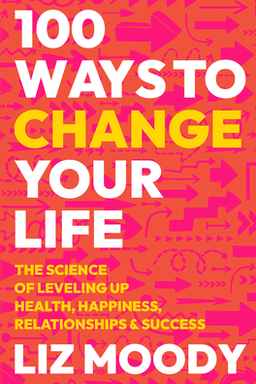
The central argument of Liz Moody’s book is disarmingly simple yet revolutionary: wellness isn’t about perfection—it’s about suffering less and living more. Instead of chasing a flawless regimen or treating health practices as moral tests, Moody reframes wellbeing as a set of flexible tools that serve your real life. You’re not collecting gold stars for discipline; you’re building systems that help you thrive in body, brain, and relationships.
Drawing from interviews with leading doctors, psychologists, and thinkers such as Dr. Casey Means, Dr. Amishi Jha, Dr. Katy Milkman, and Alua Arthur, Moody organizes life into interconnected domains: physical wellness, emotional regulation, habits and productivity, social connection, and existential perspective. Each domain contributes to a holistic toolkit for living better without unnecessary struggle.
Wellness as a tool, not a test
Moody begins by dismantling the cultural myth that health must equal hardship. If a diet or routine makes you anxious or isolates you, it fails the ultimate test—reducing suffering. Her early recovery from panic and isolation started with one joyful act: making a green smoothie she could enjoy. From that micro-act came momentum for meditation, reading, and walks. The lesson: start small and start with pleasure.
Core takeaway
If a ‘healthy’ habit increases your total suffering—social tension, stress, guilt—drop it. The most useful wellness practice is one that delights and restores you.
Personal science and N-of-1 thinking
You are your own research subject. Moody, echoing Dr. Sara Gottfried and Dr. Will Bulsiewicz, teaches experimentation through N-of-1 trials: track a single variable, observe results, and decide based on data that reflects you—not the population average. Gottfried’s tea experiment lowered her blood pressure; Bulsiewicz highlights that mood improvement from probiotics matters even if you’re the only one who benefits. (This aligns with self-experimentation frameworks in behavioral science from Tim Ferriss and Katy Milkman.)
This personalized approach makes wellbeing adaptive. You stop mimicking experts and start collaborating with your biology through observation.
Habits that actually stick
Moody integrates behavioral science elegantly: Daniel Pink’s “why,” Katy Milkman’s “fresh-start effect,” Gabriele Oettingen’s WOOP, and temptation bundling. Habits work when purpose, timing, and pleasure align. You begin with micro-goals—“10-minute walk” beats “daily 5K”—then anticipate friction (alarm fatigue, forgetfulness) and plan fixes. Pair behaviors with pleasure, such as a favorite show during chores or an audiobook at the gym. These psychological levers turn fleeting motivation into durable systems.
Mortality as motivation
Unexpectedly, Moody includes mortality reflection as a wellness principle. Inspired by death doula Alua Arthur and psychologist Julie Smith, she invites you to envision your funeral—not morbidly, but to clarify values. If you had twenty days left, how would you live? What would people say about you? These reflections direct energy away from trivial anxieties and toward authentic meaning—relationships, nature, and connection. (Similar to Stoic memento mori or Bronnie Ware’s “five regrets of the dying.”)
Physical vitality basics
Moody’s physical protocols rely on compound habits that are small but potent: circadian-aligned mornings (sunlight within minutes of waking, respecting your chronotype), regular micro-workouts (short intense bursts beat single long sessions for glucose control), cold exposure (brief, hormetic stress to improve resilience), and gut nourishment (plant diversity and fermentation for microbiome variety). She champions cooking and cooling starchy foods to form resistant starch—fuel for SCFA-producing bacteria like F. prausnitzii that lower inflammation.
These accessible tweaks combine ancient wisdom with modern science—movement every hour, food that delights, and short stress resets that recalibrate your metabolism and hormones.
Connection and emotional mastery
Wellness expands beyond your body. Moody’s chapters on relationships draw heavily on Dr. Marisa G. Franco, Logan Ury, and Dr. Robert Waldinger. Their collective message: belonging and love are biochemistry as much as psychology. To connect deeper, shift from “interesting” to “interested.” Follow conversational cathexis—the spark of topic that energizes someone—and listen actively rather than perform. Vulnerability, reliability during hardship, and shared rituals (weekly household meetings or a six-second kiss) transform social ties into emotional nutrition.
Stress and productivity
Dr. Heather Moday and Dr. Wendy Suzuki show how short stress spikes can strengthen you, but chronic stress corrodes your health. Moody packs practical antidotes: cyclic sighs, five-minute meditations, and symbolic rituals to mark transitions. Productivity follows the same principle—less friction, more focus. Simplify through Chris Bailey’s “rule of three,” automate decisions, and work inside defined time boxes to harness attention instead of drown in it.
Across every domain, Moody’s system repeats one pattern: tiny, joyful actions compound into resilience. Real wellness is iterative design—experiment, adjust, and choose what reduces suffering while enriching life. It isn’t a single cure; it’s a lifelong craft that turns everyday choices into self-support.