
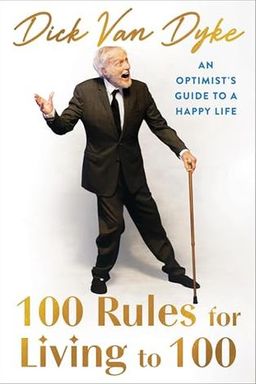
100 Rules For Living To 100 cover

100 Rules For Living To 100

by Dick Van Dyke,Tal Mcthenia

The multiple award-winning entertainer reflects upon how his positivity shaped his life and career.

Identity, Power, and a Missing Boy

What does it take to decide who a child is when memory frays, evidence conflicts, and public desire for certainty overwhelms due process? In this book, you follow the century-old Dunbar mystery—Bobby Dunbar’s 1912 disappearance and recovery—to see how identity becomes a contested construction shaped by mothers’ love, community power, press theater, legal maneuvering, and a child’s malleable memory. The authors argue that truth, in such cases, is never found in one fact; it’s forged across overlapping arenas where scars, stories, and status collide. To grasp this, you track how two women—Lessie Dunbar of Opelousas and Julia Anderson of North Carolina—claim the same blond child, how newspapers and detectives weaponize that claim, and how courts and crowds convert it into verdict and memory.

The central paradox: Two mothers, one boy

From the first pages, you confront Lessie and Percy Dunbar’s certainty that the found child—examined for moles, a cowlick, a burned left big toe, oddly formed little toes, and even a private medical detail (Dr. Shute’s “deformity” note)—is their missing Bobby. In equal conviction, Julia Anderson insists the boy is her Bruce (Charles Bruce Anderson), the child she entrusted to itinerant piano tuner William C. Walters. The boy’s inconsistent responses—answering to “Robbie” in one setting and “Bruce” in another—expose how identity in a traumatized four-year-old bends under fear, suggestion, and context.

From private grief to public spectacle

What begins at Swayze Lake as a family catastrophe becomes a regional crusade. Hundreds scour swamps by torchlight, dynamite water holes, and even cut open alligators. Rewards swell from $1,000 to thousands more; special trains bring searchers. With every poster and rumor, the case widens—from Opelousas to the Gulf Coast, from North Carolina to Mississippi—inviting opportunists and false leads alongside earnest aid. The search builds a communal narrative that later hardens into “our boy is found,” a story the law and press eagerly stage.

Press engines and narrative control

Newspapers do not simply chronicle events; they produce them. The New Orleans Item secures exclusive access, escorts Julia across state lines, and orchestrates photos; the Times‑Democrat and, later, the Times‑Picayune counter with cooler reporting and their own set pieces. Reporters—Mignon Hall, Sam Blair, Herman Seiferth, Stanley Ray—become characters who time revelations, stage identifications, and even drop preprinted verdict slips into crowds. You learn to ask not only “what happened?” but also “who staged whom, and to what end?” (Note: the press-as-actor dynamic anticipates today’s media trials.)

Law as theater and chess

Legal players—District Attorney R. Lee Garland, Judge Benjamin Pavy, defense attorneys Hollis Rawls, Thomas Dale, and E. B. Dubuisson—battle across venues and statutes while Governor Earl Brewer in Mississippi weighs extradition politics against lynch fears. The Burns Detective Agency’s Dan Lehon floods the South with circulars; sheriffs Marion Swords and Hathorn manage jails and crowds; civic leader John M. Parker presides over a pivotal New Orleans identification hearing. Habeas corpus petitions, extradition warrants, and jury instructions—not just facts—steer the outcome (compare with trials where technicalities decide fates).

Memory, marks, and the unstable child witness

The book makes you skeptical of certainty built on scars and children’s statements. The big-toe burn scar—emblazoned on circulars—fades, is “rediscovered,” or is missing depending on who looks and when; webbing and toe curvature appear and disappear in testimony filtered through hookworm, barefoot living, and time. Adults ask the boy leading questions; baby-talk prompts shape answers; storytellers (like John W. Lewis) narrate the child’s own life back to him, creating recognition where memory is fragile (echoing later research on suggestibility in child witnesses).

Gender, class, and credibility

Julia Anderson’s poverty and past relationships become weapons against her. She endures a humiliating parlor lineup, press slander about being “unmotherly,” and cross-examinations from a sickbed after major surgery. Meanwhile, the Dunbars receive parades, speeches, and political protection. You see credibility allocated along lines of status, respectability, and access—who gets the benefit of doubt depends on who belongs (a throughline with cases like the Tichborne claimant and later small-town scandals).

Verdict, aftermath, and a modern coda

The jury convicts Walters (life sentence), yet appellate courts later unwind the legal foundation on procedural grounds (Act No. 271 and faulty jury instructions). Lives fracture: Walters drifts and performs on small stages; the Dunbars’ marriage frays; Julia rebuilds a life of faith and service in Mississippi. A century later, DNA testing overturns the official story, indicating the boy raised as Bobby was not Percy and Lessie’s biological child—a result Julia’s descendants take as late vindication. You finish with a hard-earned insight: truth in public tragedies is layered—legal, social, and private—and it rarely arrives on the timeline the crowd demands.

Key premise

“Identity is not a single fact; it is an outcome of forces—love, fear, press, law, and memory—struggling to fix a name to a child.”


Mothers, Marks, and a Boy

You enter the identity fight at the point where love becomes evidence. Lessie Dunbar and Julia Anderson each demand the same child, and both reach for bodies and memories to prove it. The book keeps you close to hands and eyes—private baths, lifted shirts, examined toes—because in 1912, before DNA, a scar could pass for a fingerprint and a mother’s gasp for proof.

How mothers “see” their child

Lessie and Percy Dunbar catalog marks: a cowlick, moles near the ear and neck, a burn scar on the left big toe, oddly formed little toes, and even a genital irregularity Dr. Shute quietly records. Percy inspects shoulders and hands; Lessie tests recognition in warm light and soapy bathwater, reading comfort or recoil as signals. Julia Anderson counters with her own map: a mole above the right eye (in “fruit time”), nearly white hair, and memories of Bruce’s closeness to Walters and the Bilbo household in Poplarville. You see both women reconstructing their sons from fragments, insisting that familiarity is forensic.

The humiliating public “test”

At John W. Lewis’s Opelousas parlor, Julia is forced to pick “her” child from a lineup—a method as theatrical as it is flawed. Reporters hover; a bystander mocks; emotions swamp judgment. The boy, anxious under the gaze of strangers, recoils and then softens in later, quieter moments. The book treats this not as a neutral experiment but as a ritual reinforcing who already belongs; public identification rewards the hometown narrative and punishes the outsider (you can compare it to tainted lineups that later courts condemned).

The big-toe scar that won’t sit still

The circulars shout “big toe on left foot badly scarred,” turning a toddler’s mishap into the case’s most litigated feature. Mississippi witnesses—Dr. Anderson among them—sometimes fail to find the scar; others find a faint line or a different malformation (webbing, inward-turning phalanx). Lessie later warns Percy he overstated the scar as it had faded. Prosecutors and defense pounce on each shift, asking jurors to equate a dim or absent scar with truth or deceit. Medical context matters: hookworm and barefoot life alter skin; surgery (if any) leaves traces that can pass for different injuries (Note: the book nods to Dr. Charles C. Bass’s hookworm work in the region).

The child’s memory under siege

The boy’s words flicker like fireflies. He recalls a “bad old man Walters,” a “big white hat,” a boy who fell and needed crutches, being taken on a railroad bridge, promises of bananas. Katie Dunbar’s coaxing baby-talk and adult prompts—“Who sings like that?”—pull out names and places (Schell Canal Bridge, “baby ring”) that adults treat as hard proof. But repetition shapes memory. John W. Lewis narrates the child’s own journey back to him; the boy recognizes himself inside the story, classic narrative reconsolidation. In public crowds he freezes; in private laps he remembers differently. You witness how care, fear, and suggestion sculpt a child’s identity in real time.

When behavior is read as evidence

The adults infer identity from aggression and attachment. If the boy clings to Lessie, jurors see maternal bond; if he calms with Poplarville playmates, they see Bruce returning home. He mimics Percy’s lip pop, calls “audbeel” for “automobile,” trusts Lucille DeVerges, and sometimes recognizes Walters with a chilling stare. Every gesture becomes data—but the book warns you that in trauma, behavior mirrors the room. Recognition is partly a performance for safety.

Ethics: whose body counts as proof?

The case asks whether you can compel proof from vulnerable bodies. The boy’s body is inspected; Julia’s too—she’s asked from a sickbed to show her big bare foot beside the child’s, as if heredity leaves legible toes. The image is raw and unforgettable: a mother on a cot, post‑surgery, proving motherhood to skeptical men. The book forces you to see how class and gender decide whose intimacy becomes public evidence and whose doesn’t.

Key tension

Physical marks feel objective, but they live inside stories; a scar convinces only when power arranges the light.

By the end of this chapter of the saga, you’re wary of any single “tell.” You watch love reach for proof, witnesses reach for certainty, and a child reach for a safe answer. The authors teach you to hold ambivalence without paralysis—a skill as relevant to modern witness work as to a Louisiana parlor in 1913.


Press Machines, Made Truth

You cannot explain the Dunbar case without treating newspapers as actors with agendas, resources, and stagecraft. The New Orleans Item, Times‑Democrat/Times‑Picayune, and Daily States did not simply report; they curated facts, funded travel, manufactured scenes, and timed releases to influence governors, jurors, and crowds. In their hands, a custody dispute became a serialized melodrama with cliffhangers and villains.

Competing newsrooms, competing realities

The Item prized sensation and “exclusives.” It escorted Julia Anderson from North Carolina to New Orleans, arranged staged encounters, and splashed headlines like “Kidnapped Boy Found; Dunbar Here with Child.” Reporters Mignon Hall and Sam Blair chased stunts—newsreel crews, hotel theatrics, a fabricated Lessie interview pleading for Walters’s life—that provoked public committees in Opelousas to denounce them. The Times‑Democrat/Times‑Picayune (Herman Seiferth, Stanley Ray) struck a cooler tone but still played the editorial game, critiquing fakery while shaping opinion through careful framing.

How press power moves people

Papers funded witness travel, recruited sources, and mediated access to families. The Item tried to lure the Dunbars to a Sunshine Society carnival to capture film; it coached scenes at the Monteleone and Lewis homes; it even published anonymous threats (“B. and H.,” “Well Wisher”) that fed fear and resolve. Press attention made Governor Earl Brewer’s decisions—on extradition, on ordering identifications—feel like referendum responses. When you see the John M. Parker hearing convened in New Orleans, imagine the invisible editorial hand that made an identification a civic pageant.

Theatricalization as evidence

The book catalogs “props”: parades, hotel cots, a high chair, the boy’s bath, side-by-side toe showings, and newsreels billed as a “Two Reel Feature of Dunbar‑Walters Trial.” Visuals substitute for analysis. A single photograph suggests resemblance; a public gasp stands in for cross-examination. You’re reminded how jurors, then and now, are swayed by imagery and repetition more than by careful chains of inference (compare with modern viral courtroom clips). When an Item reporter drops preprinted verdict slips into the crowd, the symbolism is blunt: press declaring the ending before the jury does.

Witness shaping and chilling effects

Coverage distorted testimony long before oaths. Mississippi witnesses were warned (and sometimes threatened) about perjury if they contradicted the Dunbars; others were lionized for “seeing the truth.” A Poplarville restaurant worker, Katie Collins, later narrates seeing two men with two similar boys; her account blooms after press attention makes doubles fashionable. Conversely, some McComb witnesses recant or refuse to travel, spooked by publicity. You watch the feedback loop: reports provoke behaviors; behaviors become reported proof.

Editorial morality plays

The papers frame Julia as immoral or tragic, Walters as brute or misunderstood craftsman, the Dunbars as saints or strategists. Editorials moralize: some call Julia “unmotherly,” others condemn Opelousas’s treatment of her. These narratives grant or revoke empathy, and empathy often controls whether facts get believed. The press, in other words, functions like a shadow jury that convinces the real one what “everyone knows.”

How to read news in a case like this

The authors train you to parse motive and method. Ask who paid for the train ticket, who staged the photograph, who timed the leak about a scar. Recognize that scoop wars reward novelty and certainty, the very qualities a truth-seeking process should distrust. Consider how “balance” can still bias by privileging certain sources (sheriffs, business leaders) over marginal voices (poor mothers, itinerant tinkerers). When a paper becomes a power broker, you must interrogate the broker as much as the commodity.

Insight

Media do not just cover identity disputes; they manufacture the stages on which identities harden into “truth.”

By the time you reach the verdict, you realize the press helped write it. That realization equips you for today’s cases: when headlines climb ahead of evidence, pause. Look for the hand behind the camera—and ask what story it needs you to believe.


Law, Politics, and Venue Wars

The legal journey in the Dunbar affair shows you that outcomes often turn on where and how a case proceeds more than on any single fact. Extradition battles, habeas corpus strategies, statutory defects, and jury instructions steer the ship, while politicians and sheriffs try to keep crowds from capsizing it. You watch law working in public—not just as doctrine on paper, but as choreography performed under klieg lights.

Extradition as leverage

Mississippi’s Governor Earl Brewer faces a no‑win choice: sign Louisiana’s requisition for Walters and risk facilitating a wrongful conviction; or refuse and look like he’s harboring a kidnapper. He oscillates—at times demanding the Dunbars present the child to Mississippi witnesses, at others signing the requisition when pressured by headlines and officials. The defense exploits the gray: if Walters wasn’t in Louisiana at the abduction, extradition logic falters. The prosecution asserts flight and identity to keep venue in Opelousas, where public sentiment is favorable.

Habeas corpus and the Poplarville pivot

Defense attorneys Hollis Rawls and Thomas Dale file habeas in Poplarville to block extradition. Judge Weathersby allows expansive testimony—timelines, alibi witnesses, even material of questionable admissibility—building a record for appeal. The writ is vacated but stayed, and the defense races to the Mississippi Supreme Court. This is classic defense chess: use habeas to buy time, shift venue, and force the prosecution to play on unfamiliar ground (Note: you see similar patterns in modern interstate prosecutions).

The Parker hearing’s shadow trial

John M. Parker, a civic leader later to become Louisiana’s governor, reluctantly arbitrates an identification hearing in New Orleans. He interrogates Poplarville dates (the “third Sunday in July” fixation), probes scars and toes, and ultimately declares the New Orleans boy to be Robert Dunbar. Parker’s personal politics—his animus toward Theodore Bilbo and affinity for Opelousas elites—color the process. The hearing functions as a public pretrial: it sanctifies one identity narrative before jurors ever sit (compare to preliminary hearings that shape media frames).

Trial conduct and jury guidance

In Opelousas, District Attorney R. Lee Garland and ally John W. Lewis prosecute; Judge Benjamin Pavy manages a courtroom bursting with spectators and cameras. Defense counsel E. B. Dubuisson and others hammer at alibis and identification flaws. Jury instructions become pivotal: Pavy’s wording on principals vs. accessories, and the reach of the 1910 kidnapping amendment (Act No. 271), introduce reversible error. The initial conviction—life, not death—echoes community pressure; but on appeal, form prevails. The Louisiana Supreme Court first declares the statute void (amended wrong law), then, on rehearing, upholds the law but still reverses for erroneous instructions about presence at the scene.

Evidence: admissibility versus atmosphere

The courtroom wrestles with footprints at Swayze Lake (a burned-toe impression), toe displays, photographs, medical examinations, and a parade of affidavits from McComb, Poplarville, Georgia, and beyond. Judges police hearsay lines—e.g., whether Mark Cowart’s campfire conversation with the child comes in—while the gallery absorbs a broader theater of certainty. You learn that admissibility rules aim to filter noise, but a charged room can reintroduce it by other means (applause, gasps, newsreels).

Politics in the wings

Sheriffs Marion Swords and Hathorn juggle crowd control and custody; civic bodies appropriate funds for Walters’s witnesses and then retreat; local power brokers—mayors, lawyers, Elks—lend legitimacy to one side. Politicians like Theodore Bilbo exploit or resist narratives for their own ends; Brewer monitors lynch risk. Law surfaces here as a set of levers pulled in public sight, with elected actors sensitive to every headline.

Practical takeaway

Venue, timing, and instructions can matter as much as facts. If you’re litigating, guard the form—one misworded charge or ill‑founded requisition can rewrite history.

By tracking the case’s legal arc, you see justice not as a straight line to truth but as a path that must survive detours of politics, procedure, and pageantry. Walters’s conviction collapses on appeal without settling the boy’s identity—proof that legal resolution and factual resolution can live on different calendars.


Swaps, Alibis, and Walters

At mid‑story the plot thickens with a drastic proposal: perhaps there were two boys—Bobby and Bruce—swapped in Walters’s orbit. The “swap theory,” promoted by Harold Fox (a Dunbar relative and salesman) and reporter Lee Hawes, promised to reconcile clashing sightings: a sickly, hookworm‑thin child with drooping shoulder in one town; a sturdier boy with a mole and thicker hair in another. It gave jurors a way to believe everything they’d heard—at the cost of embracing a conspiracy of doubles.

How the swap gained traction

Fox and Hawes canvassed Pearl River County, interviewing Matilda Bilbo, the Golemans, A. J. McMullen, and roadhouse worker Katie Collins. Collins later described two men with two similar boys in Poplarville. Percy Dunbar, Fox, and sheriffs drove to Cameron Ferry, imagining a deliberate exchange on the Pearl River in late August 1912. Each affidavit—Hattiesburg, McComb, Picayune—became a puzzle piece. The narrative coherence felt irresistible: it explained why some saw Walters with a child who matched Bruce while others swore they’d glimpsed Bobby.

Walters, the tinker, in human detail

Against this theory stands a textured portrait of William C. Walters. He is a wandering organ tuner and stove mender, crippled by a shattered kneecap, with sturdy hands and a cracked mustache. He builds a giant zither‑harp (“New Era Harp of a Thousand Strings”), plays for children, and keeps detailed itineraries and receipts—Poplarville money order, McNeill express slip. He stays with the Bilbos, the Bledsoes of Iron City, and dozens of Gulf South families who feed and bathe the child. To some he’s kindly; to others he’s stern, quick to whip. On the stand he presents himself as intending to adopt Bruce with Julia’s consent, not as a kidnapper.

Alibi mosaics: robust yet brittle

Defense assembles a networked alibi: letters to North Carolina (April 8, 1913), photographs mailed via rural carrier Walter Murray, affidavits from F. M. Stephens and David L. Bledsoe, testimony from Baxterville laborer Mark Cowart. Together they map Walters’s wagon across the South on days that matter. Yet mosaics crack at the grout. Dates blur; long distances invite prosecution doubt (“Could he reach Opelousas by the 23rd?”); some McComb figures recant under pressure (Dee Morgan refuses, alleging fabrication). Prosecutors reframe friendship networks (Bilbos, Bledsoes, Murray) as collusion, not corroboration.

Does the swap explain or entice?

The swap hypothesis seduces because it harmonizes contradictions. But it also multiplies actors—accomplices, ferrymen, lookalike boys—and demands more inference leaps than a jury may comfortably make. The authors urge you to notice how much of the swap rests on memories reported months later under press coaching, and how neat stories attract believers in chaos (Note: this is a cognitive bias—the allure of “just‑so” narratives).

Moments that tilt identity

Two human scenes matter: Cowart’s predawn talk with the child, who says, “Yes, Bruce is my name now, but it’s my new name… it’s Bobbie,” and David L. Bledsoe’s in‑court question that elicits the boy’s “Robert Dunbar.” These moments, intimate and theatrical respectively, crystallize dual identities. You see how a quiet fire and a loud courtroom can each fix a name, and how both can be shaped by what the child needed from the adult in front of him—comfort in one, approval in the other.

Walters as more than a foil

The book resists flattening Walters into villain or martyr. His artistry—the handmade harp—signals skill and a constructive impulse. His temper and corporal discipline complicate sympathy. His receipts and roads trace a life at society’s edges where suspicion grows easily. You finish this strand understanding why a jury could both doubt him and doubt the state’s case—a tension that later appellate reversals emphasize.

Key observation

Explanations that close every loop often do so by adding untestable loops; coherence is not the same as proof.

By testing the swap against Walters’s lived itinerary, you learn to separate narrative satisfaction from evidentiary sufficiency. That habit—refusing to let a tidy story stand in for hard corroboration—may be the most transferable skill you take beyond this case.


Crowds, Gender, and Verdicts

The Dunbar case unfolds inside communities that crave closure and police their boundaries. Crowds rally, elites align, and gendered expectations script who is believed. When the jury declares Walters guilty (life), you’re watching a civic act as much as a legal one—a verdict that reads the room’s needs as carefully as the record’s facts.

Communal mobilization and menace

Opelousas lights marsh fires, forms posses, and drags Swayze Lake with hooks. Rumors target itinerants, Italians, and “octoroon” lumber workers; deputies search shacks and force families to flee. In Mississippi, Columbia citizens threaten to storm the jail, and pranksters stage a fake escape with a dummy in Jackson. Sheriff Marion Swords and clergy like Father Engberink tamp down lynch risk. You see how compassion and hysteria travel together; the same energy that powers searches can tilt into vigilante mood.

Status and the distribution of credibility

The Dunbars, middle‑class and well‑connected (Elks, judges, businessmen), receive parades and speeches. Julia Anderson, a poor single mother from a tenant‑farming background, endures moral inquisition: past relationships, pregnancies, and rumors are aired to stain her motherhood. She testifies from a cot after severe abdominal surgery; reporters lampoon her; lawyers force bodily comparisons. The lesson is stark: class and gender gatekeep who gets believed and who gets displayed.

Trial as civic theater

Inside Judge Benjamin Pavy’s courtroom, the Item’s cameras and the States’ dispatches convert testimony into entertainment. Children are lined up; the boy is placed at Mrs. Dunbar’s high chair and on hotel cots for dramatic effect; newsreels promise “Two Reel Feature” thrills. When reporter Mignon Hall is caught dropping preprinted verdict slips, you glimpse how much the outcome already lives in the square outside. Jurors, neighbors of the grieving family, feel the gravity of choosing against their town’s narrative.

Words that break and build lives

District Attorney R. Lee Garland brands Walters a principal kidnapper; defense counsel E. B. Dubuisson urges reasonable doubt through alibis and statutory defects. John W. Lewis’s invective in closing arguments lands like a civic homily; Judge Pavy’s instructions (flawed, as later courts find) narrow juror paths. Elijah Fisher, a juror, wavers from death to life under group pressure—telling you how deliberations internalize the town’s temperature. The verdict becomes a social sanction that affirms communal order over analytic certainty.

Afterlives in communities

Outcomes ripple. Opelousas celebrates; Percy leverages renown for politics; yet Lessie and Percy’s marriage later collapses under scandal and strain. Walters, released after appellate reversals and legal limbo, resumes an itinerant, precarious life, dying years later of blood poisoning from a splinter. Julia rebuilds in Poplarville—marries Ollie Rawls, raises seven children, founds Murray Hill Church of God, reunites with her daughter Bernice decades later—and becomes a moral center in her congregation.

The gendered ledger of suffering

Julia’s line endures official defeat but lives with private certainty—her courtroom cry, “If that ain’t my child, he’s never been born on this earth,” echoes across years. The community that doubted her later remembers her service more than her scandal. The Dunbar household, publicly vindicated for a time, pays private costs. Justice, here, isn’t a finish line; it’s a set of imprints different communities carry forward.

Core lesson

When identity disputes enter the square, verdicts become instruments of belonging. Who we say the child is decides, in part, who we are together.

If you work in any institution that faces intense public scrutiny, this chapter reads like a guide: name the pressures, protect the vulnerable, and remember that crowds crave closure more than truth. Your job is to reverse those priorities.


Memory’s Limits, Science’s Coda

The book ends by returning to the only witness who traveled the whole arc: the child. You learn how his identity is formed and reformed by constant interrogation, caretaking, and fear—and how, a century later, a simple genetic test disrupts the story adults once demanded he tell. It’s a meditation on time: memories fade or harden, communities forget or mythologize, and science arrives belatedly to speak plainly.

How a child learns a name

The boy knows safety before he knows labels. He leans into laps that feel secure; shuts down in noisy rooms; says different names depending on who asks and how. Repeated questions about “Bobby” or “Bruce” act like grooves worn into a record. Adults reward one answer with hugs, another with suspicion. Over weeks and months, the child’s truth becomes the room’s truth—what modern psychologists call suggestibility and social compliance (Note: the book’s scenes anticipate later research by Ceci, Bruck, and Loftus on child memory).

Narratives that overwrite

John W. Lewis tells the boy his own story back to him; Katie Dunbar’s baby‑talk elicits place names; Mark Cowart’s campfire talk invites an identity confession; David L. Bledsoe’s courtroom question produces “Robert Dunbar.” Each adult—loving, curious, strategic—pulls thread by thread until a new weave sits where a tangle was. You see why courts now warn against leading questions and why expert testimony about child development matters in identity and abuse cases.

Evidence that ages badly

Scars fade; toes heal; hookworm distorts gait and skin; photographs mislead across lighting and angle. Footprints impressed in Swayze Lake’s mud ring with certainty in 1912 and ring hollow decades later. The book pushes you to downgrade the authority of any single, time‑sensitive marker and to privilege convergent, independent signs where possible. In 1913, that meant triangulating alibis and documents; today it means anchoring cases in validated forensics.

DNA’s late arrival

In 2004, Y‑chromosome testing overturns the official narrative: the man raised as Bobby Dunbar is not biologically the Dunbars’ child. Julia Anderson’s descendants receive the result as a long‑delayed vindication, though ambiguity remains about the precise path by which the boy changed hands. This empirical coda does not erase suffering or restore lost years, but it does reset the moral ledger, asking communities to revise the stories they taught their children.

Living after uncertainty

The final quotation—Bobby Sr. to his son: “I know who I am, and I know who you are, and nothing else matters”—lands as a gentle refusal of public adjudication. The people you meet have already learned to live with partial truths: Walters busks, drifts, and dies from an ordinary splinter; Julia becomes a nurse, seamstress, and Pentecostal founder; the Dunbars navigate celebrity’s hangover and domestic fracture. Truth comes late; life cannot wait.

What this means for you

When facing contested identities—at work, in court, in families—favor methods that resist contamination: nonleading interviews, independent corroboration, and, where possible, blind testing. Treat memory as data that needs context and care. Build systems that protect the socially vulnerable from becoming evidence props. And when science finally clarifies what theater obscured, practice institutional humility: correct the record and make amends.

Final insight

Time is an investigator. It corrodes some proofs and perfects others; your task is to know which you’re holding.

In the end, the Dunbar story gives you a field guide to human truth-seeking: love makes claims, power stages answers, law referees imperfectly, and science—when invited—can still change the ending. That is sobering. It is also hopeful.

Dig Deeper

Get personalized prompts to apply these lessons to your life and deepen your understanding.

Go Deeper

Get the Full Experience

Download Insight Books for AI-powered reflections, quizzes, and more.