
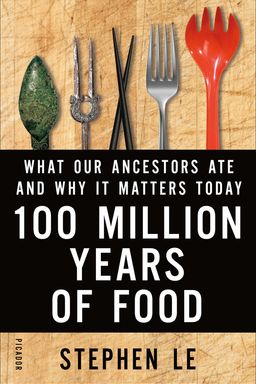
100 Million Years Of Food cover

100 Million Years Of Food

by Stephen Le

100 Million Years of Food delves into the evolutionary journey of human diets, from bugs to plants, revealing how our ancestors'' eating habits can inspire healthier choices today. Discover the impact of food evolution on health, sustainability, and cultural practices.

Evolution’s Menu: How Ancestry Shapes Modern Health

What if your daily diet, exercise habits, and even kitchen traditions reflect millions of years of evolutionary trade-offs? Stephen Le’s The Book of Eating (often summarized as an exploration of ancestral and modern diets) argues that modern illnesses—from obesity to cancer—stem not from moral weakness or single nutrients but from mismatched lifestyles. Your biology evolved under scarcity, movement, and modest animal foods; today’s abundance and inertia confuse those ancient settings.

Le builds his argument through fieldwork, family anecdotes, and scientific clues. He connects hunter-gatherer activity patterns to hormonal signatures, insects to sustainable protein, fermentation to cultural intelligence, and uric acid to evolutionary kluges. Across continents—from Vietnam and Kerala to Crete and Okinawa—he shows how traditional diets and daily rhythms optimize survival and social bonding while modern systems distort them. The book’s core question becomes: how can you recover ancestral balance without rejecting civilization?

Evolutionary trade-offs: thriving vs. surviving

Le reframes food choices as life-history trade-offs. Animal protein and fat activate growth and reproduction hormones like IGF‑1, making you taller, stronger, and more fertile. Those same pathways, however, accelerate aging and raise cancer and metabolic risk. Hence the two-stage dietary rule: eat lighter and plant-heavy when young to postpone diseases, then add animal foods later to prevent frailty. This dynamic perspective blends nutritional biochemistry with Darwinian realism—evolution favors early reproduction, not late survival.

In doing so, Le bridges conflicting modern diet gurus. Dean Ornish’s low-fat longevity diet fits late-life goals; Sally Fallon Morell’s animal-rich traditionalism suits rebuilding strength; Mark Sisson’s primal lifestyle pushes insulin regulation and movement. Each, he suggests, targets a different biological phase. (Note: This evolutionary lens echoes biogerontology research showing that protein restriction extends lifespan in laboratory animals.)

Activity patterns: walking, engagement, and monotony

The book dismantles calorie-counting dogma. Doubly labeled water studies reveal that hunter-gatherers and Western urban professionals expend similar daily energy. What differs is how they move. Foragers walk roughly nine miles daily, breaking inactivity with constant engagement; Americans walk about two and a half miles and spend five hours sitting before a screen. Hormones respond accordingly—sedentary bursts of exercise fail to emulate ancestral rhythms that stabilize insulin and IGF‑1. You don’t merely burn calories by moving; you regulate metabolism through steady, mindful motion and cognitive challenge.

Le extends this to mental activity. Monotony without mental stimulation shifts calories toward fat deposition because your brain consumes less glucose. Boredom at work or habitual screen time becomes physiologically fattening. Hence, resisting obesity means designing lively days, not just restrictive meals.

Traditional cuisines: fermented intelligence

Cultural cooking evolved as biochemical wisdom. Fermented fish sauces like Vietnam’s nuoc mam or Korea’s aged soy condiments arose to make low-meat diets flavorful and safe. Processing—soaking, parboiling, fermenting—neutralizes plant toxins, leaches tannins and phytates, and preserves micronutrients. Le demonstrates how Hang Thi Dao’s bottle of nuoc mam turns humble rice and vegetables into nutrient-balanced meals, echoing fermentation worldwide from olives to acorns. Traditional cuisines are not nostalgic relics—they are adaptive algorithms optimized over generations.

He contrasts that intelligence with industrial shortcuts: polished rice that caused beriberi, refined corn that led to pellagra, and vitamin D deficiency in smog-dark cities. Technology solved those crises but often created others—refined sugar, processed seed oils, and sterilized environments producing allergies and metabolic disorders. Your body benefits when ancient culinary logic meets modern safety, not when one replaces the other.

Ecological ethics: sustainable animal foods

Le’s travels bring sustainability home. Insects like crickets provide complete protein, B vitamins, and minerals while emitting minimal greenhouse gases. Fish fermented or farmed responsibly offer omega‑3s without ocean destruction. Modern aquaculture innovations—like Thierry Chopin’s integrated multitrophic aquaculture—recycle salmon waste via seaweed and shellfish, transforming pollution into productivity. The fermenters, insect farmers, and fish-sauce makers embody the merger of ecology and nutrition.

But sustainability also faces taste and cultural barriers. You may recoil at fried centipedes or reject native kangaroo meat because of aesthetic bias. Le argues that overcoming these taboos requires cultural reframing—valuing foods that nourish ecosystems as much as bodies. In this sense, cuisine becomes environmental policy.

Social context: community and justice

Eating, for Le, is communal behavior—shaped by economy and empathy. Projects like Shanaka Fernando’s pay‑what‑you‑can “Lentil as Anything” reveal how generosity can rebuild food justice but also struggle under market pressures. Native menus at Charcoal Lane or small game farms near Ottawa expose barriers of regulation, perception, and cost. The broader message: sustainable health depends on community structures, not just individual willpower.

Case studies from Crete, Ikaria, and Okinawa illustrate that longevity arises from whole lifestyles—shared meals, slow time, daily walking, and limited mechanization. When modernization upends communal habits with cars and TV, health deteriorates. Thus, culture is the carrier of physiology.

Practical synthesis: ancestral habits for a modern world

Le concludes with ten usable rules: move constantly, cook slowly, eat traditional foods, match diet to life stage and ancestry, get sunlight, avoid excess hygiene, and resist fads. These are not nostalgic slogans but evidence-based heuristics. You renew evolutionary equilibrium by moderating animal protein early in life, boosting it during frailty, balancing omega ratios, and integrating movement and social ties daily.

Core synthesis

Your body carries ancient instructions built for rhythm, scarcity, sun, microbes, and mixed foods. To thrive today, honor those ancestral codes—walk, ferment, share, and eat what history refined rather than what factories simplified.


Movement and Metabolism

Stephen Le insists that how you move throughout the day—not how hard you exercise—defines metabolic health. Ancestral humans walked continuously, mixing manual labor and mental engagement. Modern life compresses effort into short gym sessions surrounded by sitting, commuting, and passive entertainment. The result is disrupted hormone balance, high IGF‑1, and insulin resistance even in apparently fit people.

Continuous movement, not bursts

Hunter-gatherers averaged around nine miles of daily walking for men and six for women. Their energy expenditure equals modern averages—but distributed differently: frequent motion rather than prolonged sitting. Research using doubly labeled water supports this finding—physical activity levels (PALs) are essentially identical between foragers and Westerners. What matters is reducing long sedentary intervals that alter hormonal rhythms.

Mental engagement and fat storage

The brain burns glucose heavily when challenged. Monotonous work or boredom decreases cognitive energy demand, leaving more calories for fat storage. In this sense, intellectual stimulation is metabolic exercise. Jobs with repetitive tasks (truck drivers, cleaners) yield higher obesity rates than sedentary but mentally complex roles (teachers, artists). You gain resilience by keeping both body and mind active.

Practical rhythms

Le recommends short walking intervals, active commuting, and breaks from screens. The Amish example—men walking ~18,000 steps daily with minimal obesity—underscores that steady baseline motion trumps occasional intensity. Think of movement as a hormone regulator and mental tune-up, not as punishment after overconsumption.

Key insight

Inactivity and boredom divert energy into fat storage. Regular low-intensity movement plus mental engagement recalibrates your hormonal and emotional balance more effectively than calorie restriction.


Meat, Growth, and Timing

Le approaches meat not as villain or hero but as a timing-dependent tool. Meat fueled brain expansion and fertility in early humans yet accelerates aging in abundance. Hormones like IGF‑1 surge with animal protein, delivering growth benefits but increasing cancer risk later. Thus, evolutionary logic warns that protein density suits youth’s reproductive goals but contradicts longevity.

Evolutionary and cultural context

Archaeological evidence—Acheulean tools and butcher marks—shows humans scavenged and hunted ~2 million years ago. Meat’s dense calories allowed larger brains. Modern debates (Mark Sisson’s primal model or Ornish’s plant focus) reflect that ancestral duality: periods of feast and famine, not continuous heavy meat intake. Le’s family contrasts between Vietnam and Canada—short stature vs. taller growth—illustrate environment’s hormonal effects.

Life-stage strategy

Young people benefit from modest animal protein balanced with plants, postponing disease activation. Elders need animal foods to protect against muscle loss. Populations like Okinawans (low-fat, low-protein, long-lived) and traditional Greeks fit this longevity pattern, whereas modern meat-rich youth cultures experience earlier puberty and chronic diseases.

Practical guideline

Moderate animal foods early in life for longevity; increase them when elderly to prevent frailty. Dietary timing, not ideology, aligns nutrition with biology.


Plants and Culinary Adaptation

Plants defend themselves chemically; human tradition retaliates with cuisine. Le classifies plant-human relations into six categories—from poisoners to comrades—showing how processing transforms risk into nutrition. Traditional cultures mastered detoxifying strategies through soaking, fermenting, and combining foods wisely. Industrial simplification lost those skills, causing deficiency diseases and allergy epidemics.

From defense to nourishment

Fruits and seeds use toxins (tannins, phenols) to deter overconsumption. Humans learned to leach acorns, cure olives, and ferment legumes. Fermentation also builds flavor and probiotics, reinforcing microbial health—the same microbes weakened by over‑sterile modern environments.

Modern crises and lessons

When traditional processing vanished—polished rice, refined corn—deficiency epidemics like beriberi and pellagra arose. Vitamin D shortage in industrial cities led to rickets until fortification and sunlight treatment intervened. This history teaches that technological progress without ecological wisdom breeds paradoxes.

Cultural takeaway

Traditional food processing represents accumulated biochemical knowledge. Restoring those techniques—fermentation, soaking, parboiling—protects both nutrition and microbial diversity.


Fruits, Hormones, and Uric Acid

Sweetness seduces because evolution rewarded fruit eaters. Yet the same evolutionary chemistry now fuels metabolic disease. Stephen Le unpacks how losing the uricase gene raised human uric acid levels—a substitute antioxidant that saved extinct primates but now triggers gout and hypertension. Modern fructose-heavy diets push that ancient kluge into pathology.

Evolutionary biochemistry

Around 40–16 million years ago, primates lost uricase, making uric acid our internal antioxidant once vitamin C synthesis disappeared. It protected early fruit-eating ancestors but predisposed modern humans to gout and insulin resistance. Abundant fructose from juices and soft drinks continually raises uric acid, exemplifying evolutionary mismatch.

Cultural balancing acts

Societies resolve fruit’s chemical defense through processing—Korean dotorimuk (acorn jelly) or Mediterranean olives require patience and skill. Kerala’s coconut curries and Tokelau Islander migrations illustrate how context—activity and balance—defines whether fats and sugars harm or heal. The same coconut becomes healthful in coastal kitchens and harmful in sedentary urban diets.

Evolutionary lesson

Genes and biochemistry adapt for ancient scarcity. Modern abundance transforms survival adaptations—like uric acid—into chronic disease triggers. Eat fruit traditionally, not industrially.


Seafood, Insects, and Sustainability

Le expands the discussion of animal foods beyond mammals. Small fish and insects, once dismissed, embody sustainability and nutrition with minimal ecological cost. Crickets, ant larvae, anchovies, and fermented fish sauces showcase efficient protein cycles fitting dense populations and warming climates.

Insects: ecology and nutrition

Field scenes from Bangkok and Saigon capture the cultural drama around eating insects—both curiosity and taboo. Nutritionally, insects rival beef in protein and micronutrients yet require a fraction of land and water. Farmers like Mr. Amnat in Thailand demonstrate sustainable income models with backyard cricket farms. Proper cooking mitigates chitin digestion and pathogen risks, while cultural acceptance remains variable.

Fish: fermentation and aquaculture

Fish sauces like nuoc mam enable low-meat diets by amplifying umami. Sustainable fishing favors smaller species rich in omega‑3s and fewer contaminants. Industrial aquaculture—exemplified by Cooke’s salmon farms—poses waste and parasite challenges, which new innovations like Integrated Multitrophic Aquaculture (IMTA) mitigate by linking salmon with seaweed and mussels for waste recycling. Ecology meets gastronomy.

Sustainability insight

Smaller, lower‑trophic proteins—crickets, anchovies, fermented fish—offer ecological resilience and cultural flavor without sacrificing health.


Culture, Modernization, and Longevity

Diet alone doesn't explain health; modernization reshapes entire life systems. Stephen Le compares how island societies—Crete, Ikaria, Hydra, Okinawa—once embodied slow food, daily walking, and strong social networks but now face obesity and chronic disease under supermarket and car culture. The lesson: longevity is a social rhythm, not just a nutrient set.

Island transformations

Crete shifted from olive‑oil‑rich peasant meals to meaty, pasta-heavy menus by 2010, multiplying diabetes rates. Ikaria’s relaxed “no-clock” life still sustains long-lived residents, while Hydra’s walkable city design encourages activity through narrow paths. Okinawa’s U.S.-driven dietary change (Spam, fast food) caused health collapse—a cautionary microcosm of global modernization.

Community and justice

Projects like “Lentil as Anything” in Australia and Bearbrook Farm in Canada demonstrate that food connected to generosity or ecology faces economic fragility. Sustainable diets require systemic support—policies, pricing, and cultural acceptance—beyond personal choice.

Social health insight

Longevity correlates with community design—shared meals, walkability, slow schedules—more than with individual nutrient tracking.


Food Systems, Technology, and Policy

Behind personal diets lies structural power. Le critiques industrial agriculture and GMOs as economic systems prioritizing yield over ecology. With over 90% of corn and soy genetically modified, North Americans ingest modified ingredients daily via livestock feed and processed commodities. Resistance in Europe under the precautionary principle contrasts with North American laissez-faire policy.

Scientific disputes and ecological consequences

Independent studies indicate potential organ or genetic effects from GMO feeds, while industry-funded research denies harm. Regardless of direct toxicity, ecosystem feedback—herbicide resistance, secondary pests, nitrate runoff—already manifests. Iowa’s industrial cornfields exemplify the cost: nitrate-loaded rivers and monocultural dependence. Genetic modification amplifies these dynamics through scale.

Policy directions and consumer power

Governments differ sharply—Europe demands labeling; Canada and the U.S. rely on voluntary disclosure. Le advises supporting transparency, organic or local sourcing, and reforms that internalize environmental cost. Sustainable eating isn’t only personal—it’s civic participation.

Policy insight

Changing food outcomes requires aligning consumer demand, environmental accountability, and political frameworks—not just nutritional awareness.


Practical Rules for Modern Ancestors

In conclusion, Le distills evolutionary and cultural lessons into actionable practices. Borrowing from Michael Pollan’s maxim—"Don’t eat anything your great-grandmother wouldn’t recognize as food"—he maps ancestral wisdom onto modern routines. These rules merge metabolic evidence, ecological logic, and social coherence.

Key everyday actions

  • Keep moving—walk at every chance, avoid long sitting, design chores as micro‑exercise.
  • Eat traditional cuisines suited to your ancestry and region; pair plants with fermented condiments.
  • Balance animal protein with life stage—low in youth, higher in age‑related frailty.
  • Get moderate sunlight for vitamin D and immune calibration; reduce unnecessary sterilization and antibiotic overuse.
  • Cook with low heat to minimize AGEs; stew, steam, or ferment rather than fry.
  • Consume alcohol modestly and socially.
  • Avoid fad diets or supplement excess; diversity and traditional preparation are safer guides.

Final insight

Health is rhythm, not restriction—evolution designed you to walk, share, ferment, and adapt within community. Recreating that pattern is the modern form of “ancestral eating.”

Dig Deeper

Get personalized prompts to apply these lessons to your life and deepen your understanding.

Go Deeper

Get the Full Experience

Download Insight Books for AI-powered reflections, quizzes, and more.