
Idea 1
Engineering Human Longevity: Science, Culture, and the Quest to Live 100 Plus Years
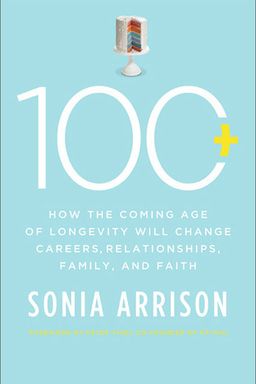
Have you ever wondered what your life could look like if you lived not just to eighty, but to one hundred and fifty—with decades of vibrant health and clarity ahead of you? In 100 Plus: How the Coming Age of Longevity Will Change Everything, technology analyst Sonia Arrison boldly argues that humanity is approaching a radical turning point: science and technology are no longer merely extending life span—they are engineering the human body itself to defy aging. She contends that this transformation will redefine not only medicine but also families, economies, and faith. Living to one hundred plus years is not a fantasy—it’s a social, ethical, and technical revolution already underway.
The book’s central claim is simple but audacious: the same process that gave us antibiotics, sanitation, and vaccine-driven longevity is now entering its most transformative stage. Through breakthroughs in biotechnology, stem cells, tissue engineering, genetic therapy, and even synthetic biology, humanity is reverse-engineering aging. Arrison proposes that these scientific advances will soon double healthy life expectancy, unlocking lives of 150 years or more—forcing civilization to rethink retirement, education, reproduction, and spirituality.
The Aging Revolution
Arrison begins by tracing the journey from humanity’s early struggle against infectious disease to the modern confrontation with aging itself. She shows that for millennia, most gains in longevity came from reducing infant mortality, not prolonging later life. But today, advances in regenerative medicine are finally targeting the cellular and molecular damage of aging directly. Scientists are creating organs in labs, repairing genes, and using stem cells to regrow tissue—turning science fiction into everyday clinical reality.
From Survival to Enhancement
In Arrison’s view, we are shifting from a medical model focused on survival to one aimed at enhancement. The body has become both the subject and object of engineering—the “greatest project of all time.” The book explores breakthroughs like 3D organ printing (pioneered by companies like Organovo), regenerative stem-cell therapies for blindness and spinal injury, and gene editing tools like zinc finger nucleases that rewrite DNA to cure AIDS and cancer. These innovations form what Arrison calls the dawn of health extension—a future where humans repair themselves from the inside out.
Why Longevity Matters Beyond Medicine
But 100 Plus isn’t merely about biology; it’s about culture. Arrison suggests that longer, healthier lives will reshape families, work, and faith as deeply as the printing press reshaped society. What happens when people marry or have children at seventy? What will retirement mean in a century-spanning life? How will religions that promise eternal life adapt when science offers near-permanent life here on Earth? Arrison explores these questions across eight chapters, blending scientific case studies with economic modeling and philosophical inquiry.
Living Ethically in a Longer-Lived World
Critics argue that this quest for longevity is an act of hubris—an attempt to usurp nature or God. Arrison disagrees. She frames longevity not as a rebellion against nature but as humanity’s most natural act: solving problems through innovation. She draws upon thinkers like Francis Bacon and modern scientists like Aubrey de Grey (creator of the SENS model to repair cellular damage) to show that extending life is a moral imperative, not a threat. To deny life extension when it can reduce suffering would be ethically wrong, she argues, echoing futurist Peter Thiel’s foreword that calls aging “the great enemy of the world.”
A Blueprint for Humanity’s Next Chapter
Arrison offers a comprehensive roadmap: from the history of longevity myths (Methuselah, vampires, and alchemists) to the latest military-funded regeneration projects and cutting-edge gene sequencing. She shows that biology is becoming a software system that scientists can now reprogram—an idea championed by biologist Craig Venter, whose mapping of the human genome and creation of synthetic cells exemplify this convergence of life and code. As the cost of sequencing genomes plummets, personalized medicine will become as cheap and routine as smartphone software updates.
Ultimately, 100 Plus asks us to reimagine everything we think we know about human limits. The book argues that living to one hundred plus years isn’t just science—it’s destiny. In the coming age of longevity, our societies will undergo upheaval in economics, morals, and meaning. And if Arrison’s forecast is right, the first thousand-year human may already have been born.
Core takeaway
Longevity is not an indulgent dream—it’s the logical next step in evolution. Science is becoming engineering, biology is becoming technology, and humanity is beginning the ultimate redesign project: itself. The implications reach far beyond medicine, touching who we marry, what we believe, and how we measure a meaningful life.